What Is The Average Water Bill

You open the mail, and there it is—that water bill. It’s a little piece of paper that can either make you shrug or sigh deeply. Most of us don’t give it much thought until we...

You open the mail, and there it is—that water bill. It’s a little piece of paper that can either make you shrug or sigh deeply. Most of us don’t give it much thought until we see a number that seems too high. So, what is the average water bill these days? Well, for a typical American household, it usually lands somewhere between $40 and $60 per month. That’s roughly the cost of one nice dinner out, or a couple of fancy coffees. Not too bad, right? But like that coffee, it depends entirely on where you live and how many showers your teenager takes.
Why does it vary so much?
Imagine your neighbor in a rainy city versus your cousin in the desert. That’s the biggest factor: location. Places like Seattle or parts of the Northeast often have cheaper water because it’s abundant. Meanwhile, dry states like Arizona or California can see bills creep up toward $70 or even $100 a month. Water isn’t free—someone has to pump, treat, and deliver it to your tap. Your local infrastructure, pipes, and even the weather all play a role. It’s like the price of gas: you don’t control the supply, but you do control how much you use.
Another sneaky variable is your household size. A single person in a studio apartment might pay just $30. But a family of four with a sprinkler-addicted lawn and a toddler who loves bath time games? That’s easily $80 or more. I once saw my bill spike because my son spent an hour “fishing” in the bathtub. He was thrilled; my wallet, not so much. Remember, the more people, the more flushes, showers, and dish loads add up.
Must Read
What’s actually in that bill?
Your water bill isn’t just for the water you drink. It’s a package deal. You’re paying for the water itself, plus sewer services (where all that flushy-floaty stuff goes), and often trash or stormwater fees. In many cities, the sewer charge is almost the same as the water charge. So if you use 3,000 gallons, you might pay for 3,000 gallons going in and out. It’s like paying a toll to leave the highway—even if you didn’t want to go that way.
There’s also a little thing called base fees. Even if you leave for vacation and use zero water, you’ll still owe something. That money keeps the pipes from freezing and the treatment plant running. Think of it as a membership fee to be part of the “indoor plumbing club.” Honestly, it’s a bargain compared to carrying buckets from a well.
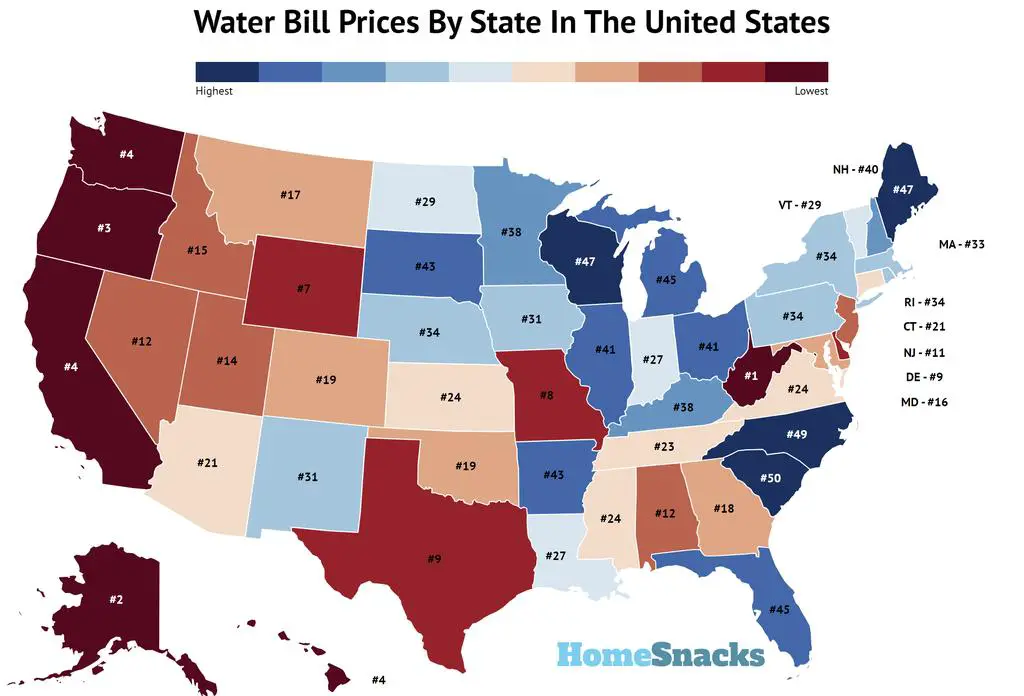 Water Utility Rates By State _ Water Bills By Month – QKCS
How to keep your bill from making you weep
Now, here’s where you can be the hero of your own story. A leaky faucet that drips once per second wastes 3,000 gallons a year. That’s like flushing a full swimming pool down the drain! Fixing that little rubber washer is cheaper than paying for that pool. Seriously, check your toilets too. A silent leak can add $20 or more to your monthly bill without you even knowing it. Just drop a food coloring tablet in the tank; if color appears in the bowl, you have a leak.
Shorter showers are the classic advice, but here’s a fun challenge: try a “five-minute song” shower. Put on your favorite banger, and race to finish before the chorus ends. You’ll save water, and you’ll feel like a rockstar. Also, only run your dishwasher and washing machine when they’re full. A half-load uses nearly the same amount of water as a full one. That’s like ordering a pizza just for the crust—wasteful and unsatisfying.
 Average Water Bill By State In The Us For 2024 – YWJYT
Don’t forget the yard
If you have a lawn, water it deep, not often. A quick sprinkle just makes the roots lazy. Watering early in the morning means less evaporation, and your grass stays happy. I used to water at noon like a fool, and my bill was high while my grass looked sad. Now I set a timer for 6 a.m., and my wallet and lawn both thank me. Rain barrels are also a game-changer—free water from the sky!
Still, the average water bill is a steal compared to other utilities. Think about it: for the price of a streaming service, you get unlimited hydration, clean clothes, hot baths, and the magic of flushing. Where else can you get that? Next time you see that $50 charge, take a moment to appreciate that every drop comes from a complex system of pumps, pipes, and hardworking humans. Then go fix that dripping faucet—your future self (and your budget) will smile.
