How Often Should I Replace My Keurig Filter

You bought a Keurig for the speed. The convenience. The glorious, one-button caffeine hit. But there’s a dark little secret hiding in your machine: the water filter. That char...
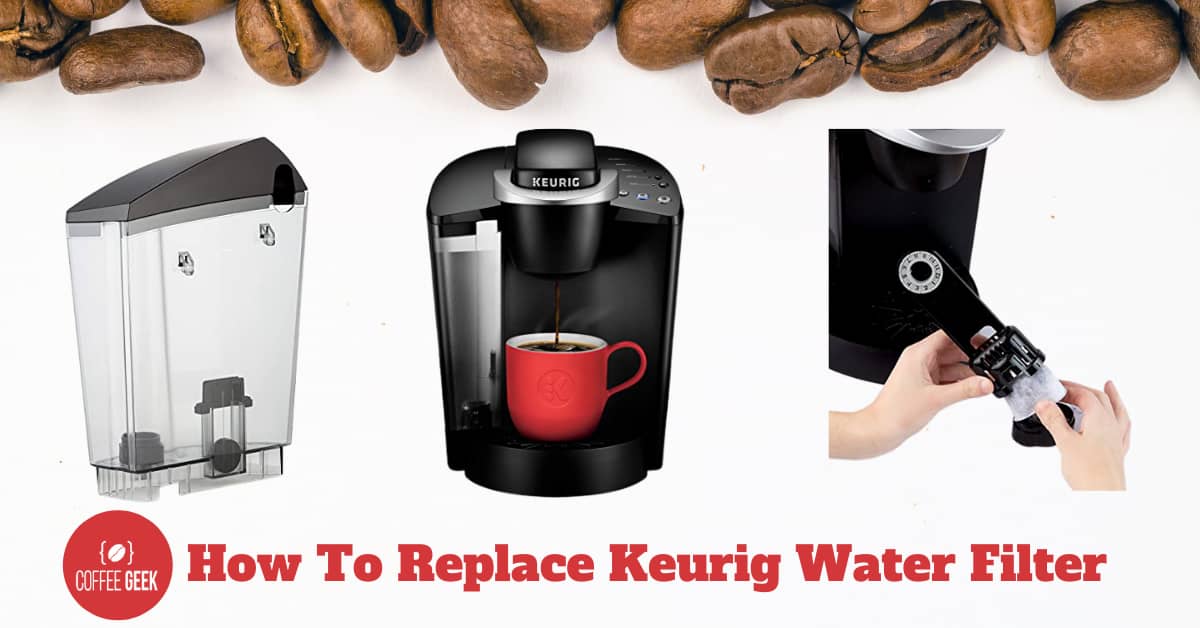
You bought a Keurig for the speed. The convenience. The glorious, one-button caffeine hit. But there’s a dark little secret hiding in your machine: the water filter.
That charcoal disc doesn’t last forever. It’s like a tiny bouncer for your coffee, blocking weird tastes and minerals. Eventually, it gets tired and lets the nasties through.
So, how often should you swap it? The official answer is every two months, or after 60 tank refills. But let’s be real: nobody counts tank refills.
Must Read
You’ll know it’s time when your morning brew tastes flat. Or worse, it starts smelling like a damp basement. That’s the filter screaming, “Help me!”
Think of it this way: your Keurig is a little coffee robot. It can’t talk. It just sits there, judging your coffee choices. The filter is its only defense against hard water.
Hard water is full of calcium and magnesium. These minerals can build up inside your machine like tiny coral reefs. A fresh filter stops that reef from choking your brew.
Here’s the quirky truth: Keurig filters are not one-size-fits-all. Some models use a cartridge that slides into the water reservoir. Others have a little basket that sits in the bottom.
Check your manual. No, really. It’s usually a 30-second read. The manual tells you the exact part number, which is critical unless you enjoy drinking mineral sludge.
You might be thinking, “I’ll just skip the filter!” Bad idea. Without a filter, your coffee gets bitter from chlorine and metals. Plus, mineral buildup can break your machine over a year.
A dead Keurig means no coffee. And no coffee means a very, very sad morning. So, treat that filter like a toothbrush for your coffee maker.
The "Sniff Test" Is Real
Your nose is smarter than you think. If you open the water reservoir and it smells like a fish tank, change the filter immediately. That’s bacterial growth, not just old charcoal.
Another weird sign: your coffee starts looking oily on top. That’s often a sign of stale oils from old water hitting fresh beans. It’s gross, but fixable.
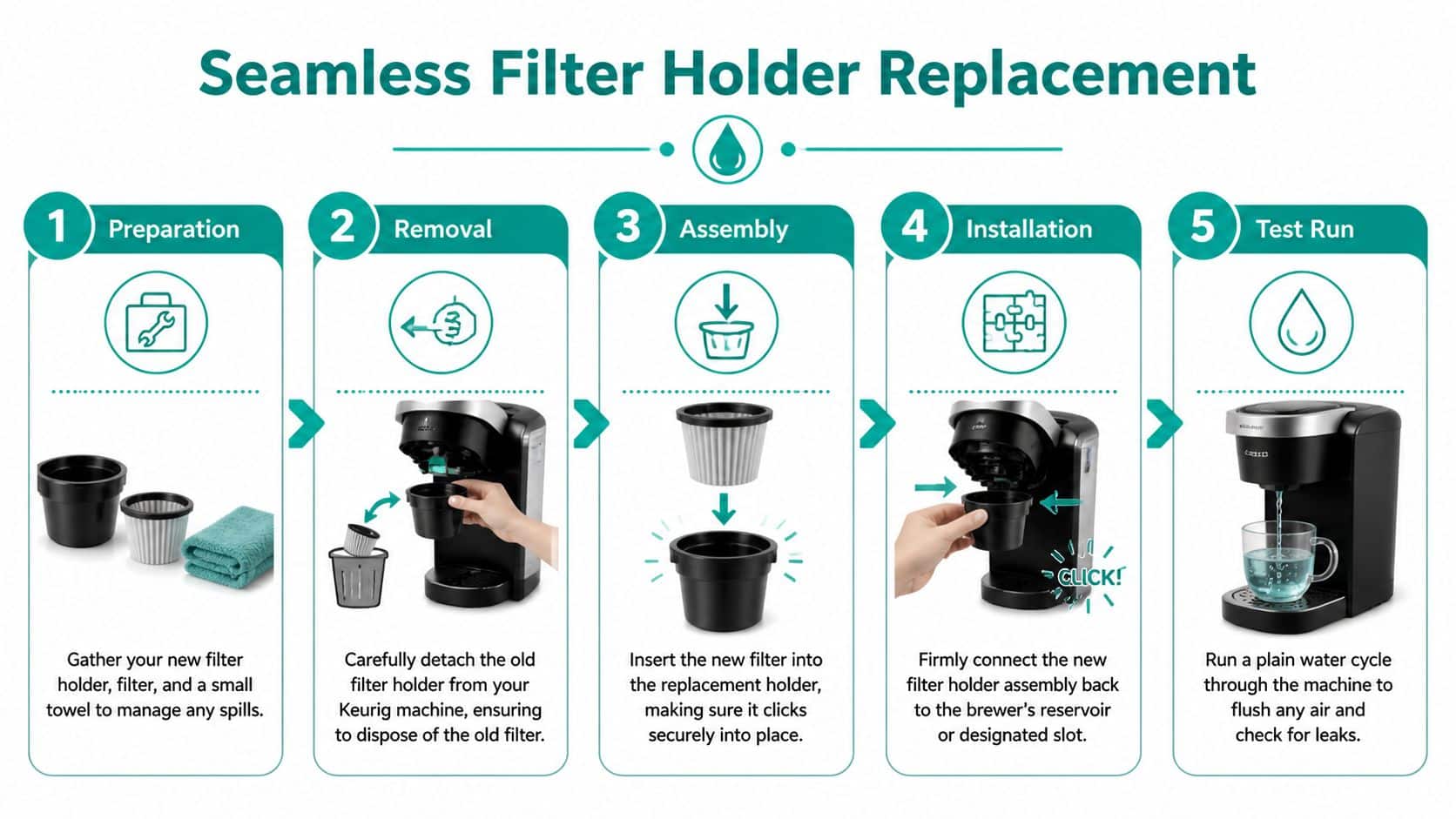 Keurig Water Filter Holder Replacement Made Easy
And here’s a funny one: if your coffee tastes like plastic or chemicals, your filter might be exhausted and releasing trapped impurities. It’s like the filter is vomiting back at you.
But let’s be honest—most of us forget. We set a reminder, then ignore it. That’s why Keurig now sells filter subscription packs. They literally ship to your door every two months.
Yes, capitalism wants you to remember. But it’s also convenient. Set it and forget it, like your coffee pods, but healthier for your machine.
What About "My Water’s Fine"?
You might live in a city with “good” tap water. That’s great. But even filtered tap water has chloramines and trace metals. The filter smooths out the flavor profile.
Think of a fine wine. Would you serve it in a dirty glass? Of course not. Your $40 bag of coffee deserves clean, filtered water too. It’s a golden rule.
Fun fact: the charcoal in Keurig filters comes from coconut shells. That’s right—your coffee filter is made from recycled tropical fruit. It’s basically a tiny, carbonized coconut.
When it’s fresh, that coconut charcoal is a sponge for bad stuff. After two months, it’s a useless lump. Your coffee tastes like the lump.
Don’t trust the “six-month” claim on some generic filters. Those are lies. Keurig’s own engineers say two months is the sweet spot. They built the machine—listen to them.
Here’s a playful challenge: next time you change the filter, save the old one. Cut it open. Look at the black, mucky residue. That’s what you didn’t drink. Isn’t that satisfying?
It’s like a gross science experiment in your kitchen. Show your friends. They’ll be horrified and impressed. Then they’ll change their own filter.
