Granular Activated Carbon Filter Systems

Let’s be honest: most of us have a complicated relationship with our tap water. We know it’s safe, but that faint whisper of chlorine or a hint of mineral tang makes us reach...
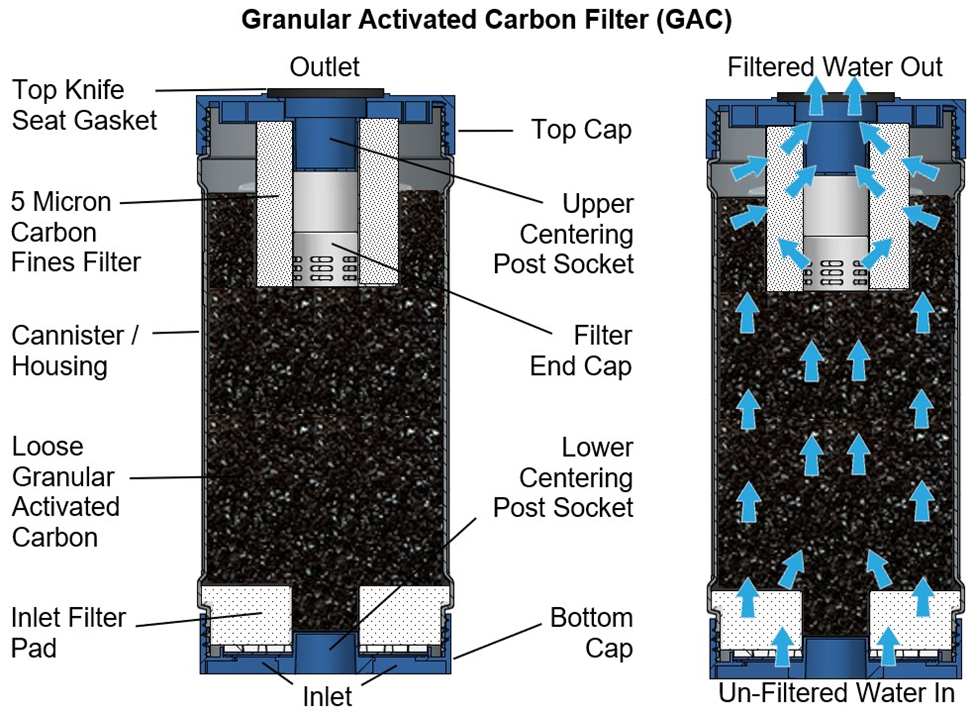
Let’s be honest: most of us have a complicated relationship with our tap water. We know it’s safe, but that faint whisper of chlorine or a hint of mineral tang makes us reach for a plastic bottle instead. The good news? The fix isn’t a fancy fridge filter or a truckload of bottled water—it’s a humble, hardworking sponge for your water main: the Granular Activated Carbon (GAC) filter system.
Think of GAC as the quiet genius of the water world. It doesn’t use electricity, chemicals, or any flashy tech. Instead, it relies on a process called adsorption—where microscopic pores in the carbon trap impurities like a spiderweb catches flies. It’s the same stuff used to filter air on submarines and to purify whiskey (yes, really).
Your water passes through a tank filled with small, black carbon granules. These granules are like tiny, super-absorbent black holes for chlorine, volatile organic compounds (VOCs), and any funky odors. The result? Water that tastes crisp, smells clean, and feels like it came from a mountain spring—without the carbon footprint of shipping plastic.
Must Read
Why Your Water (and Your Coffee) Will Thank You
If you’ve ever taken a sip of tap water and thought, “Ugh, swimming pool,” GAC is your hero. Chlorine is added to kill bacteria, but it leaves a distinct, unappealing aftertaste. A good GAC system strips that chlorine out, leaving you with water that actually makes your morning coffee taste complex, not bleachy.
Beyond taste, GAC excels at removing up to 99% of common contaminants. This includes pesticides, herbicides, and even some industrial solvents that might have snuck into your local aquifer. It’s a simple, effective barrier that gives you peace of mind with every glass.
Here’s a fun fact: one pound of activated carbon has a surface area the size of a football field. This immense surface area is what makes it so effective at trapping tiny particles. So, when you install a GAC system, you’re essentially putting thousands of football fields of microscopic cleaning power into your kitchen.
The Setup: Not as Intimidating as IKEA Furniture
Installing a GAC system sounds like a plumbing nightmare, but most modern units are designed for DIY-friendly installation. You’ll typically see two types: a point-of-entry (POE) system that filters all the water in your house, or a point-of-use (POU) system that sits under your kitchen sink.
For most people, the under-sink POU model is the sweet spot. It’s compact, costs around $100 to $300, and connects directly to your cold water line with a simple T-connector. You don’t need to be a plumber—just have a wrench, some Teflon tape, and a little patience.
Pro tip: Don’t forget to flush the new filter. When you first install GAC, it can release a tiny amount of fine carbon dust (called “fines”). Run the water for 10 to 15 minutes until it runs clear. This prevents your first glass of water from looking like a cup of black coffee.
The Maintenance Secret: You Can Just “Scrub” It
Unlike reverse osmosis systems that require expensive membrane replacements every year, GAC filters are incredibly low-maintenance. The carbon granules last for about six to twelve months, depending on your water usage and quality. When it’s time to replace them, you simply dump out the old carbon and pour in fresh granules.
Here’s a cool trick: you can backwash the system to extend its life. This means reversing the water flow to flush out trapped particles, effectively “cleaning” the carbon bed. It’s like giving your filter a power nap—it revives it for another few months.
Cultural reference: Remember the scene in Cast Away where Tom Hanks’ character filters water through a sock full of charcoal? That’s the ancient, primal version of a GAC system. We’ve just upgraded the sock to a sleek stainless steel tank.
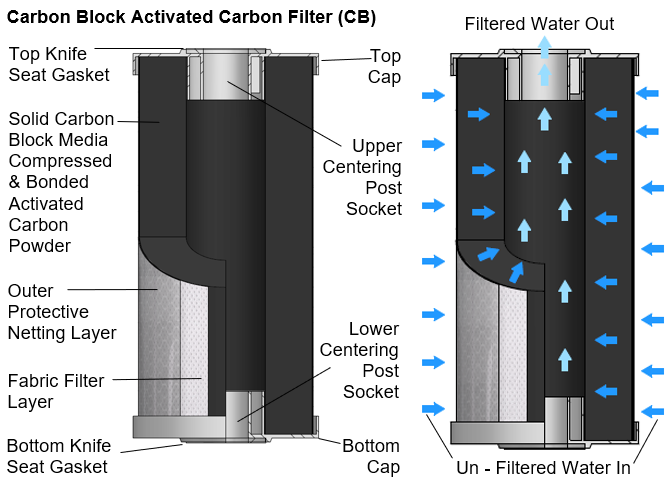 Granular Activated Carbon (GAC) vs. Activated Carbon Block (CB) Water
Practical Tips for the Modern Lifestyle
1. Pair it with a sediment pre-filter. This is your GAC’s best friend. If your water has sand, rust, or silt, it can clog the carbon pores quickly. A $10 spun-polyester pre-filter catches the big stuff, prolonging the life of your GAC significantly.
2. Know your flow rate. GAC systems are not high-pressure hoses. If you try to run a shower and a garden hose at the same time while using a POE system, you’ll get a trickle. Choose a system that matches your household’s peak water demand.
3. Store it dry. If you buy spare carbon granules, keep them in an airtight container. Carbon loves to adsorb moisture and odors from the air, which will deplete its capacity before it even touches your tap water.
4. Test your water first. GAC is great for chlorine and organic chemicals, but it won’t remove dissolved minerals (hardness), heavy metals like lead, or fluoride. A simple home test kit will tell you if you need a more advanced system.
The Aesthetic Factor: Does It Ruin Your Kitchen Vibe?
Let’s talk design. Modern GAC systems are no longer ugly beige cylinders. Brands like Apex and iSpring now offer sleek, brushed stainless steel housings that look surprisingly good under a sink. You’ll never have to see them, but your inner design nerd can rest easy.
If you’re renting, consider a countertop GAC carafe, like a Brita or ZeroWater. These use the same carbon technology in a portable, stylish vessel. It’s like having a spa for your water—right next to your coffee maker.
Fun fact: the carbon in GAC systems is often made from coconut shells. It’s a sustainable, renewable resource. Every time you filter your water, you’re supporting the coconut economy. Think of it as a tiny, delicious tribute to tropical islands.
A Short Reflection to Pour Over
In a world of complicated gadgets and smart-home everything, there’s something refreshingly simple about a black carbon block doing its quiet work. It doesn’t beep, it doesn’t sync to your phone, and it doesn’t need an app. It just sits there, silently making your water better—one molecule at a time.
We spend so much energy chasing convenience and perfection in our kitchens, from air fryers to sous-vide machines. Yet, the most fundamental tool for health and flavor is the water itself. A GAC filter is a small, affordable act of intentional living—a way to say, “I care about what I put into my body, even the invisible part.”
So the next time you pour a glass of cold, crisp tap water, take a moment. Notice the absence of that lingering smell. Taste the clean, neutral freshness. That’s the quiet magic of adsorption. And honestly, it’s a beautiful thing to drink to.
