Difference Between Ro And Distilled Water

Alright, let’s settle this once and for all: Reverse Osmosis (RO) water and distilled water—are they the same? No. Are they both just fancier versions of tap water? Absolutely...
Alright, let’s settle this once and for all: Reverse Osmosis (RO) water and distilled water—are they the same? No. Are they both just fancier versions of tap water? Absolutely. But one of them is basically the water equivalent of a vacuum-sealed hermit, and the other is a high-tech celebrity bodyguard for your taste buds. Let’s dive in, but please, grab a glass of anything that isn’t straight from the hose—you’ll thank me later.
Distilled Water: The Hermit Who Boils Away Its Problems
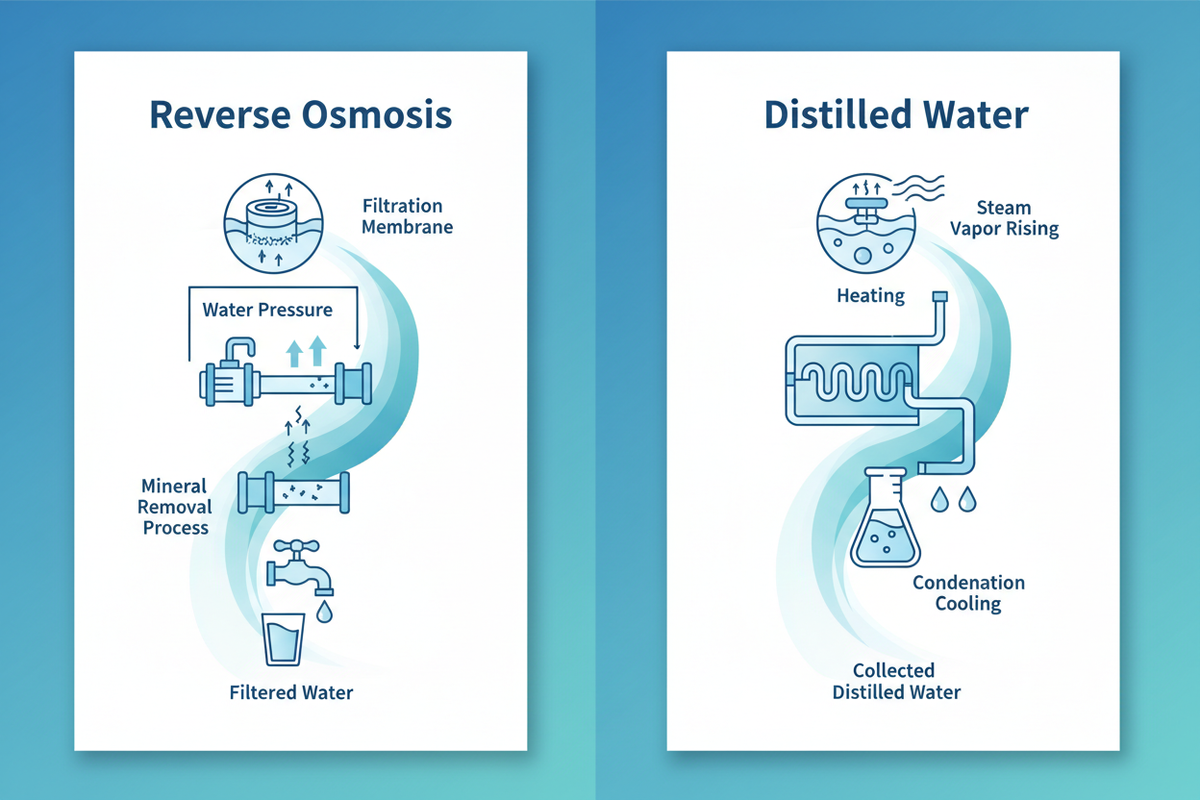
Distillation is the old-school method. You take water, you boil it until it turns into steam, then you catch that steam and cool it back into liquid. Anything that can’t vaporize—like minerals, bacteria, or yesterday’s coffee grounds—gets left behind like a bad date. The result? Water so pure it’s almost offensive to flavor.
Here’s the kicker: distilled water is so empty it actually wants to steal stuff from you. It’ll leach carbon dioxide from the air, turning slightly acidic, and if you store it in a plastic bottle too long, it might eat microscopic bits of plastic. Yes, your “pure” water becomes a tiny plastic snack. Playful, right?
Must Read
Fun fact: many hospitals use distilled water for steam sterilizers and CPAP machines. But drink it? Your body will thank you by pulling electrolytes from your cells to balance that purity. It’s like serving a perfectly bland soup to someone who’s been on a salt lick—confusing and slightly rude.
RO Water: The Bouncer with a Fancy Membrane
Reverse Osmosis is the tech-savvy cousin. Imagine a microscopic sieve that pushes water through a semi-permeable membrane so tight that even dissolved salts get kicked out. It’s like a velvet rope at a club where only H2O molecules get in—no minerals, no bacteria, no fluoride-addicted influencers.
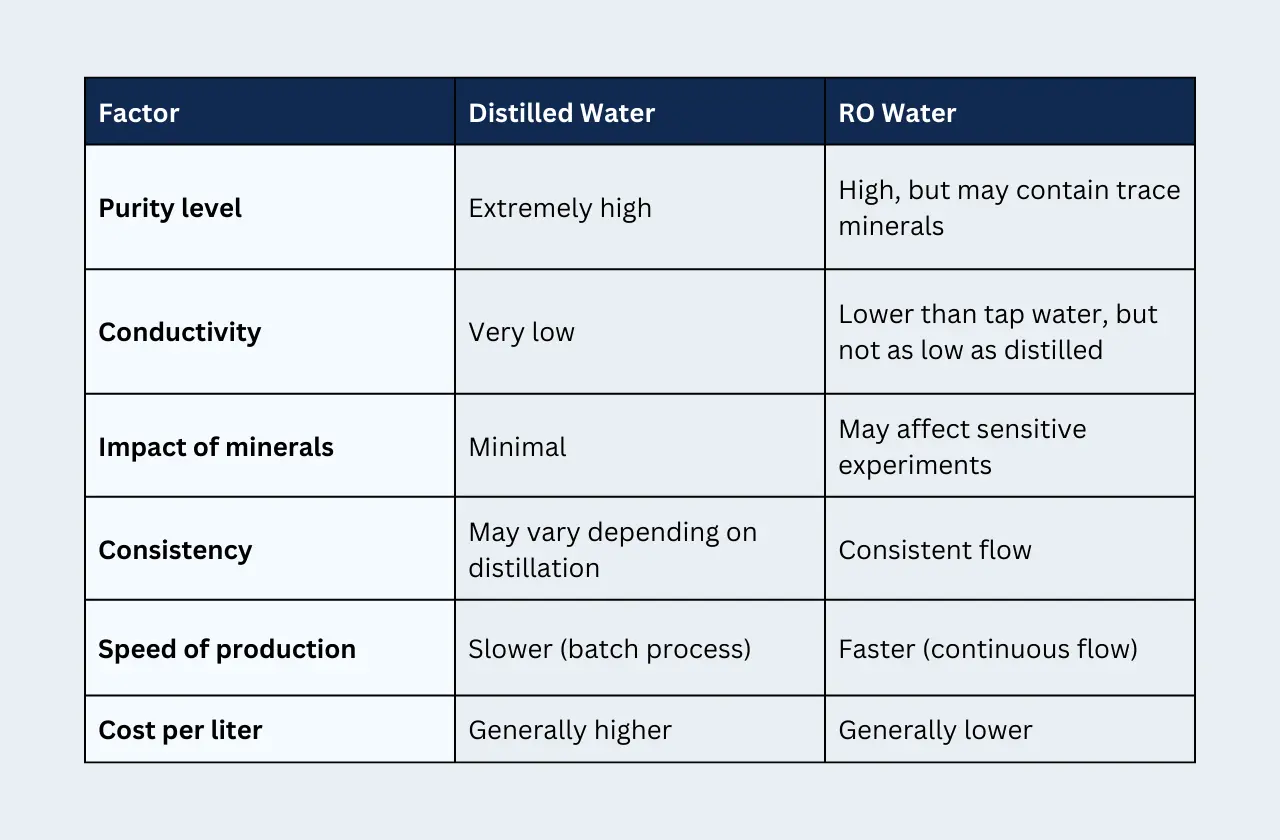
RO water still retains a tiny bit of mineral content (like calcium or magnesium) because the membrane isn’t perfect—good news for your bones, bad news for conspiracy theorists who think pure water is a government plot. But here’s the punchline: RO systems waste about 3 to 4 gallons of water for every gallon they produce. You’re essentially running a leaky faucet to get a glass of “princess water.”
Want a surprise? Many famous bottled water brands (like Dasani and Aquafina) are actually RO water with a splash of minerals added back for taste. Wait—so you’re paying premium for water that was stripped then re-dressed? Yes. And we call it “hydration.” Capitalism, baby.
The Great Taste Test: Who Wins Your Mouth?
Distilled water tastes flat—like licking a sterile cotton ball. RO water tastes clean, like a mountain spring that never met a fish. Which do you want? If you’re making coffee or soup, RO is your best friend because it lets the real flavors shine. Distilled? It’s for your iron, not your latte—unless you enjoy coffee that tastes like a ghost’s apology.
 Is Ro Water The Same As Distilled Water
But surprising fact: some whiskey distilleries use distilled water to dilute their spirits because it’s so neutral it doesn’t change the flavor. Meanwhile, fancy coffee roasters swear by RO water with a pinch of minerals. It’s the Goldilocks of hydration—too pure burns your tongue, too mineral-heavy makes your espresso taste like a sidewalk.
The Verdict: Pick Your Poison (But Not Literally)
If you’re on a budget and just want water that doesn’t kill your plants, tap water is fine (if your town’s not Flint). But if you’re a germaphobe or have a CPAP machine, go with distilled. It’s cheap, simple, and terrifyingly empty.
For drinking, RO water wins unless you want to remineralize your own (yes, that’s a thing—people buy pink salt just to add back what the membrane stole). And don’t even get me started on the “alkaline” trend. That’s a whole other circus.
Here’s the truth: both are safe, both are boring in a hygienic way, and both will keep you alive until you accidentally drink from a hotel sink. But if you want to feel fancy? Buy an RO system, tell your friends it “optimizes cellular hydration,” and watch them nod like you’re a water wizard. Meanwhile, distilled water will sit in the back of your pantry, silently judging your coffee choices.
So next time someone asks, “What’s the diff?” just say: “One boils, the other squeezes. Same result: your tap water’s self-esteem is destroyed.” Then chug a glass of whatever’s cheapest and walk away—you’ve officially out-hydrated everyone.
