Effect Of Chlorine In Water On Human Body

Let’s be real for a second: that sharp, almost chemical smell that hits you when you walk into a public pool or step out of the shower? It’s not exactly a spa vibe. That’s chl...

Let’s be real for a second: that sharp, almost chemical smell that hits you when you walk into a public pool or step out of the shower? It’s not exactly a spa vibe. That’s chlorine, the unsung hero of municipal water systems, working overtime to kill bacteria and viruses. But what happens when this chemical chaperone gets a little too cozy with your body? Let’s dive into the science without the goggles.
The Good, The Chlorine, and The Ugly
First, a quick history lesson. Before cities started adding chlorine to drinking water in the early 1900s, diseases like cholera and typhoid were basically lurking in every glass you drank. Thank the sanitation gods that in 1908, Jersey City became the first U.S. city to chlorinate its water supply, slashing death rates by double digits overnight.
So, chlorine is a lifesaver. But like that friend who always brings drama to brunch, it comes with a few side effects. When chlorine meets organic matter—think dead skin cells, sweat, or even your morning coffee leftovers in the sink—it forms disinfection byproducts (DBPs). The most studied? Trihalomethanes (THMs).
Must Read
Your Skin, Hair, and the Chlorine Tango
Ever wonder why your skin feels like parchment after a long swim? Chlorine strips away your skin’s natural oils, leaving the barrier dry and irritated. It’s basically a light chemical peel you didn’t ask for, especially if you have eczema or sensitive skin.
And your hair? That green tint isn’t actually from algae—it’s chlorine bonding with copper particles in the water, staining light-colored hair. Think of it as a punky, unintended fashion statement, but probably not the one you’re going for.
Lungs, Eyes, and That Locker Room Cough
Here’s a fun fact: the “pool smell” you associate with chlorine is actually chloramines, a compound formed when chlorine reacts with ammonia from sweat and urine. Yep, you read that right. That smell is your nose screaming, “Please, not more pee in the pool!”
These chloramines can irritate your respiratory system, triggering asthma-like symptoms or a scratchy throat. Swimmers often get that famous “pool cough”—a reflex that’s your lungs politely asking for fresh air. Indoor pools are particularly notorious since the chemicals get trapped.
What About Your Gut?
Drinking chlorinated tap water is considered safe by the WHO, but some studies link long-term exposure to high levels of DBPs with a slightly elevated risk of bladder or colorectal cancer. Before you panic: the risk is tiny compared to, say, smoking or sunbathing without SPF.
Your body is actually pretty good at processing low doses of chlorine. The liver converts most of it into harmless compounds and pees them out. So no, you don’t need to buy a $500 water filter tomorrow, but it’s worth knowing your local water report.
Practical Tips for Your Chlorine-Filled Life
Shower Hack of the Century
Invest in a vitamin C shower filter—yes, the same vitamin that fights colds neutralizes chlorine on contact. It dissolves into ascorbic acid, which is gentle and leaves your skin feeling like you just splurged on a facial. A $30 filter lasts about six months.
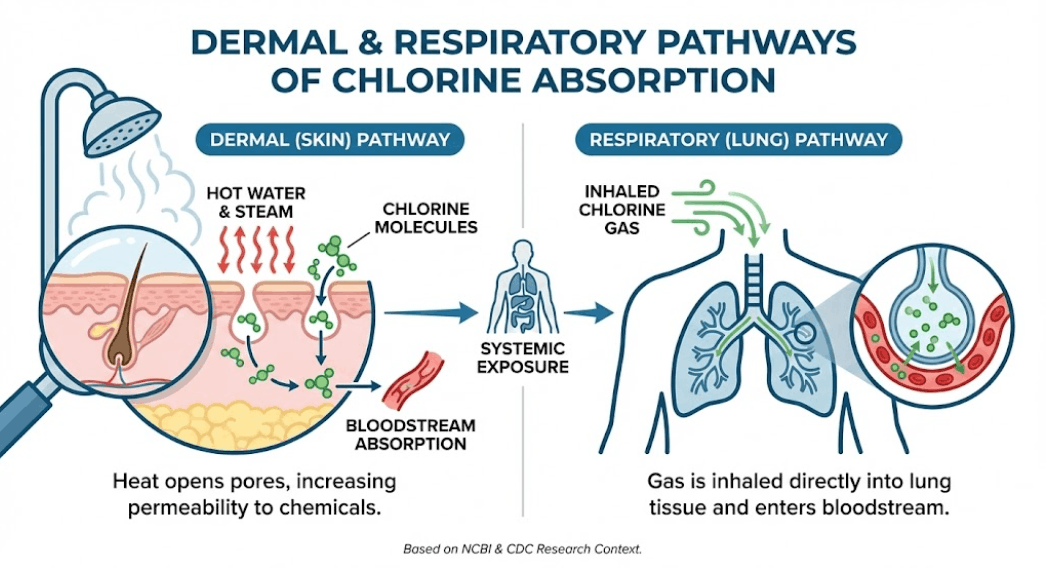 The "Invisible Cloud": The Dangers of Inhaling Chlorine in the Shower
Pool Day Survival Guide
Before you cannonball, rinse off in the shower (really, do it—it pre-wets your hair and skin, reducing how much chlorine they soak up). After swimming, use a swimmer’s shampoo with chelating agents, or just a diluted apple cider vinegar rinse to rebalance pH. And for crying out loud, don’t pee in the pool. Your fellow swimmers’ lungs will thank you.
Drinking Water: To Filter or Not?
If you’re a daily tap-water guzzler and worried about DBPs, a simple activated carbon filter (like a Brita or a faucet attachment) removes most chlorine taste and about 90% of byproducts. Bonus: your morning coffee will taste less like a chemistry experiment.
Eye & Skin SOS
After a swim, flush your eyes with sterile saline (not contact solution). For dry skin, layer on a ceramide-rich moisturizer right after patting dry. It locks in moisture and rebuilds that barrier chlorine just tried to dismantle.
Cultural & Fun Facts to Spice Up Your Water Chat
Did you know that chlorine was discovered in 1774 by Swedish chemist Carl Wilhelm Scheele, who thought it smelled like “royal water”? And royal it is—it’s the same godfather that keeps your pool from turning into a petri dish. Also, the first Olympic swimming pool to use chlorine was in 1912 (Stockholm Games), and swimmers still got typhoid. Yikes.
In Japan, people often use “chlorine-free” hot springs as a cultural remedy for skin ailments. Meanwhile, in the U.S., the average swimmer ingests about two teaspoons of pool water per session. That’s one salty, chemical-flavored gulp of fact for your next trivia night.
The Takeaway for Your Daily Life
Chlorine is a bit like that loud, slightly annoying neighbor who also happens to be a firefighter. You might roll your eyes at the noise, but you’re glad they’re on duty when things go wrong. You don’t have to fear it, but you can be smart about it.
Next time you take a sip from a tap or cannonball into a pool, take a second to appreciate the invisible battle happening—between cleanliness and chemistry, between safety and a little dryness. Then go rinse off with that vitamin C filter, slather on some lotion, and get on with your beautifully hydrated life.
