Best Way To Get Rid Of Hard Water Stains

Let’s be real: hard water stains are the uninvited guests of the domestic world. They show up unannounced, leave a chalky mess on your favorite glassware, and somehow make you...
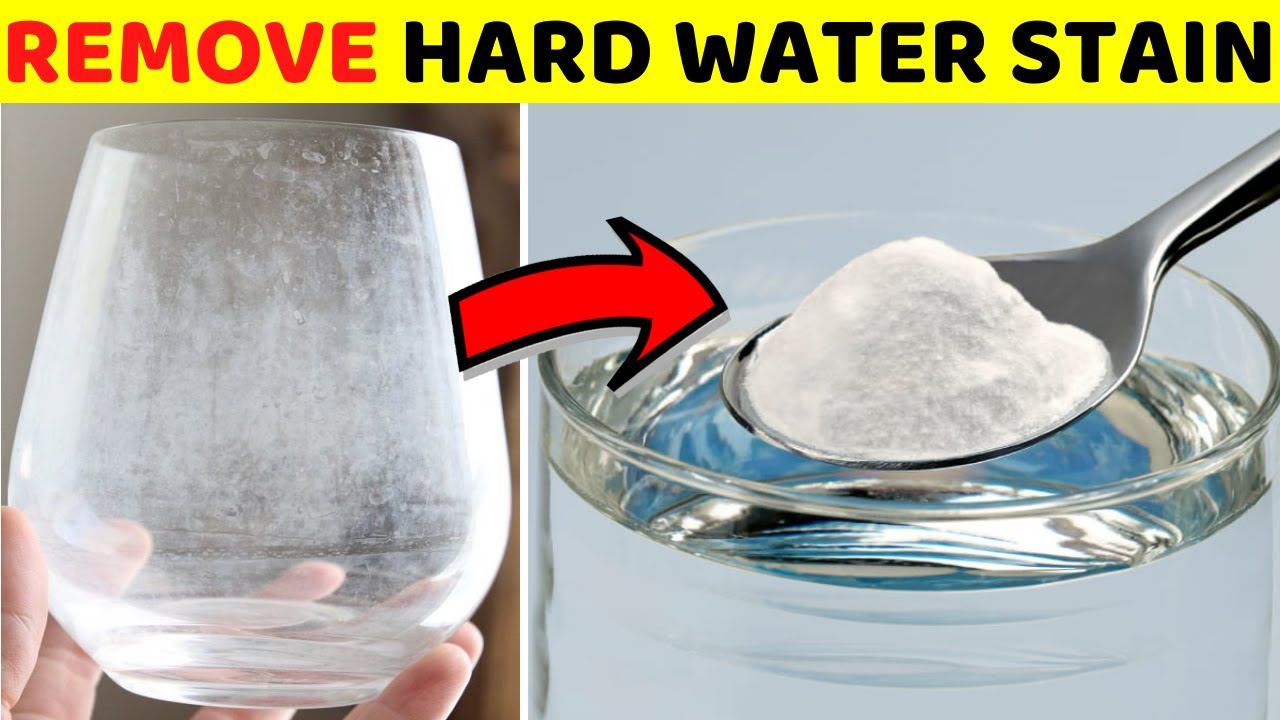
Let’s be real: hard water stains are the uninvited guests of the domestic world. They show up unannounced, leave a chalky mess on your favorite glassware, and somehow make your pristine shower look like it’s hosting a mineral convention. But before you declare war with harsh chemicals, take a breath. This is a battle you can win with a little science, a lot of ease, and zero elbow grease.
The Quiet Villain: What Is Hard Water?
First, a tiny truth bomb: hard water isn't dirty water. It’s simply water rich in calcium and magnesium—minerals that leach from the ground as it travels to your tap. Think of it as sparkling water’s less glamorous cousin, without the bubbles and with a serious grudge against glass.
These minerals leave behind a white, crusty film when water evaporates. It’s basically the ghost of a mineral deposit, haunting your faucets and shower doors. The good news? You don’t need a chemistry degree or a hazmat suit to banish them.
Must Read
In fact, your pantry already holds the solution. Vinegar and baking soda aren’t just for volcano science projects—they are the ultimate cleaning power couple.
The MVP: White Vinegar (Your New Best Friend)
White vinegar is the unsung hero of the cleaning world. Its mild acidity reacts with the alkaline minerals in hard water, literally dissolving the stains on contact. It’s like a gentle enzyme for your home, breaking down stubborn gunk without the drama.
Here’s the hack: Fill a spray bottle with equal parts white vinegar and warm water. Spritz your shower glass, faucets, or even your coffee pot generously. Let it sit for five to ten minutes—long enough for the vinegar to do its chemical magic, but short enough that you can scroll through your social feed.
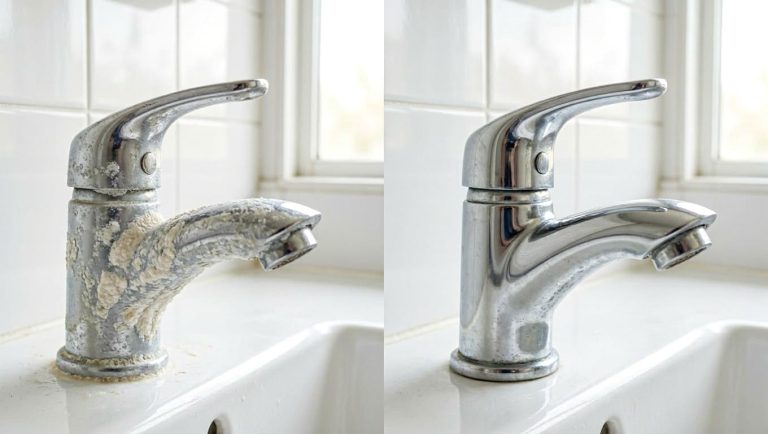 How to Get Rid of Hard Water Stains from Any Surface - Randy Lemmon
For especially stubborn stains, like those around a faucet base, soak a paper towel in straight vinegar and press it against the stain. Leave it for twenty minutes. It sounds like a spa treatment for your sink, and honestly, it kind of is.
The Baking Soda Boost
If vinegar is the lead actor, baking soda is the scene-stealing sidekick. While vinegar dissolves the mineral film, baking soda acts as a gentle abrasive to lift the residue away.
For a deep clean, make a thick paste of baking soda and a few drops of water. Rub it onto the stain with a soft cloth or an old toothbrush. Rinse with the vinegar spray and watch the fizzing reaction—it’s satisfying, non-toxic, and strangely therapeutic.
This duo works on everything: glass shower doors, stainless steel, tile, and even your favorite crystal vase. Just avoid using it on unsealed grout or natural stone like marble, as the acid can etch them.
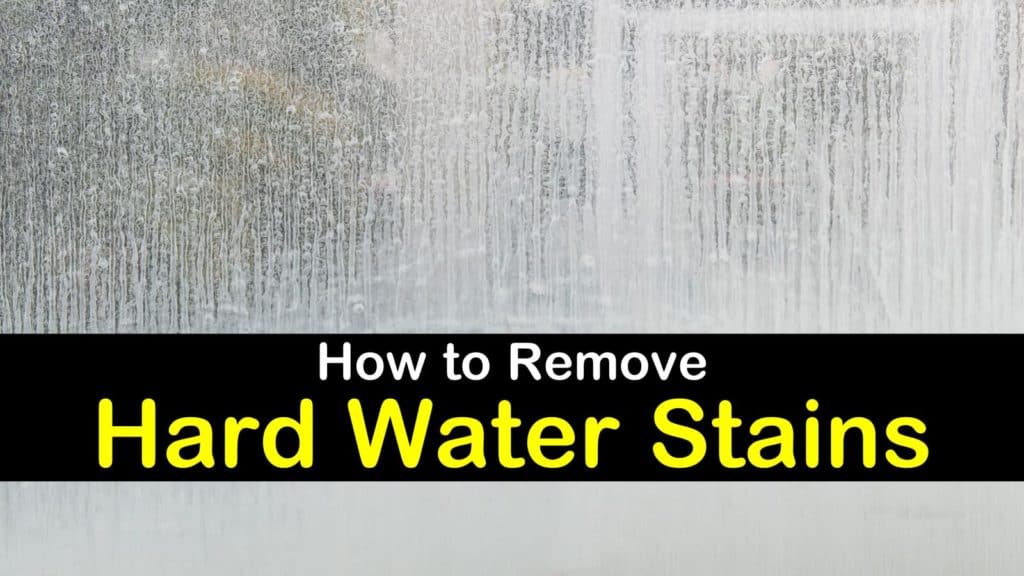 6 Clever Ways to Remove Hard Water Stains
Fun Fact: The Hard Water Hall of Fame
Did you know that over 85% of American homes have hard water? According to the U.S. Geological Survey, if you live in the Midwest or Southwest, you’re practically swimming in calcium. Meanwhile, regions like the Pacific Northwest enjoy "soft" water, where soap lathers like a dream and stains are a distant myth.
For a cultural reference, think of the ancient Romans, who built aqueducts that left behind massive mineral deposits called "travertine." They actually used that buildup to build the Colosseum. So, in a weird way, your hard water stains are connected to ancient architecture. You’re living history.
Pro Tips for a Spotless Future
Prevention is your secret weapon. After every shower, grab a squeegee and give your glass doors a quick swipe. It takes ten seconds, and it stops water from drying into those stubborn mineral polka dots. Do it religiously, and you’ll slash your deep-cleaning time in half.
 How To Get Rid Of Hard Water Spots On Plastic at Yolanda Cody blog
Citric acid is another unsung hero, especially for things like dishwashers. You can buy it in powder form at any grocery store. Run an empty dishwasher cycle with a tablespoon of citric acid in the detergent cup—it will remove hard water buildup from your machine’s internal parts and your glassware will sparkle like new.
For a quick fix on faucets, rub a halved lemon over the stain. The natural acidity gives you a fresh smell and instant shine. Plus, it makes your kitchen smell like a summer cocktail party.
The "No-Chemical" Alternative
If you want to go completely natural, try a pumice stone. Yes, the same thing you use for your feet. Wet the stone thoroughly, then gently rub it over stubborn mineral deposits on toilet bowls or ceramic sinks. It’s abrasive enough to remove scale but soft enough to not scratch the surface—a true multitasker.
Just keep it damp and use light pressure. Scrubbing too hard is like using a sledgehammer for a thumbtack. Patience is the key.
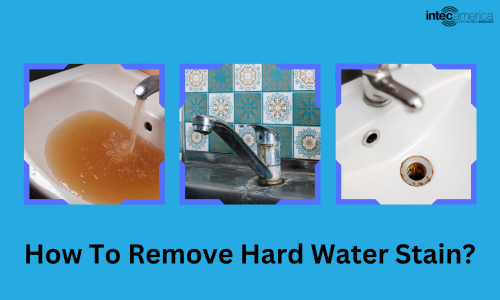 Will A Water Softener Remove Hard Water Stains
A Little Pop Culture Inspiration
Think of your cleaning routine like a scene from The Great British Bake Off. You don’t need to be perfect; you just need the right ingredients and a calm attitude. No one is judging your shower door with the same intensity as Paul Hollywood’s handshake.
Or channel your inner Marie Kondo: ask yourself if the stain sparks joy. If the answer is no, then gently but firmly show it the door with vinegar and a smile.
The Final Reflection: Cleaner Water, Clearer Mind
In the end, getting rid of hard water stains is less about perfection and more about rhythm. A little vinegar, a little patience, and a habit of wiping down surfaces—that’s all it takes. You’re not scrubbing away a flaw; you’re polishing a small victory for your day.
Life is full of buildup—minerals on glass, stress in our minds, clutter on our countertops. Taking a few minutes to dissolve one layer of gunk can feel surprisingly, almost meditatively, powerful. So go ahead: spray, wipe, and breathe. Your home, and your soul, deserve the clarity.
