Distilled And Deionized Water Difference

Let’s be honest: most of us don’t spend a lot of time thinking about water. We turn on the tap, fill a glass, and move on with our day. But then you go to buy a steam iron or...
Let’s be honest: most of us don’t spend a lot of time thinking about water. We turn on the tap, fill a glass, and move on with our day. But then you go to buy a steam iron or a car battery, and suddenly the label screams “distilled” or “deionized”. You stand there wondering: aren’t they just fancy words for “really clean water”? Well, yes and no. Let’s break it down like we’re chatting over coffee—no science degree required.
What’s the big deal about pure water?
Think of tap water like a friendly neighborhood potluck. It’s got a little bit of everything: minerals like calcium and magnesium, some chlorine (for safety), and maybe a dash of whatever’s in your pipes. It’s fine for drinking, but for certain jobs, that potluck gets messy. Distilled and deionized water are like the VIP after-party—everything’s stripped away, but they get there by different routes.
I once used tap water in my steam iron. Big mistake. White crusty dots sprayed all over my favorite shirt. That’s the minerals being rude. Distilled water would have saved that shirt.
Must Read
Distilled water: the boiled-down truth
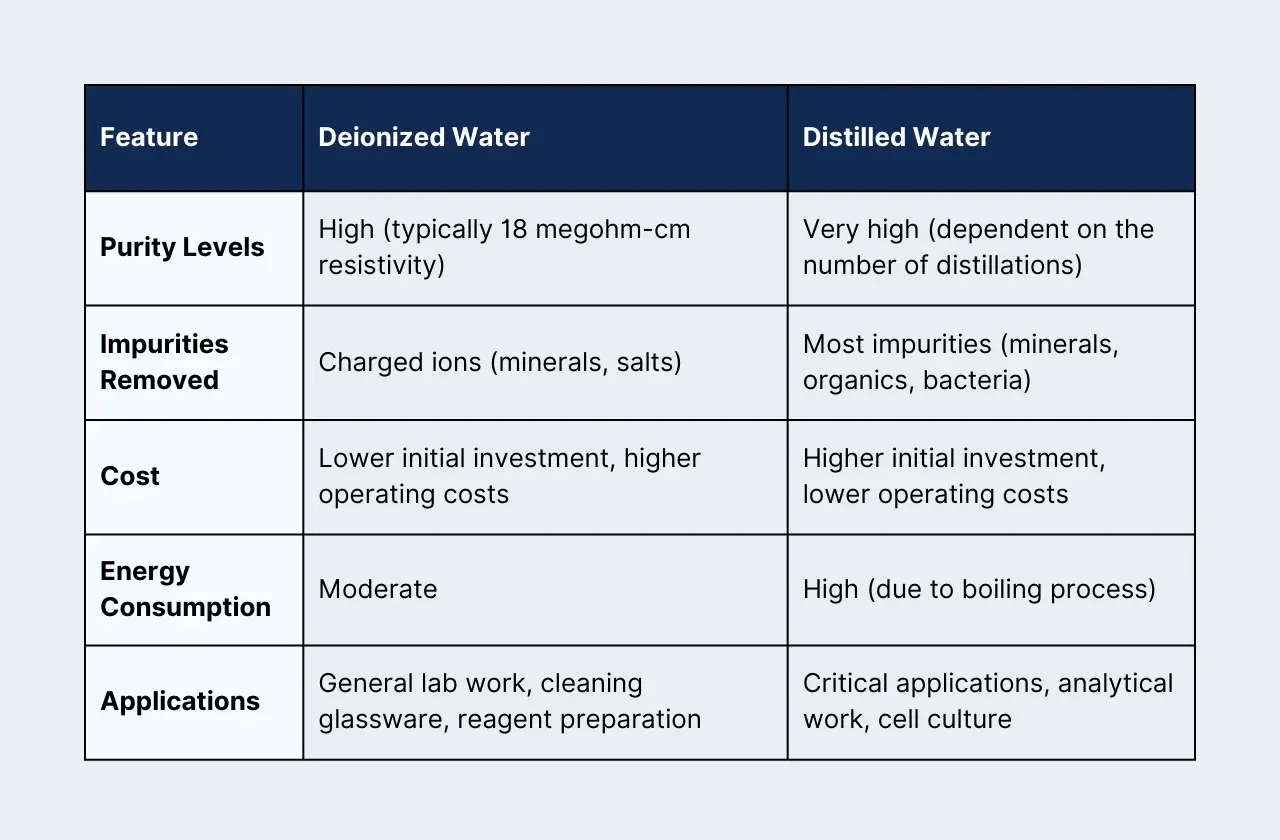
Distilled water is like making a good stew, but then stealing the steam. You boil water until it turns into vapor, leaving behind all the minerals, bacteria, and other gunk. Then you condense that vapor back into liquid. What’s left is almost completely pure H₂O—just water, no party crashers.
Here’s a fun story: my aunt once tried distilling water on her stove for a fish tank. She boiled it for an hour, collected a cup, and felt like a mad scientist. She learned that it works, but it’s slow. Distilled water is great for things like car batteries, medical equipment, and your trusty iron—anywhere you don’t want mineral buildup.
But here’s the catch: distilled water can taste a bit flat. That’s because the minerals we like for flavor (and trace nutrients) are gone. It’s like eating plain white rice—fine, but a little boring.
Deionized water: the magnet trick
Deionized water takes a different, slightly magical path. It doesn’t boil anything. Instead, it uses special resins—think of them as tiny, eager magnets—that yoink out charged mineral particles (called ions) from the water. Stuff like calcium, magnesium, and even the salt from softeners gets snatched away.
So if distilled water is “water that’s been steamed clean,” deionized is “water that’s been magnetically purified.” Science! The result is incredibly pure water—often even purer than distilled in terms of conductivity. That’s why labs use it for experiments and car washes use it to spot dry a car without leaving water marks.
I once watched a car detailing video where a guy used deionized water. He rinsed a black car and let it air dry. Zero spots. No towel needed. I was unreasonably excited about it.
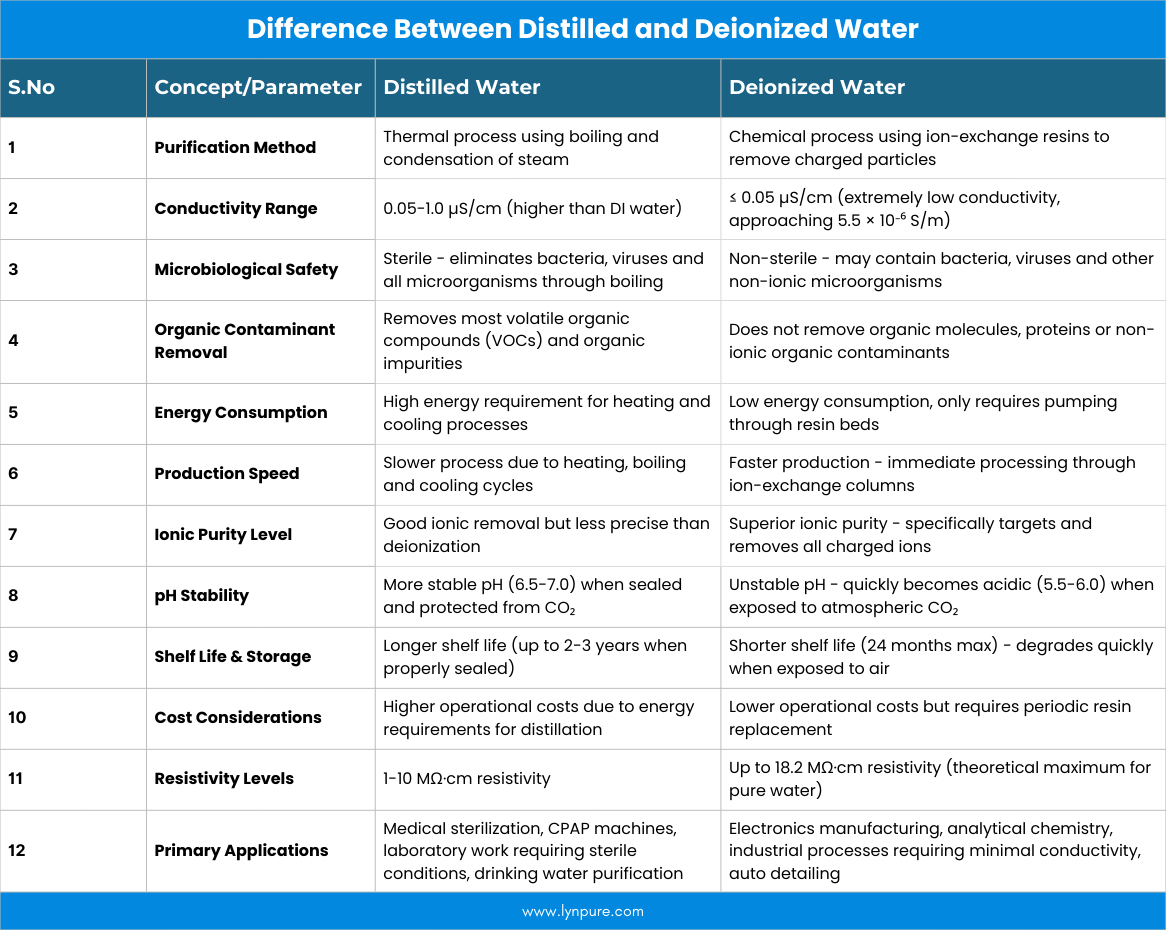 Distilled Water vs Deionized Water | Key Differences
Wait, so which one should I use?
Good question. Let’s get practical. For daily life, think of it like choosing between a Swiss Army knife and a scalpel. Distilled is your reliable everyday pure water—great for irons, humidifiers, CPAP machines, and drinking if you don’t mind the taste. Deionized is the specialist—used in laboratories, car washes, and industries where even a single speck of mineral can mess things up.
Here’s a little cheat sheet: need to clean a fish tank? Distilled is fine. Need to wash your dad’s vintage sports car? Deionized is the show-off choice. Are you drinking it? Honestly, tap water (or filtered) is usually better for your health because you want those minerals. Distilled or deionized long-term can actually leach minerals from your body—so don’t go all-in.
Why should you care in your everyday life?
Because water problems are sneaky. That white scale on your coffee maker? That’s the ghost of tap water minerals. Your houseplants looking sad? Some of them hate mineral buildup. Knowing the difference saves you money, time, and frustration. You can laugh when a friend says “distilled and deionized are the same thing” (they’re not), and you’ll know exactly what to grab at the store.
I remember buying deionized water once for a lab experiment, then absentmindedly using it to water my fern. The fern died. I learned that plants need minerals, too. Oops.
So next time you’re standing in the cleaning aisle, pick up that jug with confidence. Distilled for irons and humidifiers. Deionized for spot-free rinses and serious cleaning. And for you? Enjoy the tap water with a smile, knowing you’ve cracked the code. Clean water is cool, but knowing why is even cooler.
Now go steam that shirt without fear.
