Water Filtration System For Commercial Use

Picture this: a busy café on a Saturday morning. The barista, let’s call her Jen, is in the zone—pulling espresso, steaming milk, shouting orders. Then, she pours a shot that...

Picture this: a busy café on a Saturday morning. The barista, let’s call her Jen, is in the zone—pulling espresso, steaming milk, shouting orders. Then, she pours a shot that looks like rusty water. The customer’s face says it all. Jen’s dream of a perfect flat white? Dead on arrival.
That sad shot of espresso wasn’t her fault. It was the water. And if you run a commercial space—a restaurant, a brewery, an office—you’ve probably tasted this nightmare yourself. Water quality is the silent killer of your product, and a good filtration system is the only cure.
I know, I know. “Filtration system” sounds like something your dad would geek out over in the garage. But hold up—this isn’t about home faucets. We’re talking commercial grade: the kind that keeps your ice clear, your coffee bright, and your boilers from scaling into expensive paperweights.
Must Read
Why your tap water is secretly plotting against you
Think about what’s in your municipal water: chlorine, sediment, minerals like calcium and magnesium. That’s the stuff that leaves white crust on your espresso machine’s boiler—or worse, ruins the taste of your IPA. Hard water is a business expense you never asked for.
And here’s the kicker: your customers can taste the difference. Ever had a soda from a place that tastes vaguely like pool water? Yeah, that’s poor filtration. You are serving the city’s pipes, not your brand.
I once visited a buddy’s taco joint. His margaritas were famous—until he switched to a cheaper water filter. The next week, customers asked, “Did you change the recipe?” He hadn’t. The water had. He fixed it overnight; his reviews bounced back in a day.
The big three: what your system needs to handle
Let’s get practical. A commercial system isn’t a one-size-fits-all deal. You’ve got three main enemies: particles (sand, rust), chemicals (chlorine, chloramine), and scale (mineral buildup). Each one needs a different weapon.
First, a sediment filter catches the gunk. Think of it as the bouncer at the club—no dirt gets past. Then, a carbon block or activated carbon filter wrestles the chlorine. That’s the stuff that makes your tea taste flat. Finally, a water softener or reverse osmosis (RO) system beats the scale monsters.
Reverse osmosis? It’s the heavy artillery. It forces water through a membrane so tight, only H₂O molecules get through. Everything else—minerals, bacteria, weird flavors—gets flushed. Your espresso machine will thank you with a long, scaling-free life. (And your accountant will thank you for the fewer repair bills.)
The coffee shop trap (and the brewery salvation)
If you own a café, listen up. Espresso is about 98% water. One percent of bad water ruins ninety-eight percent of your drink. High-end shops don’t just buy fancy beans; they buy whole-house commercial filtration systems. They’re not being fussy—they’re being smart.
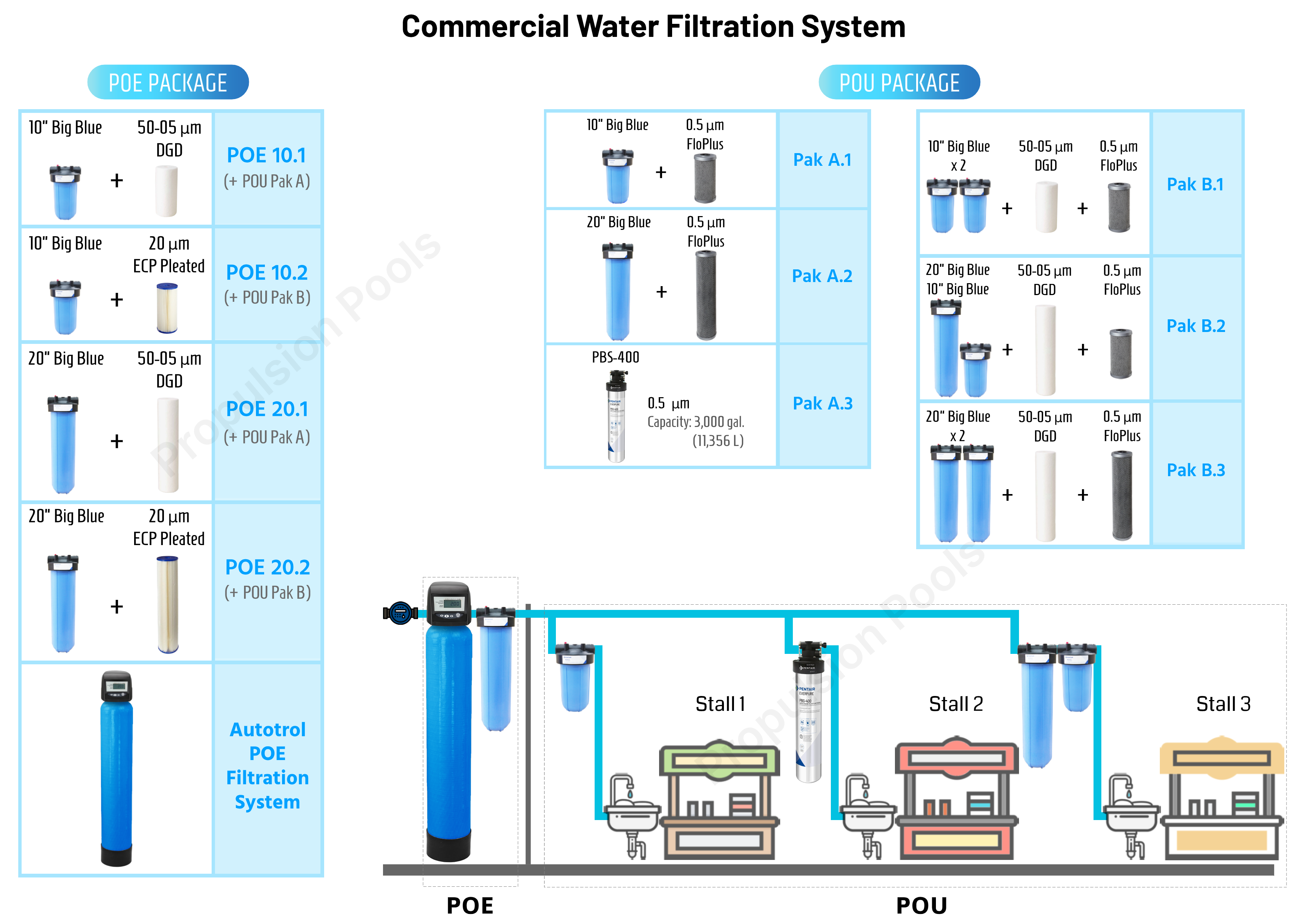 Water Filtration System For Commercial Use at Charlotte Mcgowan blog
Breweries, on the other hand, need to strip everything out and then rebuild the mineral profile. That’s right: they filter water to blank slate, then add back specific minerals for each style—like a mad scientist for beer. Without commercial filtration, your IPA tastes like a puddle.
And for offices? You don’t need espresso-grade water. But you do need a system that kills bacteria and removes the “swimming pool” smell from the cooler. Your employees will drink more water. That means less soda, less sugar, and a healthier team. (Not to mention fewer complaints about the tap tasting like a garden hose.)
The hidden ROI: equipment, energy, and your sanity
Here’s where the irony hits. People think commercial filtration is an extra cost. In reality, it’s a money saver. Scale builds up in pipes, heaters, and boilers. That crust acts like insulation—meaning your water heater works harder, uses more energy, and dies younger.
A decent commercial RO system can extend your equipment’s lifespan by years. Imagine not replacing your espresso machine every three years. Dreamy, right? Even your ice machine will stop looking like a snow globe full of chalk dust.
Plus, you dodge the “ick” factor. Have you ever watched a barista dump a batch of coffee because the water tasted off? That’s lost product, lost profit, and lost face. A filter pays for itself the first time you don’t throw away a gallon of wasted brew.
What to look for—without the nosebleed
You don’t need a degree in chemical engineering. First, check your water hardness (call your city utility or buy a cheap test kit). Second, decide your volume: a tiny deli needs less flow than a busy hotel kitchen. Look for systems rated for gallons per minute that match your peak usage.
And please—do not ignore maintenance. Filters get clogged. Membranes wear out. A system you never change is like a car with flat tires; it does nothing. Most commercial systems come with a service plan. Pay for it. Your future self will high-five you.
I’ll leave you with this: the next time you sip a perfect iced coffee or a crisp lager, think about that water. It didn’t just appear clear. It got a little help. And the person who paid for that help? They’re the real hero—running a business that tastes like intention, not tap water.
