Is Deionized Water Same As Distilled Water

Have you ever stood in the grocery aisle, staring at a bottle of distilled water and wondering what it actually does? Or maybe you’ve heard someone say, “Just use deionized wa...
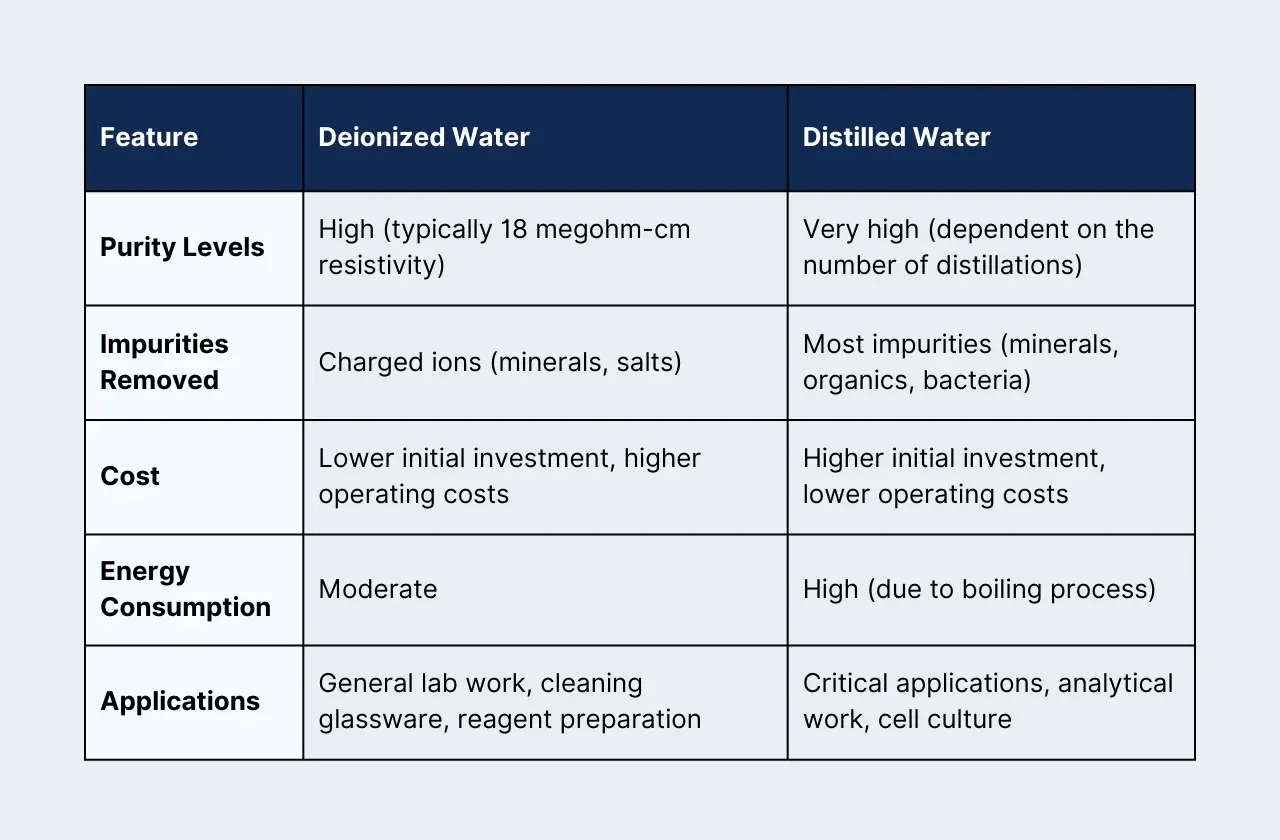
Have you ever stood in the grocery aisle, staring at a bottle of distilled water and wondering what it actually does? Or maybe you’ve heard someone say, “Just use deionized water for that,” and you nodded along, secretly panicking. Let’s clear this up once and for all, because trust me—this is way more fun than it sounds.
Spoiler alert: they are not the same thing.
But don’t worry, you’re not alone in the confusion. Distilled water and deionized water are like identical twins that grew up in different countries. They both start as regular tap water, but they go through completely different purification processes.
Distilled water is made by boiling water into steam, then condensing that steam back into liquid. Think of it as the water’s own little spa day—it evaporates, leaves all its impurities behind, and comes out squeaky clean.
Must Read
Deionized water, on the other hand, doesn’t boil at all. Instead, it gets zapped through special resins that grab onto dissolved minerals like calcium, magnesium, and sodium. It’s like a high-tech bouncer kicking out the party crashers.
So, which one is better for you?
Here’s the kicker: neither is really meant for drinking every day. Distilled water tastes flat because it lacks those tiny minerals that make water feel, well, watery. And deionized water can be even worse—it’s so pure it can actually leach minerals from your body if you chug it.
But don’t let that scare you off! These waters are absolute superstars for other things. Distilled water is a rockstar for steam irons, humidifiers, and car batteries because it leaves zero mineral buildup. Deionized water is the hero of laboratories, car washes (for that spotless shine), and even some cooling systems.
Fun fact: you can literally make your own distilled water at home with a pot and a lid. Feel like a mad scientist yet? No judgment—it’s awesome.
Why does this matter in your everyday life?
Imagine you’re cleaning your favorite cast-iron skillet or your fancy espresso machine. Using tap water can leave stubborn white spots from calcium deposits. Using distilled water? Zero spots, zero battle. It’s like giving your appliances a spa weekend.
Or picture this: you’re making a homemade herbal tincture or a delicate facial toner. Tap water has chlorine and fluoride that can mess with your ingredients. Deionized water is a clean slate—it won’t react with anything, making your DIY projects more predictable and powerful.
Even your houseplants can vibe with this knowledge. Some picky plants (like carnivorous ones) hate tap water. A spritz of distilled water? They’ll practically high-five you.
 Distilled Water Vs. Deionized Water — Microbe Online
But here’s the real fun: you get to choose.
Now you know the difference, so you can feel like an absolute genius at the water aisle. You can tell your friends, “Actually, distilled is for steam, deionized is for lab experiments.” Watch their jaws drop. You’re basically a hydration detective now.
And honestly, learning this tiny, quirky fact is like unlocking a secret level in the game of adulting. Suddenly, you’re not just buying water—you’re strategically selecting water for maximum performance in your life.
What about the environment? Can we be smart and green?
Both processes use energy—distillation requires heat, deionization uses chemicals and resins. If you’re buying plastic bottles of either, you’re adding to the pile. But here’s the uplifting part: you can make small changes. Use a countertop distiller or a home deionization filter. Even better, use distilled water sparingly for specific tasks, not for your daily water bottle.
Remember: progress, not perfection. A little knowledge gives you power to make one small better choice today.
The inspiring takeaway you didn’t know you needed
Here’s the beautiful truth: distilled water and deionized water are both examples of how we can take something ordinary—tap water—and refine it into something extraordinary. They show that purification is possible. And if water can be transformed by a little heat or a little chemistry, so can you.
You don’t need to be perfectly pure to be useful. You just need to know your strengths. Distilled is great for steam; deionized is great for precision. You are great for showing up, asking questions, and letting yourself be curious.
So go ahead—grab a bottle, run an experiment, or just smile next time you see the water aisle. You’ve got the inside scoop. And that, my friend, is pure inspiration in a world that’s full of cloudy confusion. Cheers to learning something new—and to the water that makes your life sparkle.
