Is Distilled Water The Same As Reverse Osmosis

You know that moment when you’re standing in the grocery aisle, staring at two bottles of water—one labeled “Distilled,” the other “Reverse Osmosis”—and you feel like you’re p...
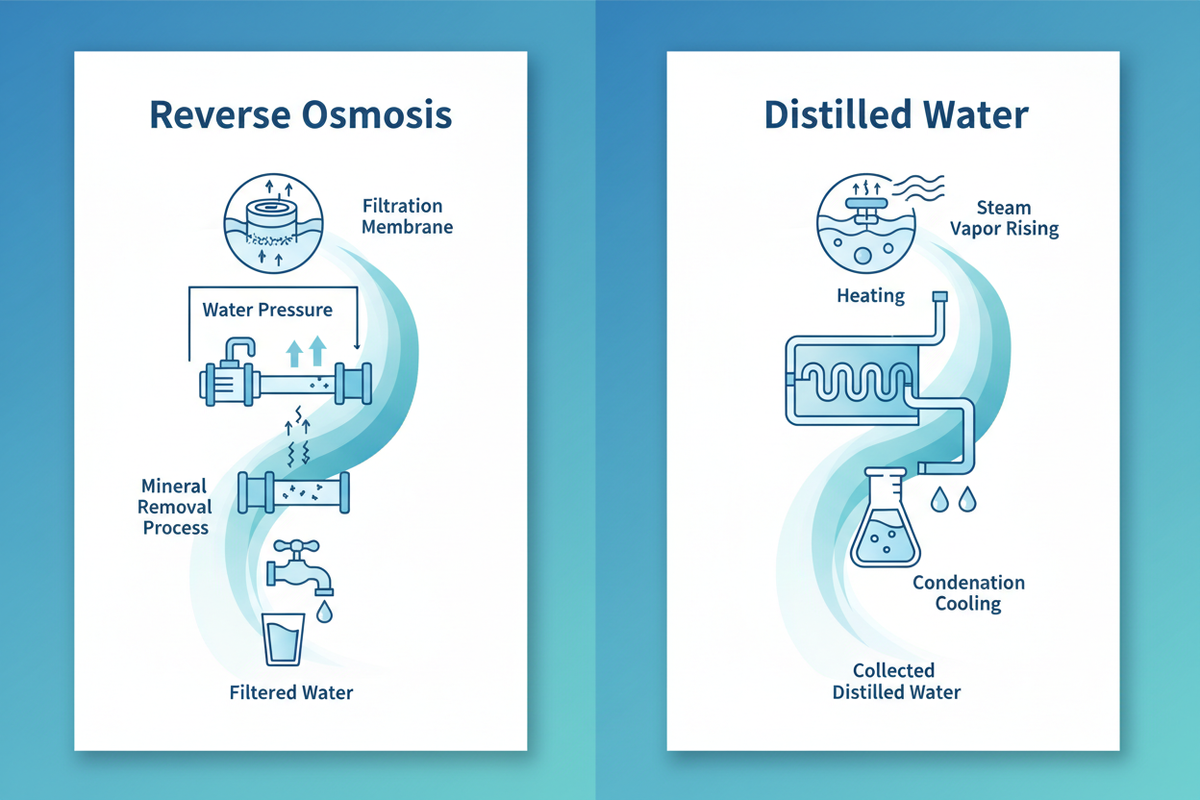
You know that moment when you’re standing in the grocery aisle, staring at two bottles of water—one labeled “Distilled,” the other “Reverse Osmosis”—and you feel like you’re picking between an accountant and a software engineer? You’re not alone. We’ve all been there, squinting at fancy words, wondering if we’re being upsold on something that’s literally the same as tap water from a singing mountain. Spoiler alert: they’re not the same, but they’re both weird cousins in the water family.
Let’s start with the basics, because nobody likes a science lecture that feels like homework. Distilled water is the old-school purifier. Imagine making tea, but instead of enjoying the flavor, you’re trapping all the flavors in a pot and drinking only the steam. That’s distillation: you boil water, catch the vapor, and let it cool into a pure, painfully bland liquid. It’s like the water version of a monk who gave up pizza forever.
Reverse Osmosis: The Fancy Filter
Reverse osmosis (RO) is the new kid on the block—the one with the cool gadgets and a complicated name you pretend to understand. It pushes water through a semi-permeable membrane with teeny-tiny pores, so small that only water molecules can slip through. Think of it as the bouncer at an exclusive club: “Sorry, minerals, you’re not on the list. Nitrates? Out. Bacteria? You’re not even getting near the door.”
Must Read
Here’s the funny thing: when you taste distilled water, your brain goes, “Is this… sadness in liquid form?” It’s flat, lifeless, like drinking a hug from a robot. Reverse osmosis water, on the other hand, still has a hint of personality—it’s cleaner than tap, but not so stripped that it makes your tongue question its existence. They’re both “pure,” but distilled is the supermodel who never eats dessert, while RO is the practical friend who still enjoys a slice of cake.
Everyday Life, Meet Your Water
Picture this: you’re making coffee with distilled water. Your morning brew will taste empty, like the ghost of a coffee bean. Baristas hate distilled water because it extracts flavor too aggressively, leaving you with a cup that tastes like a sad apology. Now use RO water—your coffee will be decent, maybe even good, because RO water keeps a whisper of minerals that make flavors sing. It’s the difference between listening to a karaoke version of your favorite song and the actual band.
But here’s where it gets personal. Remember when you borrowed a friend’s humidifier and it spat white dust everywhere? That’s tap water’s minerals turning into drywall confetti. Distilled water fixes that instantly—it’s the superhero for steam irons, aquariums, and CPAP machines. Reverse osmosis water? Good for drinking, not so great for your iron, because it still leaves a little residue. You know, the kind of person who shows up to a black-tie event in jeans—functional, but not perfect for the job.
The Zen of Pure Water
So, is one “better”? That’s like asking if a cat is better than a dog. It depends on your vibe. If you need water for lab experiments or a fancy espresso machine that costs more than your laptop, get distilled. It’s the Fran Tarkenton of water—totally neutral, never offends anyone. But for drinking every day? RO water wins. It’s the chilled-out cousin who remembers your birthday and brings guacamole.
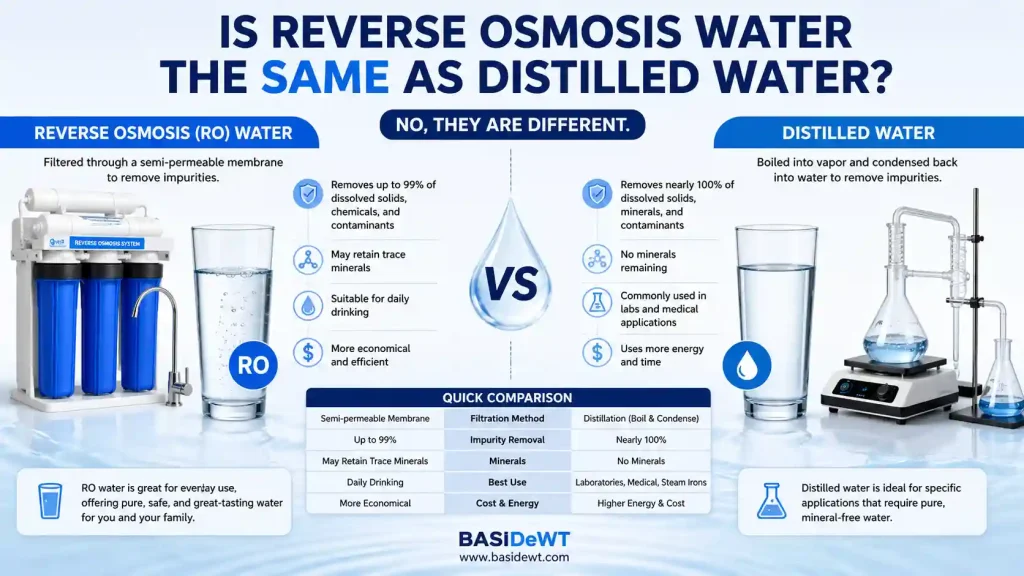 Is Reverse Osmosis Water the Same as Distilled Water? - Basidewt-Best
Let’s be real: most of us are just trying to stay hydrated without thinking too hard. I once filled a car battery with spring water because I was in a rush. Did it work? No. Did I feel dumb? Yes. That’s the kind of mistake that teaches you distilled water is for machines, RO is for humans, and tap is for washing your car. Unless you live in Flint, then stick to the fancy stuff.
The Taste Test (You Know You Want To)
I tried a blind taste test with my buddy Dave. He swore he could always tell the difference. He guessed wrong four times in a row, then claimed his palate was “off because of the tacos.” Truth is, most people can’t pick out distilled vs. RO in a glass—unless you’re a sommelier for water, which isn’t a thing, but should be. The real giveaway is how they feel in your mouth: distilled water is slippery, almost like it’s avoiding your taste buds; RO water is crisp, like a gentle high-five from a waterfall.
In the end, neither is magical. They’re just H2O that’s been through different mazes. Distilled water is the introvert who moved to a cabin to be alone. Reverse osmosis is the extrovert who still hangs out with friends but screens their calls. Choose based on what you’re doing: fish tank? Distilled. Hydration? RO. Impressing your thirsty in-laws? Just add a lemon slice to whatever you have and smile.
And if you’re ever lost, remember: you can make distilled water at home by boiling a pot with a lid—and you can make RO water by spending a lot of money on a fancy filter. Both are fine. Neither will turn you into a superhero. But hey, at least now you won’t stare blankly at the grocery shelf, feeling like you’re choosing between a ghost and a robot. You’ll nod, grab the one that matches your vibe, and walk away knowing you’re slightly less confused than you were ten minutes ago.
