Crystal Springs Bottled Water Consumables Footprint

Let’s talk about Crystal Springs water. You know, the stuff in those big blue jugs that show up at your office like a hydrated messiah. We all love a cold sip, right? But have...
Let’s talk about Crystal Springs water. You know, the stuff in those big blue jugs that show up at your office like a hydrated messiah. We all love a cold sip, right? But have you ever wondered what kind of environmental trail that bottle leaves behind? Buckle up, because the footprint is funnier—and weirder—than you think.
The Jug That Keeps Coming Back
First, the good news: Crystal Springs jugs are reusable. They’re not those flimsy single-use plastic bottles that haunt sea turtles in their dreams. Each 3- or 5-gallon jug gets washed, sterilized, and refilled up to 40 times before it gets retired.
That’s like giving a plastic bottle 40 lives. It’s the feline of the water world—minus the shedding and the midnight zoomies. But here’s the kicker: eventually, that jug gets recycled into things like carpet fibers or park benches. So your water bottle might become a seat for a pigeon. Fancy.
Must Read
The Truck That Brings It to You
Now, let’s talk about the delivery truck. Crystal Springs operates a fleet of those boxy vans that smell faintly of chlorine and ambition. They rumble through your neighborhood, burning diesel, to bring you that crisp, clear hydration.
Here’s the joke: if you live on a steep hill like I do, that truck’s carbon footprint looks like Bigfoot after a donut binge. In fact, a typical delivery route can emit as much CO2 as a small herd of cows burping for a week. Not great, but not apocalyptic either—especially compared to shipping tiny water bottles from Fiji.
Surprising fact: Crystal Springs’ parent company, DS Services, uses route optimization software to save fuel. That’s right: a computer decides the least-polluting path to your FIJI. It’s like GPS, but with a guilty conscience.
The Bottled Water Math
Let’s do the bizarre math. One Crystal Springs jug (5 gallons) replaces about 40 single-use plastic bottles of the kind you buy at the gas station. That’s 40 bottles that never get made, filled, or tossed into a landfill to weep.
So, if you’re a heavy water drinker—or you live in a house with teenagers who think hydration is a sport—that jug is a hero. Plastic bottles take over 450 years to decompose. Your Crystal Springs jug? It’s getting a second life as a park bench dressing room for your cat. You’re welcome, Earth.
What About the Water Itself?
Now, the source. Crystal Springs water comes from springs in places like Florida and Maine. That means they truck water from a natural spring to your door. You might think, “Isn’t that a bit like bringing snow to a polar bear?” Well, yes.
But here’s the punchline: compared to the global bottled water industry, which moves water from, say, Fiji to Los Angeles—a trip that burns more fuel than a rocket launch—Crystal Springs is local-ish. Their average delivery distance is under 50 miles. That’s like walking your dog to the park, if your dog ran on diesel and weighed 10,000 pounds.
Still, the water itself is just… water. It’s not magic. It’s not from a unicorn’s tear. But they filter it, ozone-treat it, and make it taste like victory in a cup.
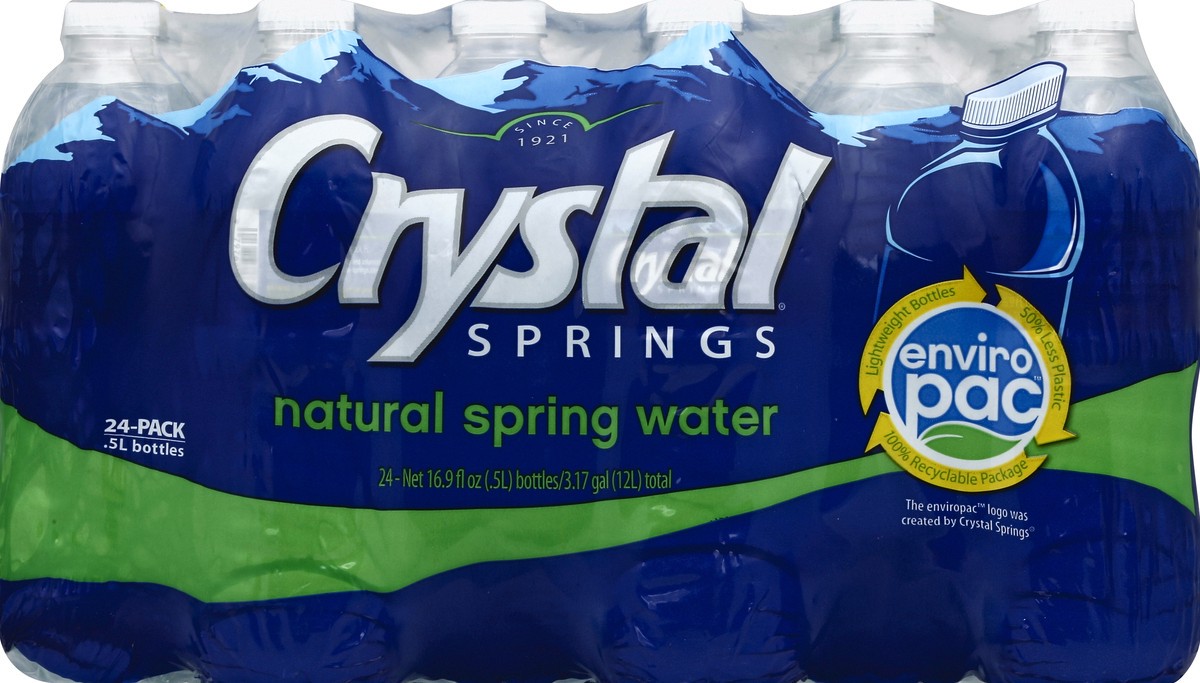 Crystal Springs Natural Spring Water 24 ct | shipt
The Plastic on Top
Let’s get small. Ever notice those plastic caps and the little shrink-wrap around the jug’s neck? Yeah, those are single-use. They’re the gateway drug of the plastic world.
Most caps are a #5 plastic, which is a pain to recycle. They often end up in the “maybe” pile at your local facility, where they eye each other nervously. Crystal Springs has started using lighter caps to reduce waste, but still—those little suckers are basically the popcorn kernel of the environmental mess: tiny, annoying, and they get stuck in everything.
The Energy to Keep It Cold
Here’s a fact that will make you snort-laugh: up to 30% of the energy used by bottled water actually comes from keeping it cold. Your office water cooler? It’s basically a mini refrigerator that hums all day like a hungry robot.
Your home cooler? Same deal. That thing is sucking electricity to keep your water at a crisp 45°F while you’re at work. It’s like having a tiny, thirsty friend who demands to be plugged in 24/7. But hey, cold water is non-negotiable.
Pro tip: Unplug it on weekends. You’ll save a few cents and feel like a heroic energy ninja.
The Big Picture
So, what’s the verdict? Crystal Springs has a footprint—it’s not a sandal, it’s a boot. The jugs are durable, the delivery is moderately efficient, and the water is tasty. But it’s still water that had to be pumped, trucked, cooled, and capped.
Compared to tap water? Tap is the barefoot champion of the world—zero truck, zero jug, zero drama. But if you hate the taste of your local tap (looking at you, places with chlorine perfume), Crystal Springs is a reasonable, slightly ridiculous compromise.
At the end of the day, you’re not saving the planet by drinking from a blue jug. But you’re not burning it down either. You’re just… hydrated with a guilty smile. And that’s okay. Now, pass me a cup. I’m thirsty.
