Hm Digital Tds-3 Handheld Digital Tds & Temperature Meter/monitor

You know that moment when you’re in a café, staring at the barista pour filtered water into a third-wave pour-over, and you wonder: Is this really worth the extra two bucks? E...
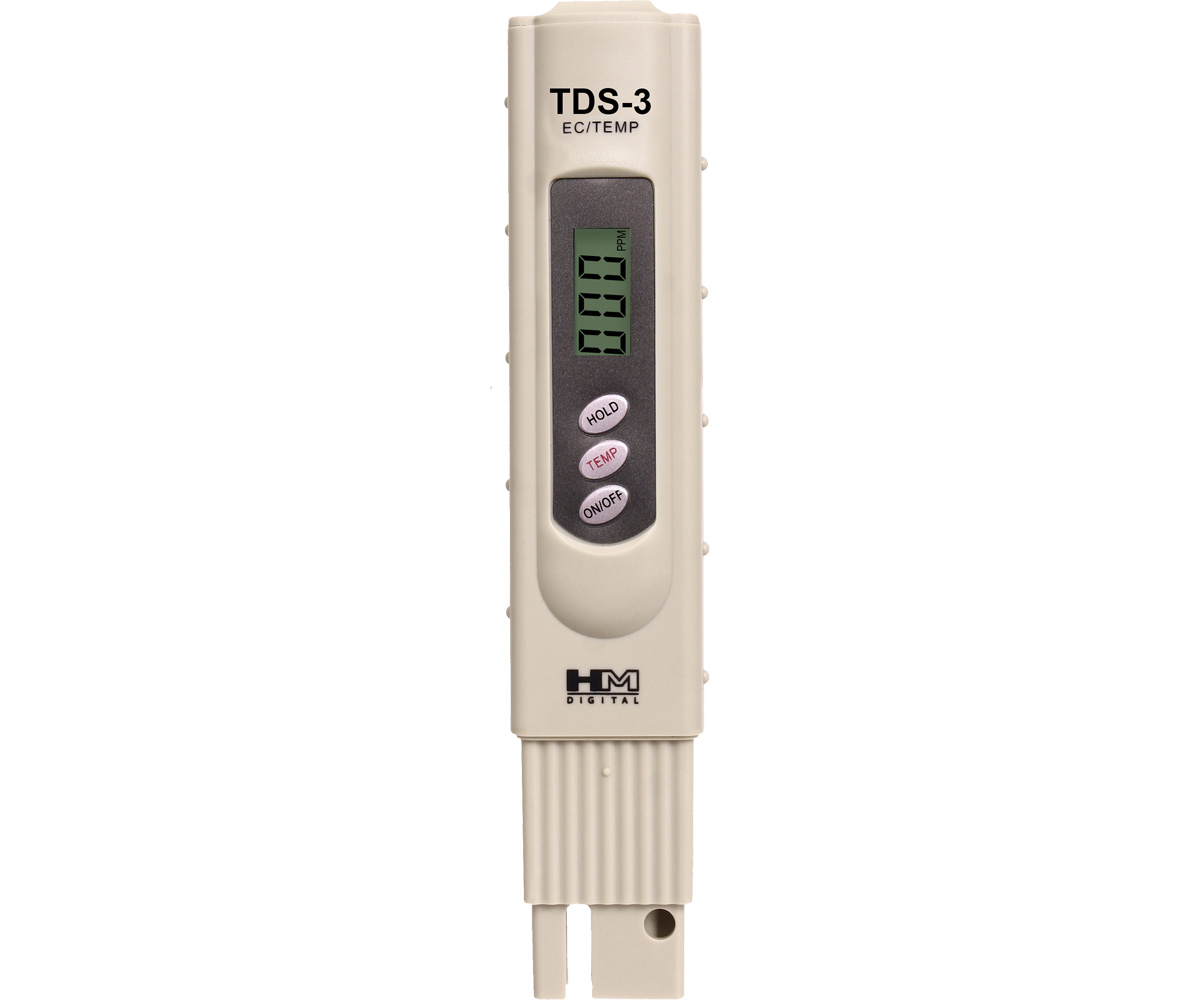
You know that moment when you’re in a café, staring at the barista pour filtered water into a third-wave pour-over, and you wonder: Is this really worth the extra two bucks? Enter the HM Digital TDS-3—a pocket-sized, no-nonsense gadget that turns you from a passive water drinker into a liquid detective. It measures Total Dissolved Solids (TDS) and temperature, which is basically the secret sauce for knowing what’s actually in your glass.
What’s a TDS, and Why Should You Care?
Think of TDS as the invisible fingerprint of your water. It’s the sum of all dissolved minerals, salts, and organic matter—good or bad—floating in that H₂O. The TDS-3 gives you a number, typically from 0 to 999 ppm, and suddenly you’re not just drinking; you’re analyzing.
A reading of 0-50 ppm? That’s practically rain, or what you’d get from a fancy Reverse Osmosis system. A number around 150-250 ppm is your standard tap water—mineral-rich, often quite palatable. Anything above 500 ppm might start tasting a little earthy, like it just wrestled a rock.
Must Read
It’s not about good vs. evil water; it’s about context. A high TDS isn’t automatically dangerous—just means you’re drinking liquid geology.
The Device That Thinks It’s a Pocket Knife
The HM Digital TDS-3 is about the size of a thick pen or a very optimistic thermometer. You dip the tip into your water, press a button, and in about two seconds, you get a digital readout. It’s like a Magic 8-Ball, but instead of vague life advice, it tells you your aquarium is fine for your betta fish.
It also measures temperature—a surprisingly critical feature. Cold water holds more dissolved gas and can feel crisp; warm water often tastes flatter and reveals hidden flavors. The TDS-3 gives you both, which is like having a sensory upgrade for your tongue.
Bonus: it auto-locks the reading, so you don’t have to hold it in a cold glass of water while you fumble for your phone. That’s design thinking you can actually use.
How to Use It Like a Pro (And Not a Nerd)
First, fill a clean glass with the water you want to test. Don’t use a metal cup—it can mess with the conductivity readings. Dip the TDS-3’s prongs into the water about an inch deep, and gently stir for a moment to remove any bubbles. Press the “HOLD” button, and you’re done.
Rinse the probe with distilled water between tests—nobody wants yesterday’s coffee grounds messing with today’s mineral profile. The device comes with a little battery and a calibration screw, but honestly, you can use it out of the box for months before needing a tweak.
Here’s a fun fact: the TDS-3’s temperature sensor is accurate to within ±0.3°C. That’s better than most kitchen thermometers. Use it to check your hot tub, your plant’s watering can, or even your baby’s bathwater—just remember to rinse it well.
Cultural Watertable: From Sake to Sushi
In Japan, water quality is obsessively measured, especially for sake brewing where soft water produces delicate, floral flavors. In Italy, baristas argue over TDS for espresso because hard water can kill crema. The TDS-3 puts you in that conversation—no certification required.
Think about it: when you order a flight of craft beers, each one has a specific mineral profile. A pale ale from the Rocky Mountains tastes different from a pilsner brewed with low-TDS spring water. Your TDS-3 can reverse-engineer that flavor by telling you if your home tap is closer to Portland or Prague.
 Buy HM DigitalTDS-3 Handheld TDS Meter with Carrying Case, 0-9990 ppm
It’s also a secret weapon for travelers. Test the tap water in a new Airbnb or hotel. If the TDS is over 600 ppm, maybe stick to bottled—not because it’s unsafe, but because the kitchen faucet might taste like a mountain stream that’s been through a gravel factory.
Practical Tips for the Everyday Wizard
Use the TDS-3 to check your water filter’s effectiveness. Test the tap water, then test the filtered water. A drop of 70% or more means your filter is doing its job. If the numbers look the same, it’s time to replace that Brita cartridge—stat.
For aquarium nerds (and you know who you are), this is a lifesaver. Freshwater fish like specific TDS ranges, and the TDS-3 keeps you from accidentally creating a tiny ocean for your angelfish. The temperature readout helps you avoid shocking them during water changes—those little guys are drama queens about temperature swings.
Another fun fact: the TDS-3 can test the salinity of brine for pickling or salt-curing. Yes, it’s designed for water, but it reads the total dissolved solids, so it works for salt solutions. You can literally verify your pickles’ scientific accuracy.
The Un-Boring Numbers Game
Here’s where it gets meta: the TDS-3 doesn’t tell you what’s in the water—just how much stuff is floating around. That means a reading of 200 ppm could be delicious mineral water or slightly muddy puddle juice. You still need your nose and common sense. But it gives you a starting point for curiosity.
I’ve tested my tap water (around 85 ppm) next to a bottle of Evian (304 ppm) and felt like I’d cracked a code. The Evian is high because it’s full of calcium and magnesium—good for you, but not for making fluffy bread. Low TDS water is better for dough hydration. True story: professional bakers argue about this.
And yes, you can test your wine. A glass of Chianti comes in around 2500 ppm—which is just dissolved sugars, acids, and alcohol. The TDS-3 will register it, and you’ll feel like a sommelier with a science degree.
Reflection: Water, the Quiet Foundation
Using the TDS-3 for a week, you start noticing something: water isn’t boring. It’s a variable, a character, a quiet actor in your morning coffee, your afternoon tea, your aquarium’s ecosystem, and even your air conditioner’s steam. We think of it as a blank canvas, but it’s actually a landscape.
That little handheld meter transforms a mundane chore—filling a glass, testing a filter—into a tiny experiment. It teaches you that the most ordinary things are layered with complexity. Maybe we can’t control the chaos of a Tuesday, but we can know exactly what’s in our water. And for a device that costs less than a dinner out, that’s a pretty profound upgrade to daily life.
So go ahead, dip it in your fish tank, your bottled water, your melting ice cubes. The TDS-3 doesn’t judge—it just reports. And honestly, that’s the most chill thing you can ask for on a Tuesday afternoon.
