How To Remove Fluoride From Water At Home

Let’s be honest—most of us don't spend our weekends dreaming about water chemistry. But you know what we do care about? A good night’s sleep, a happy gut, and knowing what’s i...

Let’s be honest—most of us don't spend our weekends dreaming about water chemistry. But you know what we do care about? A good night’s sleep, a happy gut, and knowing what’s in the stuff we drink every single day. That’s why it’s time to talk about fluoride and how to kick it out of your tap water at home.
So, why should you care about fluoride?
For decades, we were told fluoride was a hero for our teeth. And hey, a little dab of toothpaste? Totally fine. But when you’re accidentally gulping it down with every glass of water, the story changes. Some folks find their bones get achy, their thyroid gets sluggish, or they just feel a bit “off.”
It’s like adding salt to your coffee—a little pinch in the right place is fine, but a whole spoonful ruins the whole experience. You don’t need a conspiracy theory to want a choice. You just want clean, neutral water that lets your body do its thing.
Must Read
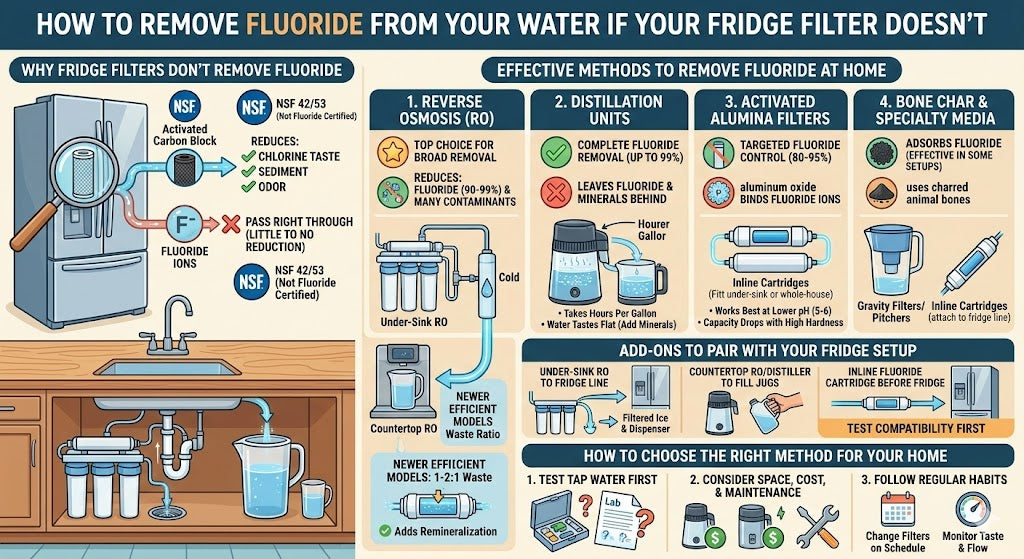
Method #1: The trusty countertop distiller
Think of a distiller as a tiny, hardworking cloud maker for your kitchen counter. It boils water until it turns into steam, leaving all the fluoride (and heavy metals) behind like bad party guests. Then it cools that steam back into pure, liquid gold.
I remember my neighbor Carol bought one after her dentist warned her about too much fluoride. She called it her “water whisperer.” She swears her morning tea tastes crisper and her kettle has zero scale buildup. The catch? It needs a little electricity, and it hums softly—like a friendly refrigerator.
Method #2: Reverse osmosis under the sink
This is the big-league option. Reverse osmosis pushes water through a semi-permeable membrane that’s so picky, it blocks almost everything except H2O. It’s like having a bouncer at a club who only lets in the water molecules and sends fluoride packing.
If you’ve ever been to a fancy juice bar and noticed a metal spout on the sink, they’re probably using this. It’s not cheap upfront (maybe a couple hundred bucks), but it’s a set-it-and-forget-it solution. My buddy Tom installed one and now refills his dog’s bowl with it—his golden retriever, Rufus, has never had better breath.
 filterappliance – Filter Appliance
Method #3: The simple activated alumina filter
Don’t let the science name scare you. Activated alumina is basically a very thirsty, very picky sponge made from aluminum oxide. It grabs fluoride molecules right out of the water like a magnet picking up paperclips.
You can find these as standalone countertop pitchers or faucet attachments. They’re not as powerful as distillation or reverse osmosis, but they’re perfect if you’re on a budget or renting an apartment. I use one on my bathroom tap for brushing my teeth—no more accidental gulps of fluoride while I’m half-asleep and singing along to the radio.
What about those “carbon filters” in your fridge?
I hate to break it to you, but that standard fridge filter or Brita pitcher? They’re great for chlorine taste and gross sediment. They’re like a polite bouncer who lets the rowdy guests (fluoride) right through. Activated charcoal simply doesn’t catch fluoride.
If you’ve been relying on a fridge pitcher, don’t feel bad—we’ve all been there. It’s like bringing a butter knife to a sword fight. It works for bread, but not for this job.
Method #4: The DIY clay pot trick (sort of)
You might have seen bucket-style ceramic filters online. These use special clay and silver-impregnated carbon to reduce fluoride. They’re slow—like watching paint dry—but they’re zero-electricity and perfect for camping or emergency prep.
 How to Remove Fluoride From Water: 5 Proven Methods
My aunt keeps one on her patio for her garden hose. She says it makes her cucumber water taste “like a spa.” I say it’s a charming way to filter water while you read a book. Plus, they look like cute little terracotta pots.
Which one should you pick?
Let’s simplify: If you drink a gallon of water a day and want the purest water possible, go for reverse osmosis. If you just want fluoride out of your morning coffee and evening tea, a countertop distiller is your bestie. If you’re broke but determined, start with an activated alumina pitcher.
And remember: you don’t need to remove fluoride from every drop of water in your house. Just focus on your drinking and cooking water. Your shower water? Let it flow. Your toilet? Please don’t bother. That’s like vacuuming your front lawn—fine, but not where the magic happens.
A final sip of wisdom
You don’t need to become a water snob who carries a pH tester everywhere. You just deserve a choice about what goes into your body. Whether you want to avoid fluoride because of health concerns or just because you like your water uncomplicated, you have options.
Start small. Maybe buy a single countertop filter this weekend. Fill your glass, take a sip, and notice how clean it feels. Your body will thank you, your kettle will stop looking like a fossil, and you’ll finally know exactly what you’re drinking. That kind of peace of mind? It tastes better than any fancy bottled water.
