Can You Use Regular Water In A Humidifier

So, you just unboxed a shiny new humidifier, and you’re staring at a jug of tap water, thinking, “Can I just… pour this in?” It’s a fair question, and honestly, it feels like...
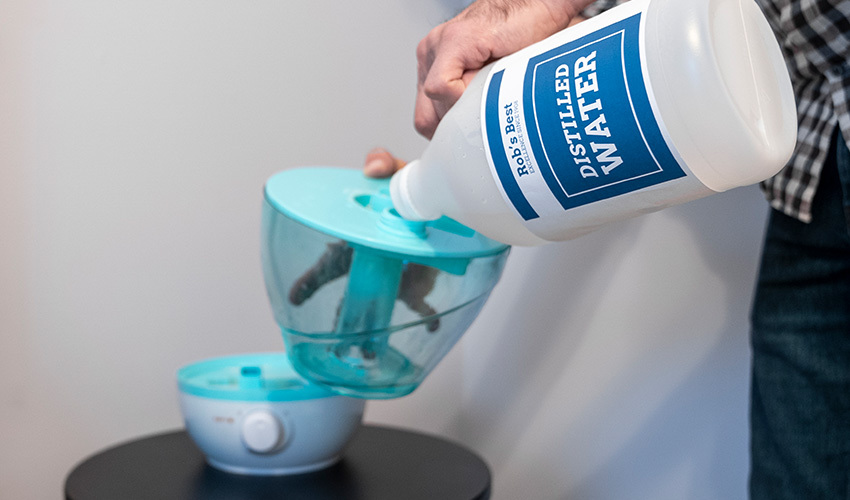
So, you just unboxed a shiny new humidifier, and you’re staring at a jug of tap water, thinking, “Can I just… pour this in?” It’s a fair question, and honestly, it feels like the most natural thing in the world. After all, water is water, right?
Well, not exactly. Using regular tap water in a humidifier is kind of like putting regular gas in a high-performance sports car—it works, but things can get a little… messy. Let’s break down why that happens, and why you might actually want to think twice before filling up from the sink.
The White Dust Mystery
Here’s the thing: tap water is full of minerals like calcium and magnesium. They’re great for your bones, but not so great for your air.
Must Read
When a humidifier vaporizes that water, those minerals don’t disappear. Instead, they get launched into your room as a fine, white dust.
Suddenly, your coffee table looks like it’s been dusted with powdered sugar from a ghost. It’s not harmful, but it is a little weird, and it can mess with electronics or furniture over time.
Why Your Humidifier Might Get Grumpy
If you use tap water, you’re practically inviting a science experiment to grow inside your machine. The minerals can build up into a crusty, yellowish scale—think of it as a mineral stalactite forming in your tank.
This gunk clogs the wick, the filter, or the ultrasonic plate, depending on your model. Before you know it, your humidifier starts sputtering, or it just stops working entirely.
It’s like having a pet that needs a bath every single week… except the pet is plastic and doesn’t cuddle. So, using distilled or demineralized water keeps it happy and running smoothly.
The Bacteria Factor (Yeah, It’s a Thing)
Here’s where it gets a little gross: tap water isn’t sterile. It contains tiny microbes and bacteria that normally chill out in your pipes.
When you leave that water sitting in a warm, dark humidifier tank for days, it becomes a mold and germ paradise. You could be misting your living room with a fine spray of microbial fun—yikes.
Distilled water has been boiled and vaporized, so those little hitchhikers are gone. It’s like giving your humidifier a clean slate, and your lungs will thank you for it.
Is It Ever Okay to Splash in Tap Water?
Look, if you’re in a pinch and your nose is drier than a desert, go ahead. A little tap water won’t kill you or your machine overnight.
But if you live in an area with really hard water (think limestone mountains or old pipes), the buildup can be brutal. You’ll spend more time scrubbing mineral crust off the tank than actually enjoying the humidity.
:strip_icc()/bhg-detail-levoit-oasismis-450s-smart-humidifier-hwortock-001-1-d19e440a26ee4161be84c8765580dd39.jpg) The 12 Best Humidifiers, Tested by BHG
The 12 Best Humidifiers, Tested by BHG
Think of it like this: tap water is the street food of humidifiers—sometimes you just have to, but it’s not the healthiest long-term choice.
What About Cool Mist vs. Warm Mist?
This is a fun twist: the type of humidifier matters. Cool mist ultrasonic models are the ones most sensitive to minerals—they literally shatter water into tiny particles, sending everything (including the minerals) into the air.
Warm mist evaporative humidifiers boil the water first, which kills bacteria, but they still leave mineral scale on the heating element. Either way, you’re fighting the same enemy: minerals.
So, if you have a cool mist model, distilled water is practically a superpower. For warm mist, it’s still a good idea, but you get a little more wiggle room.
What’s the Budget-Friendly Hack?
Buying gallons of distilled water every week sounds like a pain, right? You can actually use filtered water from a pitcher (like Brita) as a decent middle ground. It won’t be perfect, but it removes a lot of the heavy minerals.
Another weird but cool trick: you can let tap water sit out for 24 hours to let some chlorine evaporate, but it won’t remove the minerals. It’s like putting a bandaid on a paper cut—it helps a little, but not entirely.
For the truly curious, there’s a gadget called a demineralization cartridge that you can drop right into your humidifier. It’s like a little sponge that catches the minerals before they become white dust.
The Final Sip
So, can you use regular water in a humidifier? Technically yes, but it’s a bit like wearing socks to the beach—it’ll get the job done, but you’ll have sand everywhere later.
If you want a machine that lasts longer, air that’s cleaner, and furniture that stays free of ghost-dust, go with distilled or demineralized water. Your humidifier will purr like a happy cat.
And hey, if you just use tap water anyway, don’t stress—you’re in good company. Just clean your machine more often, and maybe keep a microfiber cloth handy for the coffee table.
