Can Reverse Osmosis Remove Lead From Water

Let’s be real for a second: water filters can feel a bit like magic boxes with fancy knobs. But when it comes to something as serious as lead in your tap water, you want to kn...
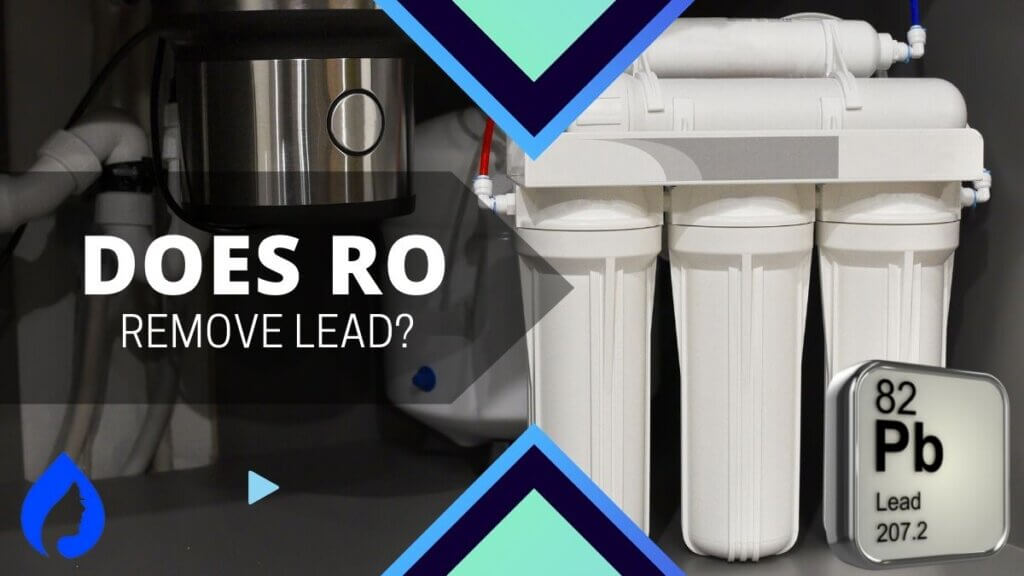
Let’s be real for a second: water filters can feel a bit like magic boxes with fancy knobs. But when it comes to something as serious as lead in your tap water, you want to know the science, not just the hype. So, can a reverse osmosis system actually pull that nasty heavy metal out? Spoiler alert: yes, it can—and it does it like a superhero with a very precise cape.
What is Reverse Osmosis, Anyway?
Think of reverse osmosis (or RO) as nature’s bouncer, but for water molecules. It uses a semi-permeable membrane with holes so tiny that only the smallest H₂O molecules can squeeze through. Lead ions? They’re physically too big to fit, like a linebacker trying to smash through a cat door. The result? Crystal-clear water that leaves the bad stuff behind and heads straight to your glass.
This isn’t guesswork, by the way. The EPA and NSF International have certified many RO systems to remove up to 99% of lead from drinking water. That’s not “kind of works”—that’s a staggering level of protection for something that comes out of your kitchen faucet.
Must Read
Why This Matters (and Why It’s Kind of Fun)
Lead is a silent party pooper. It has no taste, no smell, and no color, so you’d never know it was in your water without a test. But here’s the fun part: by installing an RO system, you’re basically turning your kitchen into a tiny water laboratory. You’re taking control of your tap water’s destiny, and that feels surprisingly empowering. Plus, think of the bragging rights. Next time a friend says, “I got a Brita,” you can casually reply, “Oh, I have a reverse osmosis membrane that annihilates lead with physics.” Boom. You’re the cool water person now.
And let’s not forget the practical payoff. No more lugging heavy plastic jugs from the store, no more worrying about BPA leaching into your drinking water from those bottles. Your tap becomes your personal spring, but one that you’ve triple-checked for safety. That’s a lifestyle upgrade you can literally taste.
But Wait—Is RO Perfect for Everyone?
Okay, let’s keep it 100% honest. Reverse osmosis systems do waste a bit of water during the filtration process (about 3 to 4 gallons per gallon of clean water produced). And yes, they can also remove some beneficial minerals like calcium and magnesium. But here’s the good news: most modern RO systems come with a remineralization filter that puts those good minerals back in. So you get pure, lead-free water that still tastes crisp and healthy. It’s like getting a salad without the dirt—but with the dressing restored.
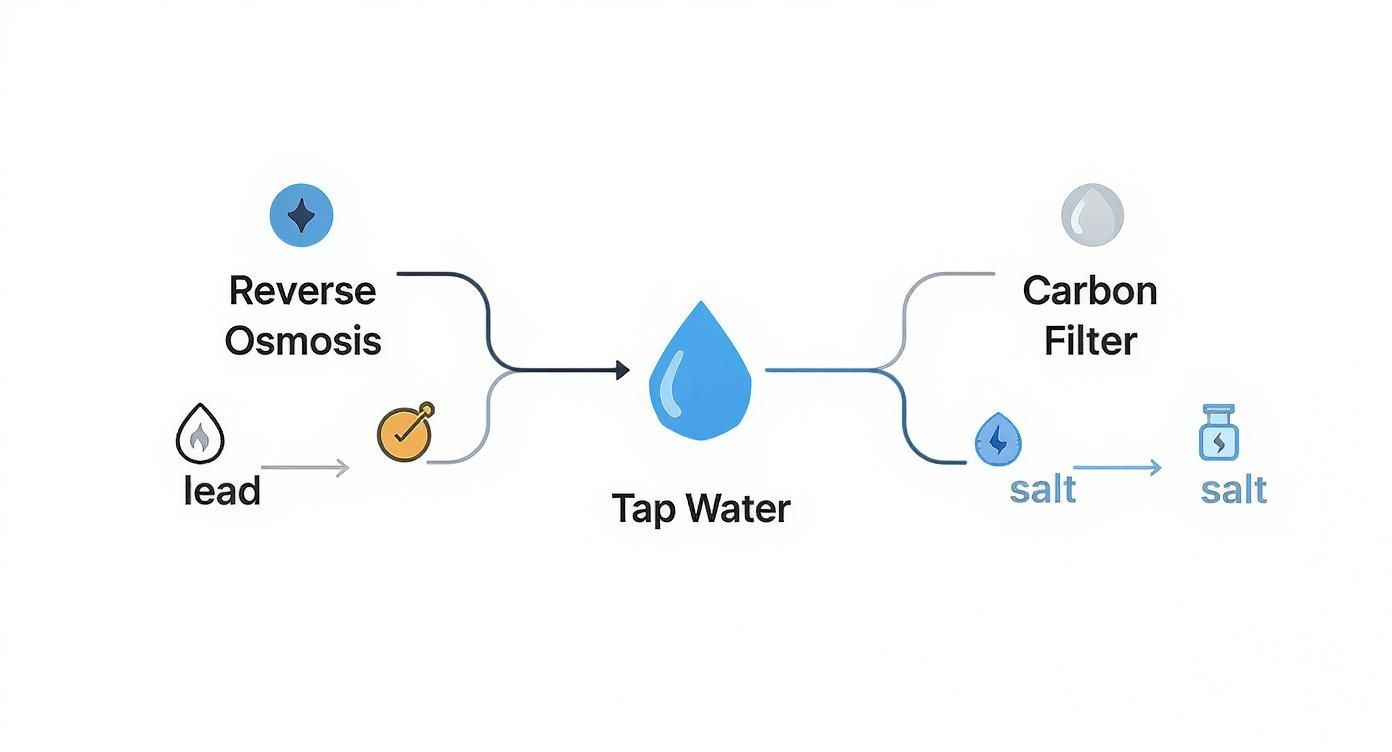 Reverse Osmosis vs Filtered Water: Which System is Right for Your Home?
Also, installation is easier than you might think. Many countertop units simply hook up to your existing faucet with a diverter valve. You don’t need a plumber’s license, just a willingness to follow instructions (and maybe a YouTube tutorial or two). You’ve got this.
The Uplifting Truth
Here’s the big takeaway: you don’t have to live with uncertainty about your water. Reverse osmosis is a proven, accessible, and downright clever way to remove lead and hundreds of other contaminants from your tap. It’s not a luxury; it’s a tool that belongs in every home where health is a priority. And the best part? Once you have one, you’ll feel a little thrill every time you pour a tall glass of water, knowing the science is on your side.
So go ahead—dive into the details. Read about membrane maintenance, compare systems, and imagine what your future lead-free hydration looks like. Because water should refresh you, not worry you. And with reverse osmosis, you’re not just filtering H₂O; you’re filtering out the doubts. Cheers to that!
