Difference Between Distilled Water And Purified

Let’s be honest: staring at the water aisle in the grocery store can feel like a weird science test. You see “Distilled” and “Purified” and suddenly your brain asks, Wait, isn...
Let’s be honest: staring at the water aisle in the grocery store can feel like a weird science test. You see “Distilled” and “Purified” and suddenly your brain asks, Wait, isn’t all water the same? No, my friend, it’s not. And understanding the difference is like getting a secret key to making your life tastier, cleaner, and way more fun.
So, what’s the deal? Both types are super clean, but they get there by totally different paths. Think of it like this: purified water is the bouncer at a club, while distilled water is the VIP-only, super-exclusive penthouse. Let’s break it down without any boring chemistry jargon.
Purified Water: The Friendly Neighbor
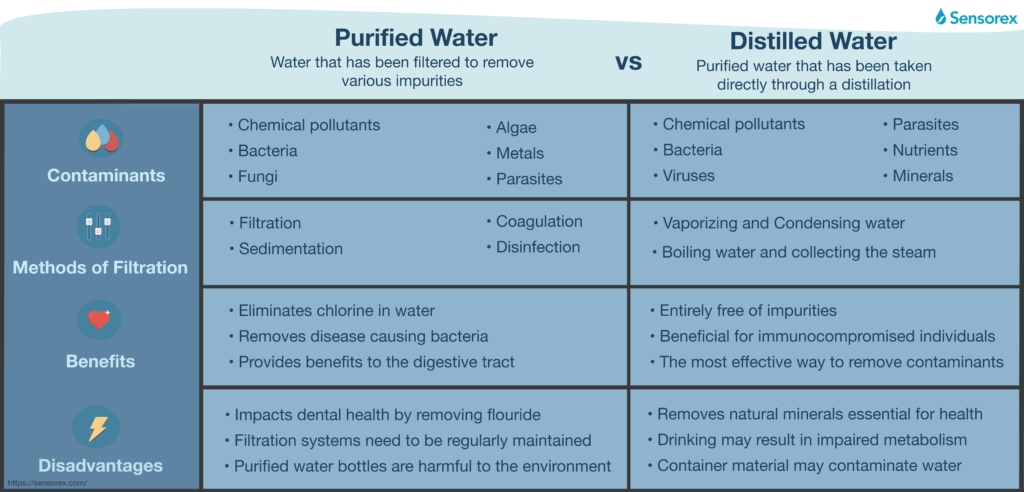
Purified water is essentially tap water that has been filtered to remove most impurities. It goes through processes like reverse osmosis or carbon filtration to kick out chemicals, bacteria, and heavy metals.
Must Read
It’s the “everyday hero” you grab for your office water cooler or the pitcher in your fridge. The key word here is filtered — it’s clean, tastes fresh, and still has some natural minerals left in it (which is great for your body and your plants).
Why You Might Love It
It’s perfect for drinking, mixing with juice, and making coffee that doesn’t taste like a swimming pool. Plus, it’s usually cheaper than the fancy distilled stuff.
If you want water that’s clean but not stripped of everything, purified is your go-to. It’s like the reliable friend who always shows up with snacks.
Distilled Water: The Intense Overachiever
Distilled water takes a dramatic route. It’s boiled into steam, then the steam is captured and cooled back into liquid. This vaporization process leaves behind everything that’s not water—minerals, bacteria, viruses, and even some pesticides.
The result? Water that is 99.9% pure H2O. It’s like the cleanest canvas you’ve ever seen, with absolutely nothing extra. But here’s the twist: that purity also means it tastes a little flat to some people (no minerals = no flavor).
Where Distilled Water Shines (Literally)
This is where the fun starts. Distilled water is a rockstar for appliances. Use it in your steam iron and you’ll never deal with white, chalky mineral stains again. It keeps your humidifier from spitting powder all over your living room.
 Distilled vs. Purified Water: What’s the Difference? – Waterdrop Europe
Think car batteries, CPAP machines, and aquarium fill-ups. It’s also legendary for making clear ice cubes that look like jewels in your cocktail. Party trick alert!
The Big Showdown: Which One Wins?
There is no winner—just different jobs for different moments. Drinking and cooking? Go purified; it’s delicious and healthy. Cleaning your espresso machine or filling a fishtank? Distilled is your MVP.
One quick warning: don’t drink only distilled water for days on end. Your body actually needs some of those trace minerals, and distilled water can pull them out of your system if you overdo it. Balance, people!
Honestly, the best choice is to keep a bottle of both in your pantry. You get the social drinker (purified) and the science lab specialist (distilled). It’s like having a hammer and a screwdriver—you’re ready for anything.
A Little Inspiration to Sip On
Now you know the secret. You’re no longer a passive water buyer; you’re a water connoisseur with a plan. That tiny difference between “distilled” and “purified” is actually a doorway to smarter choices every day.
So the next time you see those bottles, smile. You know which one to grab for your morning brew and which one to use for that Pinterest-perfect ice ball. Life is full of tiny, joyful decisions—and this is one that keeps you hydrated, smart, and ready for fun. Go on, make a splash!
