Uv Disinfection System For Wastewater Treatment

So, you’ve flushed. Congratulations. That’s the easy part. Now begins the epic, disgusting, and frankly heroic journey of your… contribution. It has to go from “yikes” to “thi...
So, you’ve flushed. Congratulations. That’s the easy part. Now begins the epic, disgusting, and frankly heroic journey of your… contribution. It has to go from “yikes” to “this is fine” before it can meet a river or an ocean. And for decades, we’ve mostly used chlorine, which is like using a sledgehammer to kill a fly. It works, but it leaves a chemical hangover.
Enter the hero we never knew we needed: UV disinfection. Imagine a million tiny, invisible death rays. That’s basically what we’re talking about. This isn't a tanning bed for sludge. It’s a bacterial apocalypse.
How to Micromanage a Microbe
Think of ultraviolet light as the nuclear option for pathogens. It doesn’t poison the water. It just gives germs a severe sunburn. Only it’s so intense that it scrambles their DNA like a paranoid hacker. The little troublemakers can’t reproduce. They can’t party. They just float there, spiritually defeated.
Must Read
Here’s the surprising fact: UV disinfection doesn’t kill the bacteria. It makes them sterile. They are the zombies of the wastewater world. Alive but totally useless. They’ll eventually get eaten by something else, which is nature’s version of recycling.
This process happens in a matter of seconds. For comparison, chlorine takes up to an hour. UV is the espresso shot of water treatment. Chlorine is a slow-brewed pot of regret.
Why We Dumped Chlorine
Chlorine is a bully. It kills everything, including the good guys, and then it leaves a chemical corpse in the water that can hurt fish. To fix that, you have to add another chemical to neutralize the first chemical. It’s like hiring a bouncer to kick out the first bouncer.
UV, on the other hand, is a polite assassin. It zaps the bad stuff and then disappears. The water is left physically and chemically unchanged. It’s just… clean. And slightly more tan.
Also, handling massive tanks of liquid chlorine is terrifying. One leak and you’re recreating a scene from a war movie. UV systems are just big, fancy light bulbs. You can trip over them. You can’t accidentally gas a neighborhood.
The System: A Very Angry Tanning Bed
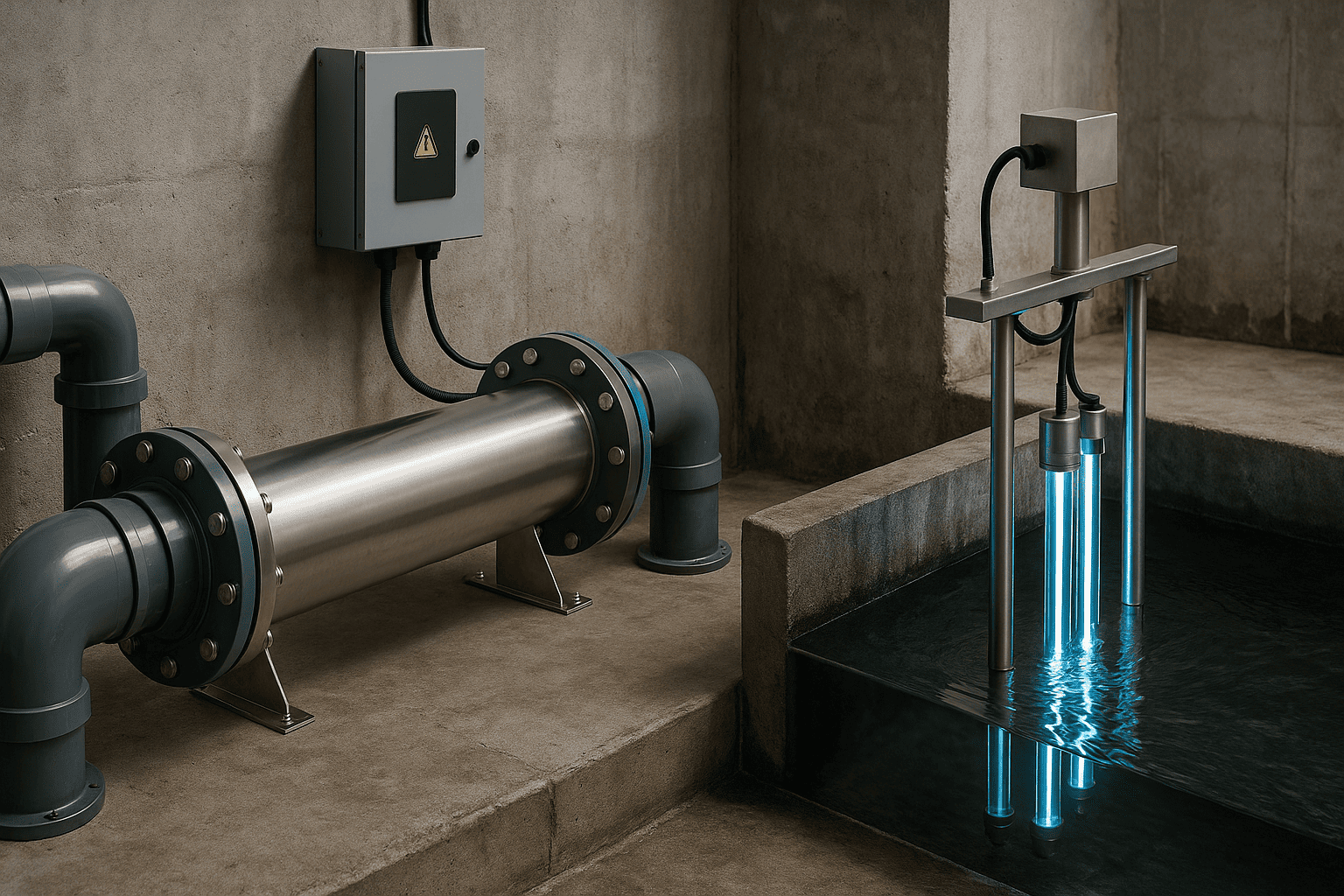
So how does it actually work? Imagine a large concrete channel. Now fill it with treated but still slightly funky water. Now hang a bunch of high-powered UV lamps over it. That’s it. That’s the system. It looks like a submarine’s kitchen got a terrible glow-up.
These lamps are not the kind you screw into your desk lamp. They’re monstrous. They pulse with the power of a thousand suns. Actually, that’s an exaggeration. It’s more like the power of three thousand suns. The water flows past them, and every single microscopic hitchhiker gets a lethal dose of vitamin D.
One catch: the water has to be pretty clear first. UV can’t see through a murky mess. It’s like trying to read a book through a bowl of chili. So the water is filtered and settled beforehand. The UV is the final, glorious polish. It’s the mic drop.
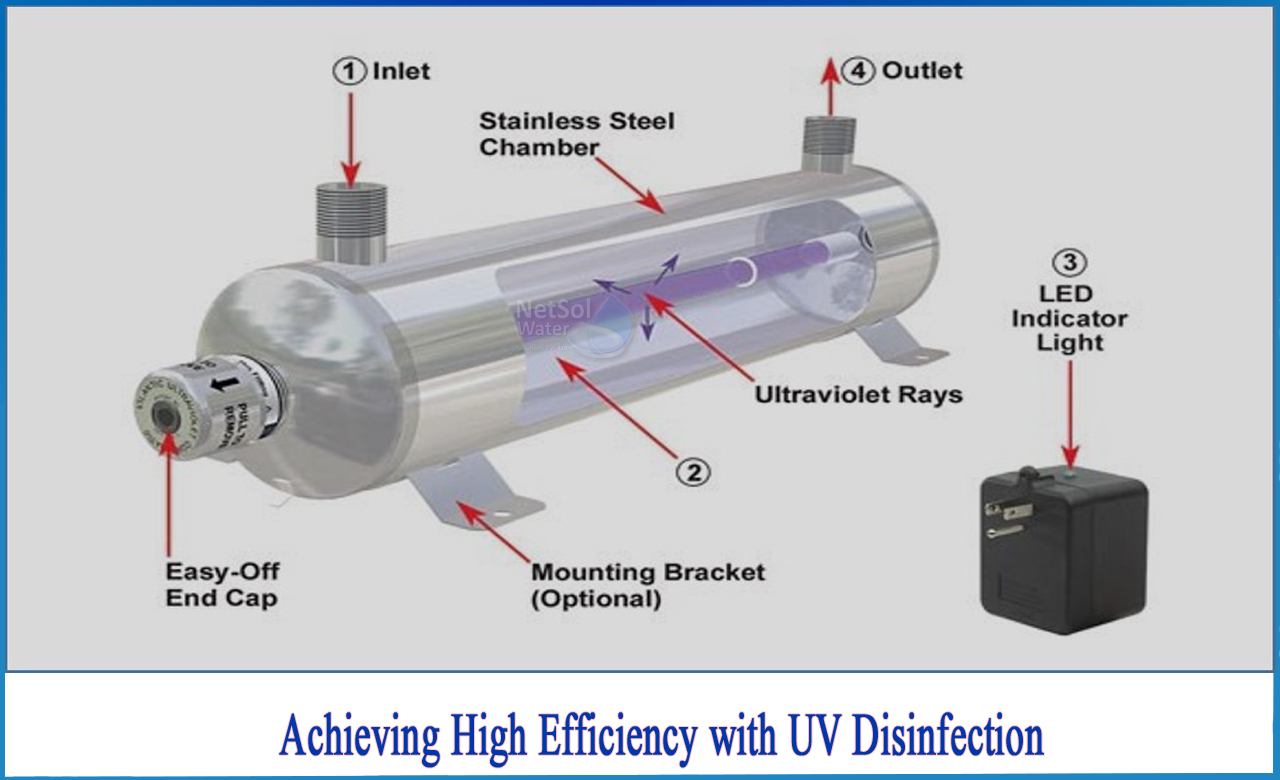 Uv Light Disinfection Water Treatment | Shelly Lighting
The Dirty Secret (Quartz Sleeves)
Here’s where the humor comes in. These UV lamps are protected by quartz sleeves. They are fancy glass tubes. And you know what builds up on them after a month in raw-ish water? Biofilm. That’s the scientific term for “gunk with an attitude.”
It’s a slimy, greasy, microscopic community that tries to block the UV light. So, a robot arm or a wiper system has to periodically scrape the sleeves clean. I call it the “janitor of the apocalypse.” It’s literally pushing goo off a light bulb in a sewer. The person who invented that automatic wiper deserves a Nobel Prize and a lifetime supply of hand sanitizer.
Fun fact: If the water is too “hard” (full of minerals), the quartz sleeves get a crusty mineral scale. It’s like seeing a light bulb get kidney stones. They have to clean it with acid. Yes, acid. The same stuff you’d nervously scrub your shower with? They use it on their lights.
Is It Safe? (Spoiler: Yes)
The water coming out of a UV disinfection system is crystal clear. It has fewer microbes than your kitchen sponge. Actually, your kitchen sponge is a biological war zone. The wastewater is cleaner. You could theoretically drink it. I did not say you should. The mental barrier is a real thing.
Surprising fact number two: UV disinfection doesn’t leave any “bad taste.” Chlorine makes water smell like a swimming pool’s regret. UV water tastes like… well, nothing. Which is the highest compliment you can give to something that was poop juice an hour ago.
This technology is so safe that many cities now use it for their drinking water supply. That’s right. The same invisible vampires that clean toilet water can also polish your tap water. The circle of life, folks.
The Final Verdict
UV disinfection is like hiring a ninja instead of a drunk with a flamethrower. It’s elegant, fast, and leaves no trace. It uses a lot of electricity, sure. But it doesn’t require shipping truckloads of dangerous chemicals across the country.
So the next time you flush, remember: a perfectly silent, brutally efficient army of angry photons is about to save the day. They don’t ask for thanks. They just glow. And they make your toilet’s secret life a lot less terrifying.
Just don’t look directly at the lamps. Unless you want to see the inside of your own skull. You’ve been warned.
