Are Distilled Water And Purified Water The Same

So, you’re standing in the water aisle at the grocery store, totally overwhelmed. There are jugs labeled “Distilled” and others screaming “Purified.” Your brain whispers, “Are...

So, you’re standing in the water aisle at the grocery store, totally overwhelmed. There are jugs labeled “Distilled” and others screaming “Purified.” Your brain whispers, “Aren’t they… the same?” Let’s grab a coffee (made with tap water, because we’re rebels) and sort this out.
Short answer? Nope. Distilled and purified are cousins, not twins. They both start as regular water, but they take totally different paths to get clean. Think of it like making coffee versus tea—both hot drinks, but not the same vibe.
So, what’s distilled water?
Distillation is the drama queen of water purification. You boil the living daylights out of water, catch the steam, and condense it back into liquid. It’s like water’s version of a spa vacation—it leaves everything behind. Minerals, bacteria, viruses, that weird floaty thing from your sink? Gone. Bye.
Must Read
The result? Water that’s almost too pure. It’s so empty it’ll steal minerals from your coffee maker or your radiator. Perfect for CPAP machines or ironing—not great for your plants or your gut, honestly. It tastes flat, like someone sucked the soul out of it.
Distilled water is basically the Goldilocks of “no.” No minerals, no flavor, no drama. Just pure H2O, lonely and bored.
And purified water? That’s a whole buffet.
“Purified” is an umbrella term, like “snack.” It means the water has been treated to remove chemicals, contaminants, and bacteria. But here’s the kicker: it’s a process, not a single method.
Purified water can come from reverse osmosis (pushing water through a fancy membrane), carbon filtration (charcoal magic), UV light (zapping germs), or even distillation itself. So yes, distilled water is technically a type of purified water. Mind blown yet?
But here’s the twist: most purified water keeps some minerals. Reverse osmosis, for example, strips out nasties but often adds minerals back for taste. So it’s clean, but not dead like distilled. It’s the difference between a spring morning and a sterile lab.
Why does this even matter in real life?
Let’s be real—you’re not going to die if you drink the “wrong” one. But your coffee maker might. Using distilled water in your espresso machine? It’ll corrode the metal because it’s too hungry for minerals. Reverse osmosis or filtered tap? Chef’s kiss.
For drinking, purified water wins. It tastes better (hello, minerals), and your body appreciates the tiny bits of magnesium or calcium. Distilled water? It’s like drinking a blank stare. Fine for a day, but weird long-term.
Need to water your orchids? Distilled is great—they hate tap water minerals. Need to hydrate after a run? Not distilled. Your body will go, “Hey, where’s the electrolytes, pal?” and give you a headache.
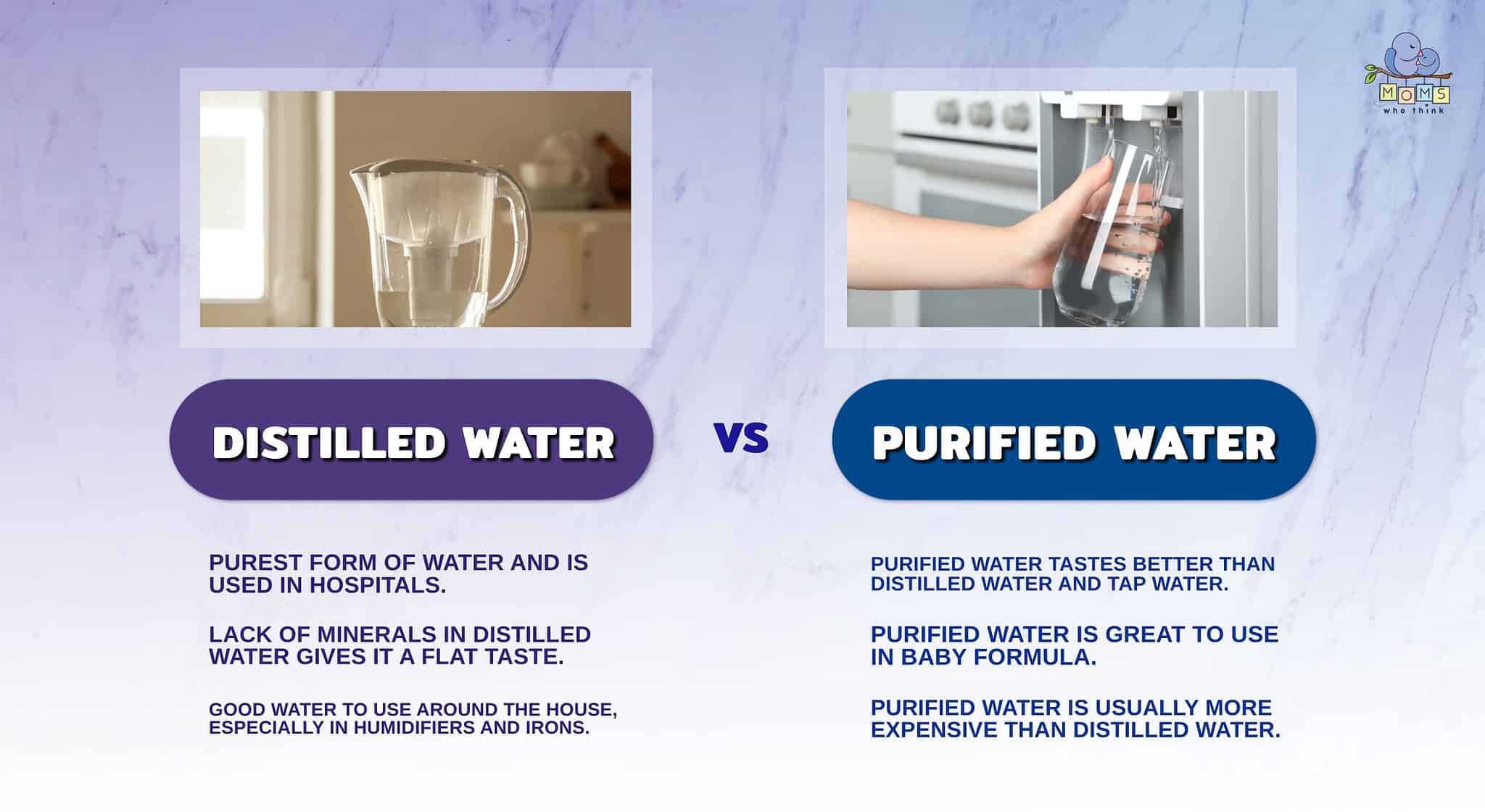 Distilled vs. Purified Water: 4 Differences & Health Benefits
The “Baby Bottle” Trap
Ever seen parents buying distilled water for babies? They do it because it’s sterile. But many pediatricians say purified water is better—babies need those teeny tiny mineral traces for growth. Distilled is too pure; it’s like feeding a baby air. (Don’t feed babies air, obviously.)
So if you see “distilled” and “purified” next to each other, just know: one is a specific method, the other is a category. Distilled is a purified water, but not all purified water is distilled. It’s like saying “all squares are rectangles, but not all rectangles are squares.” Boring math, but true.
What about taste? Be honest.
If you’re a water snob (we all are, slightly), you’ll notice. Distilled tastes flat—like licking a clean glass. Purified water from reverse osmosis? It’s crisp, neutral, but has a hint of “something.” That something is probably added calcium or a memory of being filtered through charcoal. It’s the difference between a whisper and a blank silence.
Personally, I’d rather drink purified. Distilled makes me feel like I’m punishing myself. But hey, some people swear by it for their fish tanks. You do you.
So, which one should you buy?
Rule of thumb: Drink purified, use distilled for appliances. Pour distilled into your CPAP, your iron, or your car’s battery. Pour purified into your mouth, your plants, or your fancy Himalayan salt lamp (joke—don’t water that).
And if you’re at a friend’s house and they offer you distilled water in a glass? Drink it. Be polite. Just know you’re entering a flavor desert. They’re trying to be healthy, but they’ve missed the point. Bless their hearts.
Bottom line? Distilled and purified are like jeans and chinos. Both cover your legs, but one is aggressively specific. Purified is the chill, all-purpose pick. Distilled is the one you only wear to car shows or when you’re feeling dramatic.
So next time you’re in that aisle, grab the purified for drinking and the distilled for your steam mop. Your taste buds and your appliances will thank you. And if anyone asks? Just shrug and say, “It’s a water thing.” Then sip your coffee mysteriously.
