Crossness Pumping Station Bazalgette Way London

So, the other day, I’m on a double-decker bus heading towards Abbey Wood, minding my own business, when we crawl past this massive, red-brick Victorian castle. I actually said...
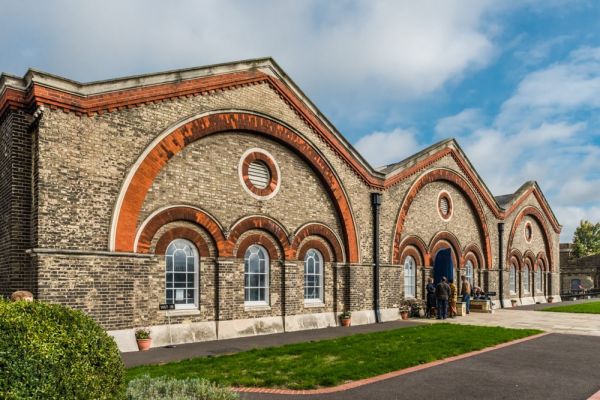
So, the other day, I’m on a double-decker bus heading towards Abbey Wood, minding my own business, when we crawl past this massive, red-brick Victorian castle. I actually said out loud, “What in the name of Hogwarts is that?” The guy next to me gave me a look that said, clearly a tourist. But honestly—who expects a sewage pumping station to look like a cathedral?
That, my friend, is the Crossness Pumping Station, sitting quietly on Bazalgette Way in London. It’s not a castle, and it’s definitely not Hogwarts. It’s the heart of Victorian London’s most heroic—and frankly, grossest—engineering project. And yes, we’re about to talk about poo. You’re welcome.
The Man Who Saved London from Itself
Before we get into the shiny bits, let’s talk about Joseph Bazalgette. The “Way” part of the address is named after him, and for good reason. Back in the 1850s, London was a stench bomb. The Thames was basically an open sewer, and the smell—called “The Great Stink”—was so bad Parliament had to dip curtains in lime juice just to function. Imagine that zoom meeting.
Must Read
Bazalgette designed an entire underground network of sewers to move all that waste downstream, away from the city. And this station at Crossness? It was the final flush—the place where the actual magic happened. It pumped the city’s filth into holding tanks, then released it on the outgoing tide. Poetic, really.
Wait, It’s Beautiful?
Here’s where it gets wild. The building itself is a masterpiece. You walk in, and the main engine house looks like a high-Victorian palace for pumping. The floor is a mosaic of royal symbols, the ironwork is painted in jewel tones, and the ceiling is a starry sky of metal and glass. For sewage. I’m not kidding—go look up the “Prince Consort” engine. It’s painted like a Fabergé egg, and it pumped human waste.
Why did they make it so gorgeous? Because Victorians were extra. They believed that civic engineering should be beautiful. Plus, they had to impress the Queen. She visited in 1865, and they wanted her to feel like she was touring a palace, not a septic tank. Mission accomplished, your Majesty.
What You’ll Actually Experience
If you visit today—and you absolutely should—you’ll mostly see the Rusty Giant. That’s the nickname for the four original beam engines, which are slowly being restored by volunteers. They are enormous. Each piston is the size of a small car. When they ran, the ground shook. And the noise? Imagine a thousand steam trains having a coughing fit.
The smell, thankfully, is gone. The modern station next door does all the dirty work. But when you stand in that main hall, you can still feel the ghost of that Victorian ambition. It’s humbling to realize your morning flush is part of a 150-year-old system designed by a mustachioed genius.
 Crossness Pumping Station - The London Magazine
My Favorite Detail (You’ll Miss It If You Blink)
Look at the toilet in the visitor centre. Yes, really. It’s a replica of a high-Victorian loo, but it sits under a stained-glass window of a lotus flower. In Eastern symbolism, the lotus grows from mud. The Victorians were, consciously or not, saying: Your waste is the beginning of something pure. Deep, right? Or just very, very optimistic.
Then there’s the Bazalgette Way itself. It’s a quiet, unassuming road. No one walking their dog knows they’re strolling on a site that literally saved London. The irony is delicious: the street is named after the man who made the city clean, yet it’s the poop palace that gets all the Instagram fame. Justice for Bazalgette! Put his face on a stamp or something.
But Wait—Is It Fun?
For the love of all that is holy, yes. It’s not just a history lesson; it’s a sensory overload. The volunteers are retired engineers who talk about “sludge” with the same passion you’d use to describe fine wine. You can climb up the iron staircases, peer down into the engine pits, and press buttons that make replica models move. It’s like a steampunk playground with a PhD in hydraulics.
They also run steam days a few times a year. That’s when they fire up one of the restored engines. I was there last March, and when that beam started pumping—thump, thump, thump—the whole building vibrated. A man next to me, probably 80 years old, wiped his eye and whispered, “That’s England, that is.” I didn’t think it was cheesy. I thought it was true.
The Final Flush
Look, you might not think a sewage station is bucket list material. But Crossness is weirdly charming. It’s a testament to how we treat our most mundane infrastructure. We bury it, hide it, pretend it doesn’t exist. But here, they built a temple to it. And they painted it gold. That’s the kind of unapologetic confidence I aspire to.
So, next time you’re in London and you’re tired of the crowds at Buckingham Palace, hop on the 301 bus towards Thamesmead. Get off at Bazalgette Way. Walk into the red-brick castle. And then, stand under that mosaic ceiling, take a deep breath—it smells like engine oil and history—and think: This is where London became clean. And honestly? It’s gorgeous.
