What's The Difference Between Club Soda And Seltzer

Let’s be honest: you’ve been standing in the grocery aisle, staring at a row of fizzy waters, feeling a deep, confusing emptiness. Club soda? Seltzer? Is one secretly just tap...
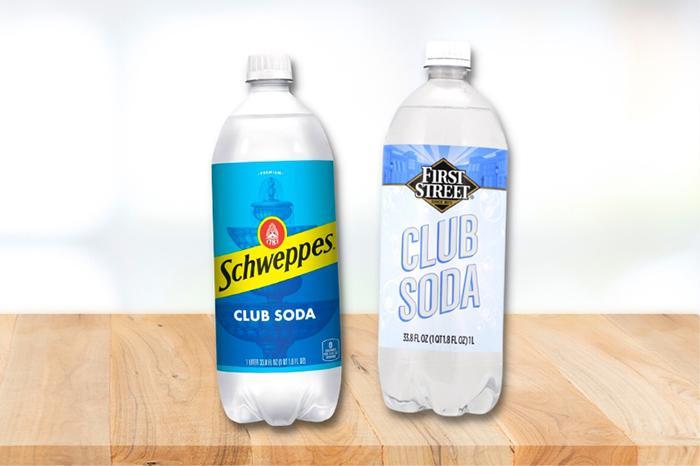
Let’s be honest: you’ve been standing in the grocery aisle, staring at a row of fizzy waters, feeling a deep, confusing emptiness. Club soda? Seltzer? Is one secretly just tap water with a bad attitude? I’m here to save you from this crisis of bubbles.
The short answer, delivered like a punchline, is this: club soda has added minerals for flavor, and seltzer is simply water with carbon dioxide forced into it. Think of seltzer as the naked, minimalist cousin of the sparkling water family. Club soda is the one who shows up wearing a subtle, salty cologne.
Let’s start with seltzer, the basic hero of the soda stream crowd. It has zero calories, zero sugar, and zero personality—until you add a lime and pretend you’re in a 1990s commercial. Seltzer is literally just carbonated water, and its taste is that sharp, clean bite of pure fizz. It’s the blank canvas of the beverage world.
Must Read
Now, club soda is the sneaky overachiever. Manufacturers inject it with tiny amounts of mineral salts—think potassium bicarbonate, sodium bicarbonate, or potassium sulfate. These are not just fancy science words; they give club soda that faintly salty, minerally taste that makes it taste more like “water” than “fizz.” It’s the difference between a whisper and a polite cough.
A Surprisingly Salty Secret
Here’s where things get absurd: club soda often contains more sodium than a handful of potato chips. A typical 12-ounce serving can have 75 to 100 milligrams of sodium. Meanwhile, seltzer has zero. That’s right—your “healthy” bubbly water might be giving you a mini dose of salt water. Who knew?
But don’t panic! That sodium level is still lower than a pickle or a bag of pretzels. It’s just enough to make you wonder why your cocktail tastes slightly oceanic. The mineral content is the entire reason bartenders love club soda: it mimics natural spring water, adding a soft roundness to mixed drinks.
How to Tell Them Apart (Without a Chemistry Degree)
Grab a glass and take a sip. Seltzer will hit you with a sharp, aggressive fizz that fades quickly—like a firecracker. Club soda’s bubbles are smaller, more persistent, and the liquid feels slightly heavier on your tongue. If seltzer is a skittish puppy, club soda is a dignified, slow-blinking cat.
Also read the label. If it says “sodium bicarbonate” or “potassium bicarbonate” in the ingredients, you’re holding club soda. If it just says “carbonated water,” you’ve got seltzer. It’s that simple, and yet here we are, arguing about it on the internet.
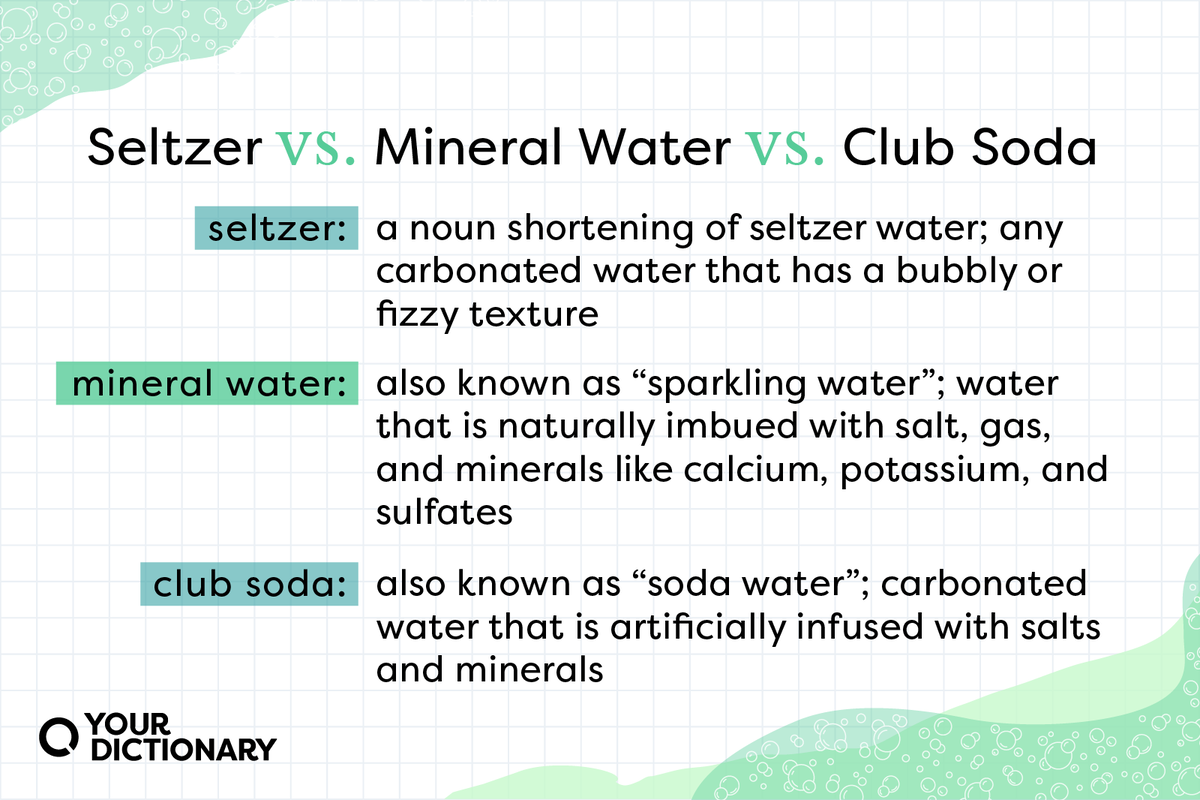 Difference Between Club Soda And Seltzer Water at Michael Carandini blog
A Brief History of Bubbles (With a Detour Into Insanity)
The word “seltzer” comes from Niederselters, a German town that sold natural mineral water across Europe in the 1700s. Eventually, people started copying the fizz artificially, and the name stuck. Seltzer is basically the original knockoff of a fancy spring water. Imagine that.
Club soda, on the other hand, was invented in the 19th century by a guy named John Mathews who wanted to mimic the bubbles of natural springs. He added the mineral salts on purpose, and the name “club” came from the social clubs where wealthy folks drank their fizzy water while discussing monocles. I swear this is true.
So what about tonic water? Oh, you had to ask. That’s a completely different beast—it’s carbonated water with quinine and sugar, giving it a bitter, medicinal taste. Do not, under any circumstances, confuse tonic with club soda unless you want your vodka to taste like a forgotten cough drop.
The Final Fizz-Off
Here’s your cheat sheet: use seltzer when you want a neutral, crisp, empty-calorie thirst quencher. It’s perfect for mixing with fruit syrups or drinking alone while you judge your life choices. Use club soda when you’re making a cocktail that deserves a little mineral complexity—like a highball or a gin and tonic (with actual tonic, not club soda, you monster).
And a final shocking fact: most people cannot taste the difference in a blind test. In a 2019 study by the beverage industry (yes, that’s real), 70% of participants misidentified which was which when given both. So if you pour a glass of seltzer and call it club soda, no one will ever know. Not even the bubbles will tell on you.
In the end, the difference is mostly marketing and salt. Unless you’re a professional bartender or a picky eccentric, just pick whichever fizz is on sale. Your mouth will thank you, your wallet will be happy, and you’ll finally have a party trick to bore your friends with. “Actually, this seltzer has zero sodium, while your club soda is basically a health hazard!” (Okay, it’s not a hazard, but it sounds dramatic.) Now go forth and drink your bubbles with confidence.
