Salt Lake City Commercial Water Softener Installation

If you live in Salt Lake City, you know the water situation is a little… dramatic. The Wasatch Range gives us stunning hiking trails, but it also sends hard water minerals tum...

If you live in Salt Lake City, you know the water situation is a little… dramatic. The Wasatch Range gives us stunning hiking trails, but it also sends hard water minerals tumbling straight into our pipes. One minute you’re enjoying a perfect pour-over; the next, your espresso machine is sputtering like a drama queen at Sundance.
Commercial water softener installation in SLC isn’t just a luxury; it’s practical damage control for your business. Restaurants, breweries, and even boutique hotels here deal with scale buildup that wrecks expensive equipment and leaves glassware looking cloudy. Nobody wants to serve a top-tier IPA in a glass that looks like it survived a fight with a chalkboard.
The Science of ‘Salt Lake Grit’
Locals call our water “liquid rock” for a reason. The Great Salt Lake region sits on ancient seabeds, so our H2O is packed with calcium and magnesium ions. Fun fact: Hard water in SLC can measure upwards of 15 grains per gallon, while the national average sits around 5 or 6.
Must Read
For a coffee shop downtown, that means your $15,000 espresso machine gets a mineral jacket every single brew cycle. A commercial water softener removes those tough minerals through a process called ion exchange—it swaps calcium for softer sodium, giving your equipment a longer, happier life.
Brewery Owners, Listen Up
Utah’s craft beer scene is exploding, but hard water ruins both flavor and foam stability. Brewers call balanced water the “blank canvas” for hops and malt. Without a softener, your hazy IPA might taste more like a mineral bath than a crisp beer.
Professional installation isn’t a weekend DIY project. You’re dealing with main water lines, brine tanks, and drainage that must pass the Salt Lake County Health Department’s exacting standards. Trust a licensed installer—it’s cheaper than rebuilding a boiler after a scale-induced meltdown.
Where the ‘Soft’ Meets the ‘Mountain’
Walk into a high-rise office in Sugar House, and you’ll see gleaming lobby fountains and spotless bathrooms. That’s the quiet magic of a commercial system working behind the scenes. Your bathroom fixtures will thank you by not turning into white-crusted relics after a year.
Practical tip: Schedule installation during a slow business week. Most pros can set up a dual-tank system in 6–8 hours, but you’ll need a brief water shutdown. Thursday afternoon is the sweet spot—avoid Monday rushes and Friday pre-weekend chaos.
Another fun fact: The first water softener was patented in 1903 by a New Yorker named Jay C. Emerson. Today’s units use digital controllers that text you when the salt tank is low. Very 2024, very Utah.
The ‘Salt’ in ‘Salt Lake’
You’ll need to choose your softening salt carefully. Solar salt (from evaporated seawater) is most common, but many SLC businesses prefer evaporated salt pellets for their higher purity. Loose rock salt can leave residue that clogs your brine tank faster than a rush-hour I-15 traffic jam.
Pro installers will also test your water’s temperature and flow rate. Cold water runs slower through a softener, so a restaurant with a giant dishwashing setup needs a larger unit with a high flow rate. Don’t let a salesperson sell you a “one-size-fits-all” tank—this town rewards customized solutions.
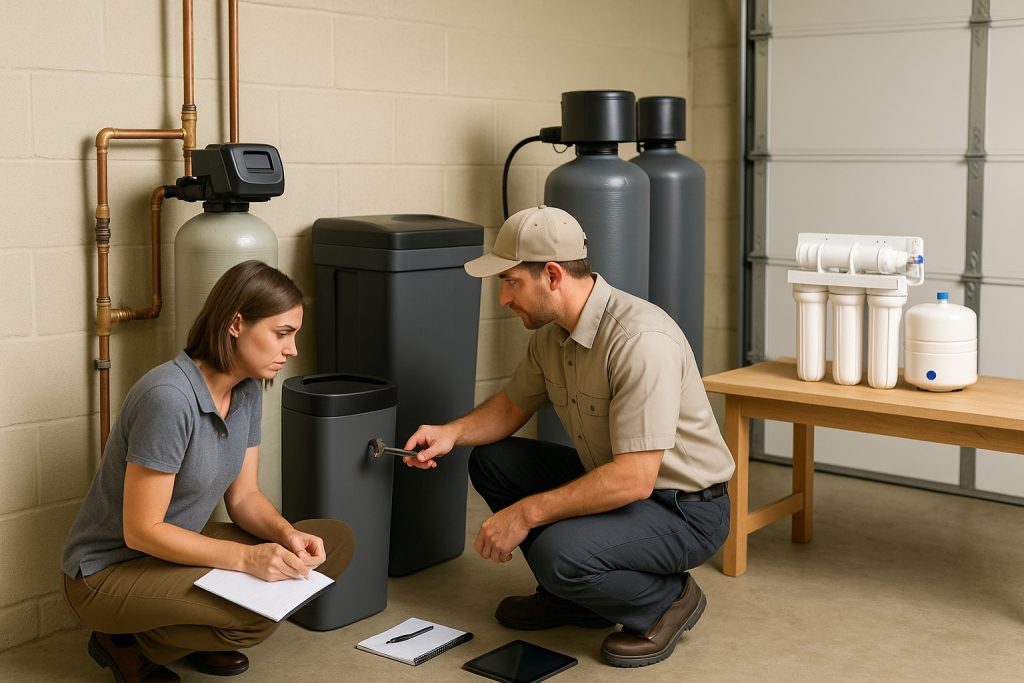 Water Softener Installation Cost – A&B Water Softener Experts
The Winter Isn’t Coming—It’s Here
Salt Lake’s dry, cold months make hard water even more troublesome. When home and business owners crank up their boilers for heating, scale forms faster on hot surfaces. A commercial softener installed before November saves you from a Christmas boiler breakdown—which is neither merry nor bright.
Local water quality reports show that January typically has the highest mineral concentration. It’s like the mountains are dumping extra calcium just to keep us on our toes. Beat the rush and book your system in October or March.
Common Signs Your Business Needs This Yesterday
Your dishwashers leave water spots that look like a salt flat map. Your water heater makes a low, rumbling sound (that’s scale breaking loose). And your barista’s hands feel sticky after handling glasses—a sign of mineral residue mixing with soap scum.
Don’t ignore the plumbing equivalent of a warning label. A commercial water softener pays for itself in six to twelve months through reduced energy bills and fewer repair calls. That’s a return on investment even a venture capitalist would nod at.
A Smooth, Modern Life
Installation isn’t just about pipes and brine tanks; it’s about preserving your business’s rhythm. A bakery in Park City, a brewery in the Granary District, or a yoga studio in the Avenues—all run better when water stops being a problem. The best technology fades into the background, letting you focus on what matters.
Your morning espresso tastes cleaner. Your silverware dries without spots. And your staff stops complaining about “that weird film on the ice machine.” It’s a tiny luxury that feels bigger with every scaler-free pot of coffee.
Reflection on a Glass Half Full
In a city that blooms with red rocks and white winters, water is our constant companion. We ski on it, drink it, and wash our gear with it. Making that water work for you, instead of against you, is one of those quiet upgrades that changes the texture of your everyday life.
So raise a glass of soft, clean water to the Wasatch. Your kettle, your customers, and your future self will all be grateful you finally called a pro.
