What's The Difference In Purified Water And Distilled Water

So, picture this: last weekend, my friend Brad—the guy who once tried to cook pasta in a coffee maker—proudly held up a jug of water from his new “fancy” machine. “It’s distil...
So, picture this: last weekend, my friend Brad—the guy who once tried to cook pasta in a coffee maker—proudly held up a jug of water from his new “fancy” machine. “It’s distilled,” he said, “so it’s basically the healthiest water ever.” I just blinked at him, because I knew he was mixing it up with purified water, but honestly? I wasn’t 100% sure myself. Ever been there? (Yeah, me too.)
That little kitchen moment got me curious. Are purified and distilled water just fancy labels for the same H2O, or is there a real difference under the cap? Grab a glass of whatever you’ve got, and let’s crack this hydrating mystery together.
The Short Answer: The Purification Family Tree
Here’s the deal: all distilled water is purified, but not all purified water is distilled. Think of it like the difference between all squares being rectangles, but not all rectangles being squares. It’s a hierarchy, and distilled water sits at the snooty top.
Must Read
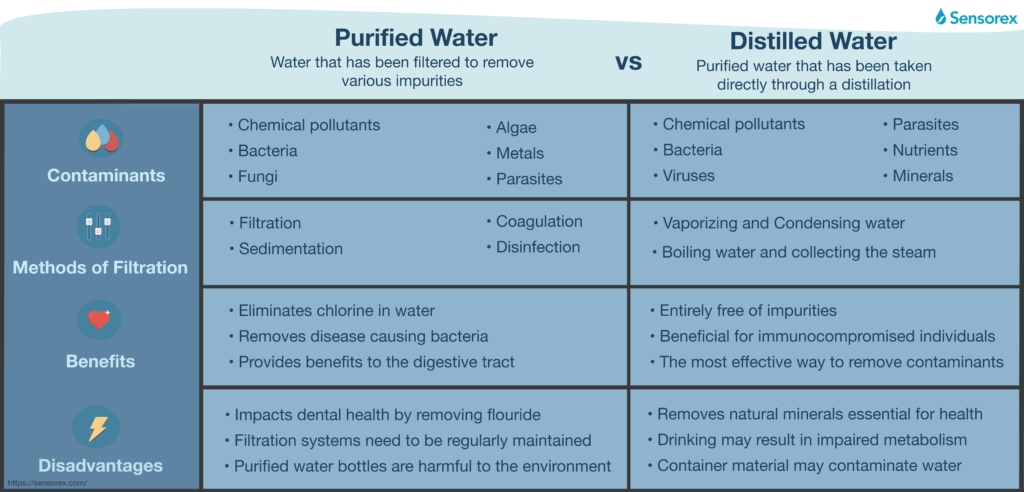
Purified water is a broad category. It means the water has been treated to remove chemicals, contaminants, and impurities—usually to a level below 10 parts per million of total dissolved solids. That’s the standard.
Distilled water, on the other hand, is made by a very specific process: boil the water into steam, then condense that steam back into liquid. You’re basically leaving the gunk behind in the pot. It’s like a spa vacation for water, but way less relaxing.
How They’re Actually Made (And Why It Matters)
Let’s start with purification. Most purified water goes through reverse osmosis, which forces water through a fancy membrane that catches nasties like lead, chlorine, and bacteria. Or it might use carbon filtration—the same stuff in your Brita pitcher. It’s effective, but it keeps some minerals and gases.
Distillation is more dramatic. You heat water until it turns to vapor—like a ghost leaving its body—and then cool it back down. The result? Dead clean water, with almost nothing left but the hydrogen and oxygen. Even minerals are gone. It’s so pure it feels a little... empty, honestly.
Side note: have you ever tasted distilled water? It’s flat. Kind of sad. That’s because all the dissolved minerals and air that give tap water its “zip” have been evicted. (No offense, distilled—you’re still useful.)
What’s In It? The Contaminant Catch
Here’s a big difference: purified water removes about 90-99% of contaminants, depending on the method. It’s great for drinking and getting rid of chlorine taste or heavy metals. But it still holds onto some good stuff like calcium and magnesium, which your body actually likes.
Distilled water takes that to a crazy level—it removes 99.9% of impurities. That includes minerals, viruses, bacteria, and even dissolved solids you can’t see. Sounds perfect, right? Well, the irony is that by stripping everything, it sometimes leaches minerals from your body if you drink it exclusively. Oops.
Don’t panic—drinking distilled water occasionally won’t hurt. But for daily hydration, your kidneys prefer a little mineral company. Think of it like eating white bread versus whole wheat—both fill your stomach, but one brings friends.
When to Use Each (Real Talk)
Okay, let’s be practical. Purified water is your everyday hero. It’s what’s in most bottled waters (check the label—it often says “purified by reverse osmosis”). It tastes good, it’s safe, and it won’t turn your coffee taste flat. Use it for drinking, cooking, and making ice cubes that don’t smell like a fridge.
Distilled water is the oddball specialist. You want it for specific jobs where impurities cause trouble. Like in your car’s battery, a steam iron, a humidifier, or a CPAP machine—anywhere mineral buildup (aka scale) can ruin the gadget. Also, if you’re making baby formula, some parents prefer distilled to avoid any weird tap water surprises.
 Purified Vs Distilled Water: What’S The Difference? – WSVMVJ
And here’s a kicker: never use distilled water in a fish tank. Fish need those minerals to survive. You’ll basically make your goldfish’s life a desert. (Yes, I learned that the hard way. RIP, Bubbles.)
Cost and Convenience: The Wallet Check
Let’s talk money, because water shouldn’t cost like a luxury handbag. Purified water is cheap—you can get it from a filter on your tap or a $20 pitcher. A jug at the store costs around a dollar or two. It’s the practical choice for most people.
Distilled water is pricier, because distillation takes energy—boiling and condensing is no lazy afternoon. A gallon can run you $1.50 to $3.00, and you’ll feel it if you use it daily for drinking. That’s why it’s reserved for its special jobs, not your morning glass.
Pro tip: if you’re a DIY hero, you can distill water at home with a pot, a lid, and some ice. But honestly? Don’t. It’s slow, and you’ll burn through energy like a teenager on a video game binge. Just buy a jug when you need it.
Health Myths and Facts (Let’s Clear the Air)
You’ve probably heard that distilled water is “dead” water or that it detoxifies your body. Eh, that’s a stretch. While it’s true that it’s extremely pure, your liver and kidneys already do the detoxifying. You don’t need fancy water to override your biology—it’s called being a mammal.
On the flip side, some people worry about purified water losing healthy minerals. But guess what? The minerals in water make up a tiny fraction of your daily needs—you get most from food. So drinking purified water is totally fine, and it doesn’t turn your bones to chalk.
Let’s be real: the biggest risk with either water is that you’re drinking enough. If you’re hydrated, you’re winning. Whether it’s purified or distilled is just a bonus trivia point for your next party.
So, Which One Should You Choose?
Here’s my no-nonsense verdict: Go with purified water for everyday drinking. It’s affordable, tastes fine, and keeps you hydrated without any weird side effects. Distilled water is like that high-maintenance friend—great for specific situations, but exhausting to hang with daily.
Keep a jug of distilled in your pantry for your iron, your car, or your humidifier. For your coffee, tea, or lunchtime hydration: purified water is your buddy. And hey, if you’re still confused, just remember Brad—he’s out there drinking distilled water and wondering why his coffee tastes like a math test.
Stay hydrated, my curious friends. And maybe don’t take water advice from Brad.
