How Much Water Does A Softener Use To Regenerate

So, picture this: last Saturday, I’m standing in my laundry room, watching my water softener do its thing. It starts this loud, gurgling hiss, like a giant drinking the last s...

So, picture this: last Saturday, I’m standing in my laundry room, watching my water softener do its thing. It starts this loud, gurgling hiss, like a giant drinking the last sip of a milkshake. I looked down at the drain, and honest-to-goodness, a small river of water was rushing out. My first thought? “Did I just break it? And how much of my water bill just went down that drain?”
If you’ve ever owned a water softener, you’ve probably had that same moment of panic. You are not alone. That weird noise is “regeneration” — the process where the softener cleans itself to keep giving you that silky, spot-free water.
Here’s the thing most people get wrong: they think regeneration is wasteful. But pausing that thought for a second, it’s actually a trade-off. You’re trading a bit of water now to save your pipes, appliances, and skin from the havoc of hard water. Fair deal? Let’s break down the numbers.
Must Read
The Short Answer (Because You’re Busy)
On average, a standard water softener uses 30 to 60 gallons of water per regeneration cycle. Yes, that sounds like a lot — it’s about the same as one long shower. But here’s the ironic part: if you skip regeneration, your water heater will waste way more energy fighting scale buildup.
How often does it regenerate? Most modern units do it every 3 to 7 days. So, we’re talking roughly 5 to 15 gallons per day average. Not as scary as that torrent down the drain, right?
What Even Happens During “Regen”?
Think of your softener like a furry hamster that needs a bath. It traps hardness minerals (calcium and magnesium) on resin beads. Over time, those beads get “full” and stop working. Regeneration is the bath — it flushes those minerals out using a salt brine solution.
That whole process has four stages: backwash (flipping the beads), brine draw (sucking in salty water), slow rinse (scrubbing), and fast rinse (final polish). Each stage uses water, but the brine draw and rinses are the thirsty ones. Fun side note: if your water is extremely hard, the softener might burn through more water to get the job done.
Why Your Softener Might Be a Thirsty Beast
Not all softeners are created equal. Some are like a sensible sedan; others are a gas-guzzling SUV. Older models with analog timers regenerate on a schedule — even if nobody used water all week. That can waste up to 70 gallons per cycle, like clockwork.
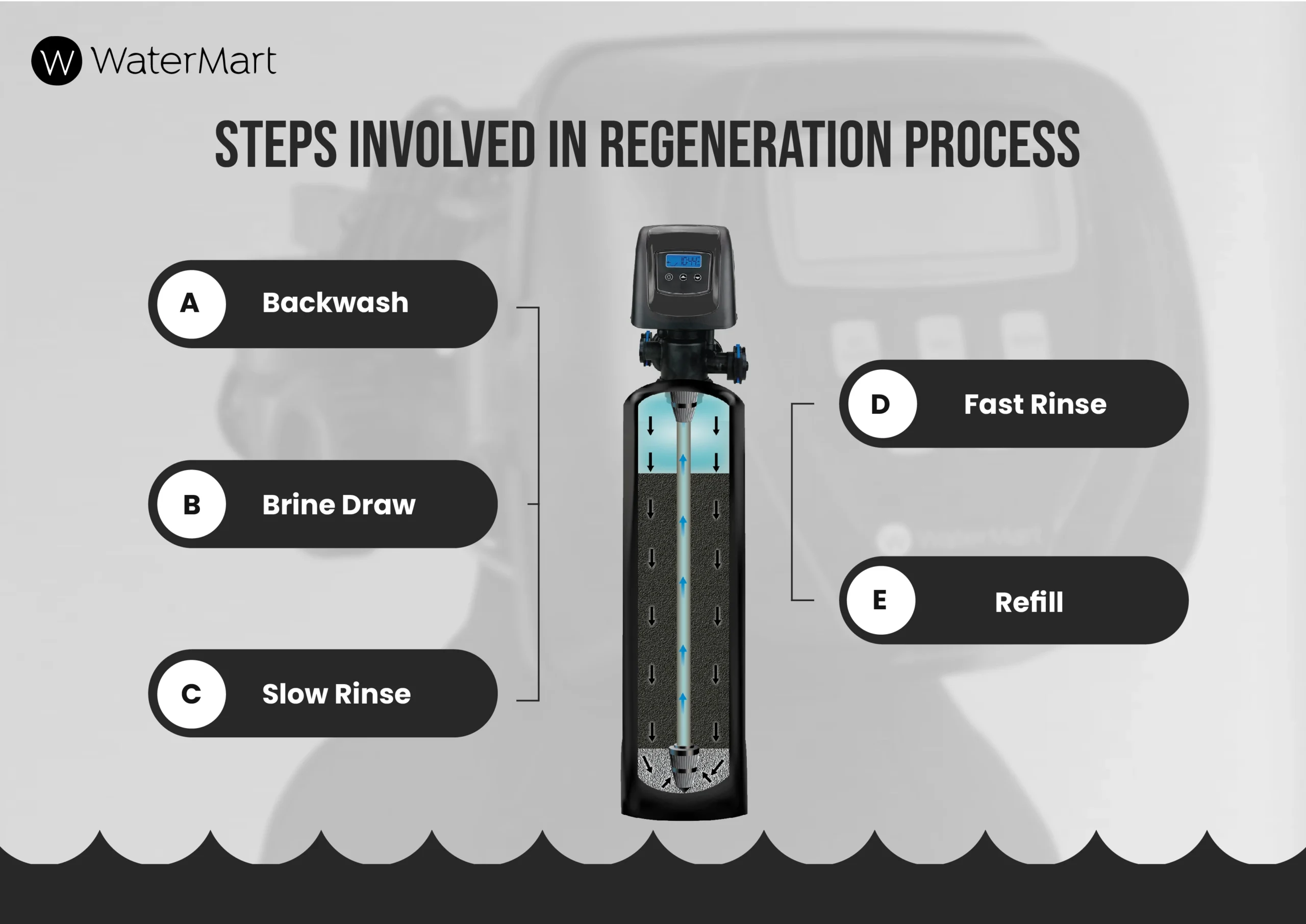 What Is Water Softener Regeneration - Process And Its Types
Newer demand-initiated models? They’re the smart alecks of the softener world. They track how much water you actually use, and only regen when the resin is truly dirty. These can cut water use in half, down to 20–35 gallons per cycle. If you have one, give it a little hug.
Another sneaky factor: the size of your unit. A giant commercial one will guzzle more water to rinse all those beads. A small, under-counter softener for a single sink? It might use less than 15 gallons. Always check the spec sheet — yes, I know, boring — but your wallet will thank you.
Is 50 Gallons Really That Bad?
Let’s put it in perspective. The average American household uses 300 gallons of water per day. So, if your softener regenerates once a week with 50 gallons, that’s just 2% of your weekly usage. Meanwhile, a leaky toilet wastes 200 gallons a month — and you don’t even get soft water from that.
Also, consider this: hard water makes your water heater work harder. Experts say scale buildup can cut heater efficiency by up to 30%. That means more energy wasted. So, a softener’s regeneration water is like paying a small insurance premium to avoid a huge repair bill later. Irony, thy name is plumbing.
How to Tame the Thirst (Without Sacrificing Your Silky Hair)
If you’re feeling eco-guilty, here’s the cheat sheet. First, upgrade to a demand-based softener if you can. It’ll pay for itself in water savings within a couple years.
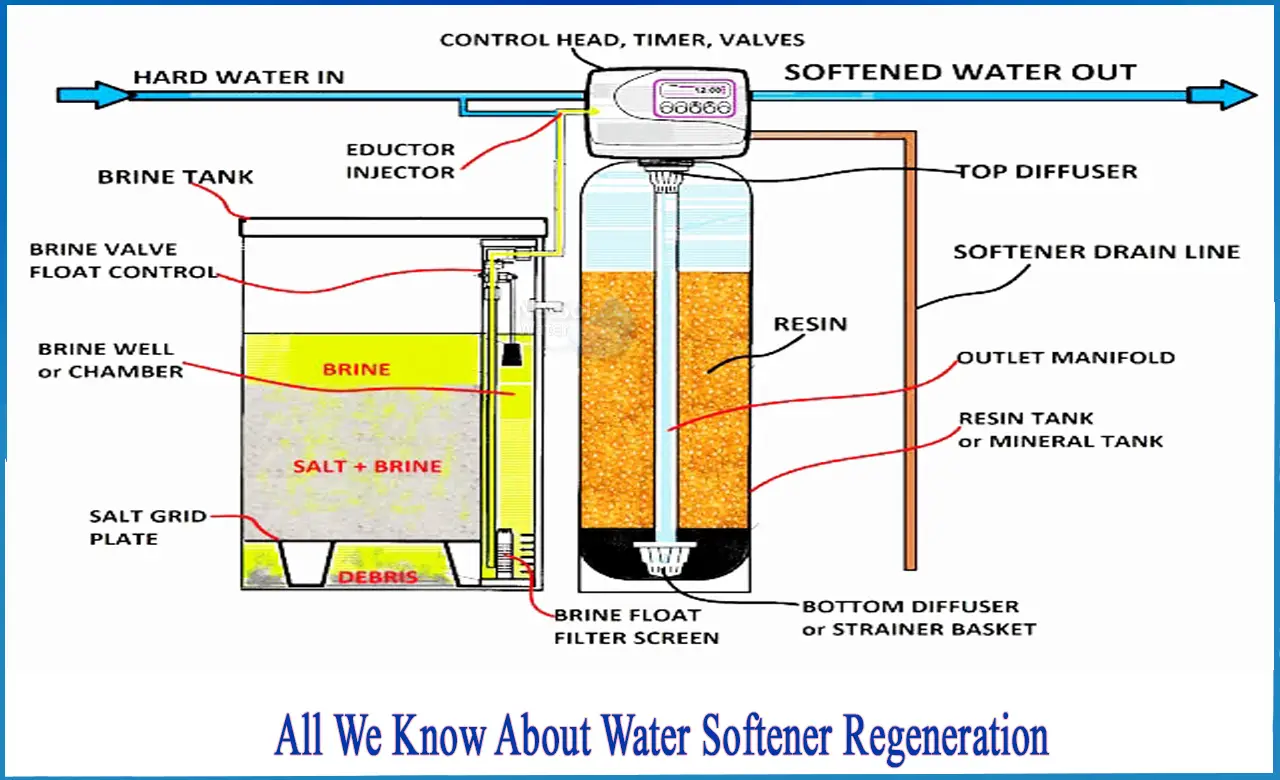 How Long Does It Take To Regenerate A Water Softener | Detroit Chinatown
Second, adjust the salt setting and hardness level on your current unit. Most installers set them too conservatively. Lowering the hardness by 1 or 2 grains can shave off 10 gallons per cycle.
Third, consider a counter-current regeneration system (fancy term, I know). It pushes brine from the bottom up, using less water for the same cleaning power. Ask your plumber — they’ll know what you mean, and they’ll appreciate you doing your homework.
One Last Reality Check
Here’s the truth that no sales brochure tells you: any regeneration uses water, but not regenerating costs you more. I once met a guy who disconnects his softener for a month to “save water.” His shower doors looked like a shattered windshield from all the hard-water spots. He also replaced his water heater twice in five years. Ouch.
So, just enjoy that glass of spot-free ice water. The softener’s little “bath” is a fair price for living in a hard-water world. And hey, if you’re feeling fancy, collect that backwash for your garden — it’s technically safe for non-edible plants. But that’s a story for another blog post.
Bottom line? A softener uses water, not your firstborn. Breathe easy, let it do its job, and maybe treat yourself to a water bill that’s still cheaper than a divorce caused by hard-water arguments. You’re welcome.
