What Does The Grain Mean On A Water Softener

You’ve just bought a water softener, or maybe you’re scrolling through listings online, and you hit the wall: “What does the grain mean on a water softener?” It sounds like a...
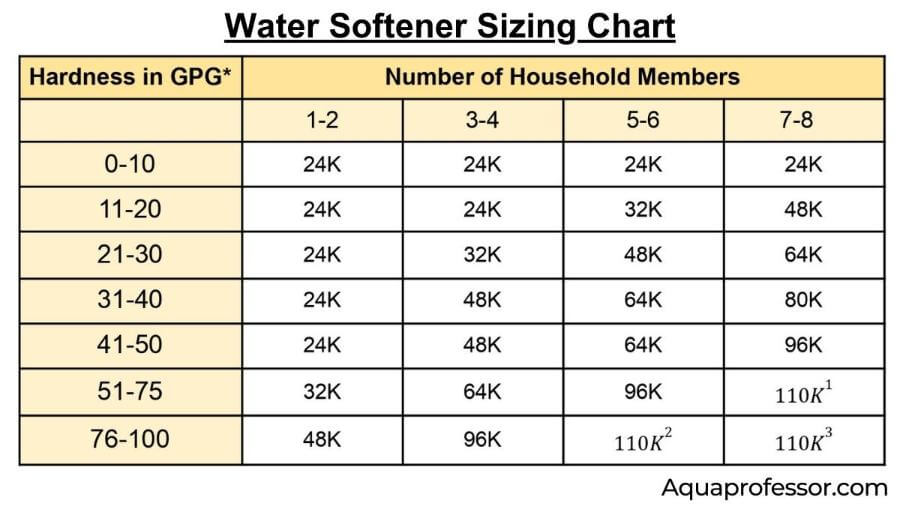
You’ve just bought a water softener, or maybe you’re scrolling through listings online, and you hit the wall: “What does the grain mean on a water softener?” It sounds like a question about farming, or maybe a new health-food trend. Spoiler alert: it’s neither, but it’s the single most important number you’ll need to know.
Think of “grain” as a unit of measurement for mineral armies. Specifically, one grain equals 1/7000th of a pound of dissolved rock—mainly calcium and magnesium carbonates. Your softener’s job is to capture those pesky minerals before they can crust your showerhead or turn your soap into chalk.
Here’s a fun fact to drop at brunch: the term comes from the barley grain, historically used as a standard weight by apothecaries and jewelers. Yes, your appliance has a tiny bit of Renaissance-nerd DNA baked into its specs.
Must Read
Why Grain Count Matters (Like, Really Matters)
The grain rating tells you how much mineral-annihilating power your softener has. A unit with a 30,000-grain capacity can remove that many grains of hardness before it needs to “regenerate”—basically, take a salt-brine shower to wash out its resin beads.
Imagine hiring a bouncer for your pipes. A small club (your two-bedroom apartment) needs a bouncer who can handle rowdy crowd of 15,000 grains per week. A sports arena (a family of five in a hard-water town) needs one who can manage 64,000 grains.
Under-sizing is a rookie mistake. You’ll end up with frequent regenerations, wasting water and salt. Over-sizing is like buying a monster truck to haul a single bag of groceries—wasteful, loud, and prone to breakdowns from not working hard enough.
How to Do the Math (Don’t Worry, It’s Easy)
First, find your water hardness on a municipal report or a test strip. Let’s say it’s 10 grains per gallon (GPG). Next, check your daily water usage—average is about 80 gallons per person. That’s 800 grains per person per day, or 5,600 grains weekly for a family of four.
Now, multiply that weekly number by 7 days to protect the softener from overwork. In our example: 5,600 × 7 = 39,200 grains needed. Round up to the next standard size. That’s why a 40,000-grain unit is the Goldilocks sweet spot for many homes.
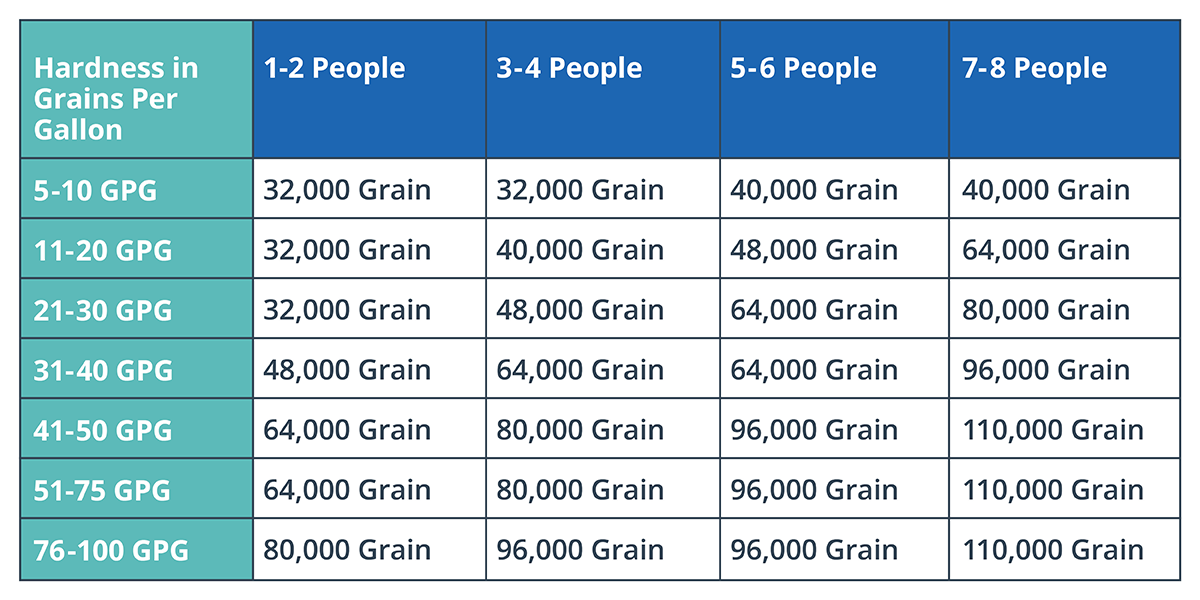 How to Size a Water Softener: Sizing Chart and FAQs | Aquasana
Pro tip: always account for iron. If your water has 1 part per million (ppm) of iron, add 5 GPG to your hardness number. Iron is the rogue agent of hard water—it stains sinks and makes regeneration less effective.
The Cultural Stigma Around “Hard Water”
Let’s be honest—having to talk about water softeners feels a bit like admitting you own a heated bidet. It’s luxurious, secretly practical, and you’re never sure if you should bring it up at a dinner party. But once you’ve experienced silky skin and a scale-free espresso machine, you become a convert.
Europeans often look at us with bemused horror at our obsession with “soft” water. In many parts of the UK and Germany, hard water is a badge of honor—proof of mineral-rich geology. But try telling that to your boyfriend whose hair feels like dry hay after a shower in a hard-water town.
The truth? There’s no right or wrong. Grain count is just a tool to match your local water’s personality. Treat it like choosing a wine—you wouldn’t pair a heavy Cabernet with a delicate fish, and you shouldn’t pair a massive softener with a tiny, low-flow household.
Practical Tips for the Choosing the Right Grain Count
Always buy a unit that can handle your peak week—the week you host a family reunion or friends come to crash for the holidays. Most softeners regenerate on a timer, so a surge in use can leave you with semi-hard water mid-party. Going 10% over your calculated need is smart insurance.
Look for models with demand-initiated regeneration. These smart units measure actual water use and only regenerate when necessary. They’re pricier upfront but save you money on salt and water over time—about 20-30% less salt usage compared to timed models.
 What Size Water Softener Do You Need? — WaterSmart
Don’t forget about physical space. A 64,000-grain unit is the size of a small refrigerator, and your laundry room might not accommodate it. Measure your clearance before you fall in love with a giant softener on a flashy website.
A Fun Little Fact: The Ocean’s Grains
Seawater has an average hardness of about 6,000 grains per gallon. If you pumped ocean water into your home, that 40,000-grain softener would exhaust itself in roughly 6 gallons. That’s why desalination plants use reverse osmosis, not softeners—a whole different level of engineering.
But here’s the weird part: you actually need some hardness in your water for taste and health. The World Health Organization notes that very soft water can leach minerals from pipes. Luckily, most softeners let you bypass a small amount of raw water, keeping that subtle mineral bite.
The Takeaway That Connects to Daily Life
In the end, grain count is just a number that helps you balance chemistry with comfort. It’s the secret architect behind that satisfying lather from your shampoo, the lack of white spots on your wine glasses, and the fact your water heater hasn’t had a breakdown in years.
Think of your water softener as a quiet, hardworking friend who never asks for thanks. The grain rating is its vocabulary—speak its language, and you’ll get decades of smooth, easygoing service. And isn’t that the kind of relationship we all want in our home? Low-maintenance, reliable, and a little bit nerdy in the best way.
So next time someone asks you, “What does the grain mean on a water softener?” you can smile, offer them a glass of perfectly chilled water (no off-flavors), and say, “It’s the measure of how much dried-up mountain rock your house can handle. And trust me, you don’t want any more than that.”
