How Long Does It Take Chlorine To Evaporate

So, you’re staring at a bucket of water, wondering when that sharp, bleach-like smell will just *poof*—disappear. You’re asking the real questions: How long does it take chlor...

So, you’re staring at a bucket of water, wondering when that sharp, bleach-like smell will just poof—disappear. You’re asking the real questions: How long does it take chlorine to evaporate? Grab your coffee, friend. We’re diving into this puddle together.
First, let’s be honest: Chlorine is a drama queen. It doesn’t just vanish quietly. It throws a little chemical tantrum before hitting the road. The short answer? It depends—on air, water, and how much you’re trying to kick out.
The Big Number: 24 to 48 Hours
For most backyard pools or a bucket of tap water, chlorine takes about 24 to 48 hours to evaporate completely. That’s a solid one to two days of waiting. But wait—don’t roll your eyes yet. Mother Nature has a few tricks up her sleeve.
Must Read
If you’ve got a shallow dish sitting in the sun, that chlorine can be gone in hours. Sunlight is chlorine’s kryptonite. Ultraviolet rays break it down like your willpower at a donut shop.
But if your water is deep, cold, and sitting in a dark corner? That chlorine might linger for three to five days. It’s like that house guest who just won’t leave.
Does Agitation Help? You Bet Your Splashes It Does
Stirring the water speeds things up. A lot. Think of it like shaking a soda bottle—except less sticky and messy. When you circulate the water, you’re helping chlorine gas escape into the air.
Pouring water from one container to another works wonders. Each splash is like a tiny, sassy wave saying “bye-bye, chlorine.” Aeration is your secret weapon. It can cut that 48-hour wait down to just a few hours.
So if you’re in a hurry (like you have a fish waiting or a plant that’s thirsty), get that water moving. A fan blowing across the surface helps too. Yes, really. Your ceiling fan might be a chlorine-evaporation superhero.
Temperature: Hot Water, Fast Exit
Heat makes chlorine evaporate faster. It’s science, but also common sense. Warm water molecules move like they’re late for a party, and chlorine tags along for the ride.
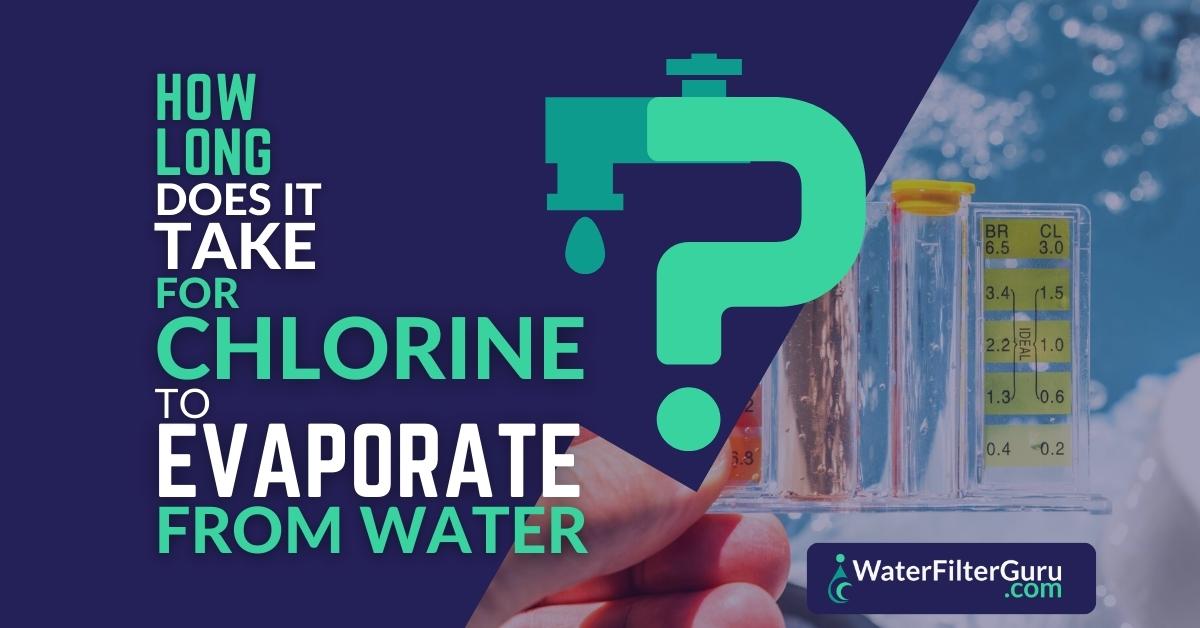 How Long Does It Take Chlorine to Evaporate From Water?
At 70°F (21°C), chlorine might take a full day. Crank it up to 90°F (32°C), and you could see results in just hours. Think of it like this: hot water is the fast-pass lane at the amusement park. Cold water is the line for a boring exhibit.
But careful—boiling water isn’t the best idea. You’ll drive off the chlorine, sure, but you’ll also concentrate any other minerals. Plus, it’s a pain to cool down. Stick with warm, not scorching.
What About that “Chlorine Smell”?
Ah, the classic pool aroma. Newsflash: That smell isn’t chlorine itself. It’s chloramines—a stinky mix of chlorine and stuff like sweat or pee. Gross, but true. Real chlorine evaporates without much odor.
When you smell that “swimming pool” scent, your chlorine is actually already gone. What’s left is a chemical ghost. So if your water still smells like a public pool after a day, you’ve got chloramines, not chlorine. Evaporation won’t fix that. You’ll need to shock the water or just let it sit longer.
Moral of the story? Don’t trust your nose completely. Trust a test kit or patience.
So, How Do I Test If Chlorine Is Gone?
Easy: Buy a cheap pool test strip or a liquid kit. Dip it in, wait a few seconds, and look for the color. No color? Chlorine is a ghost. Pale pink? Still hanging around.
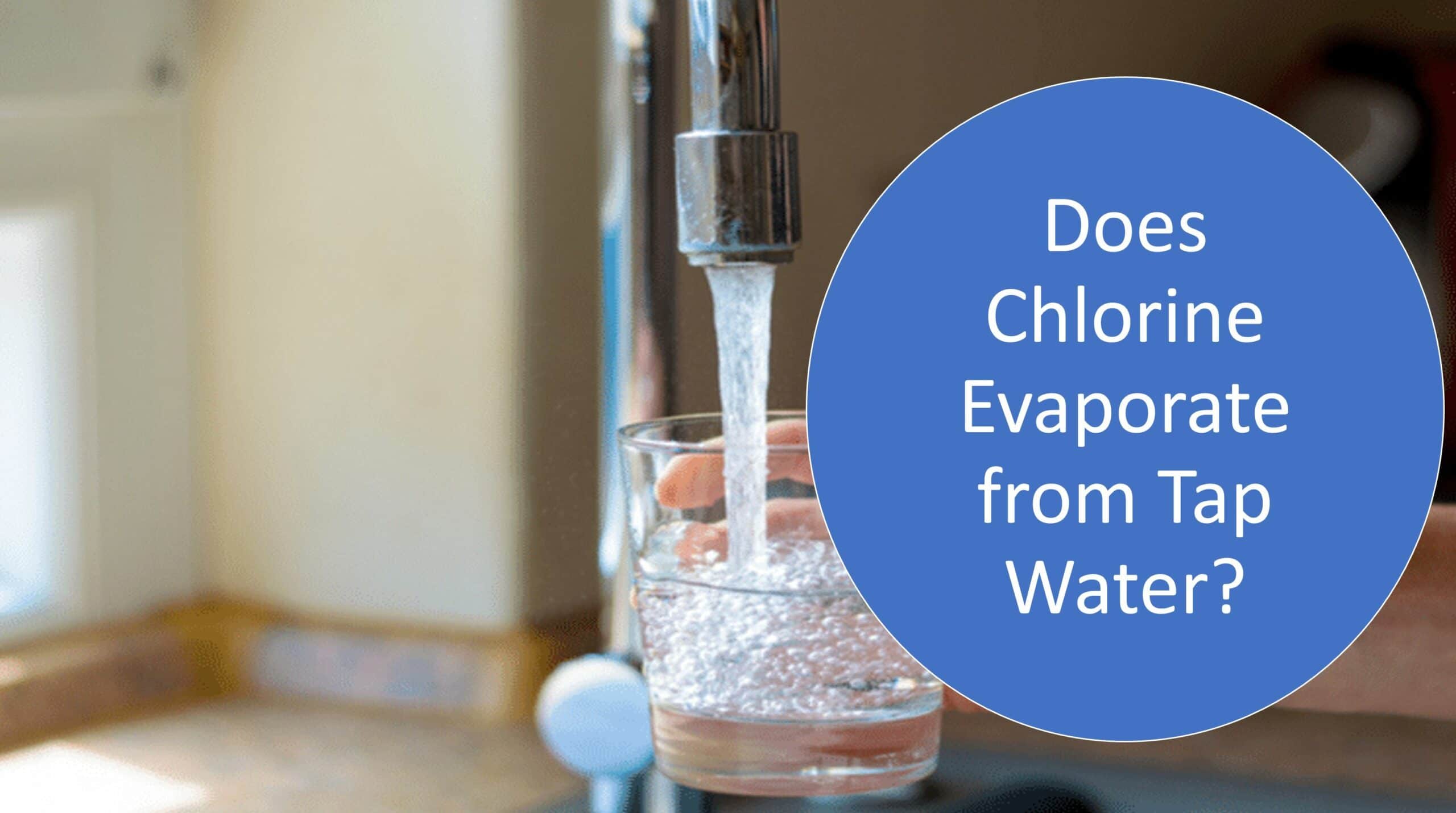 How Long Does It Take Chlorine To Evaporate From Water | Detroit Chinatown
You can also use your sense of time. If you’ve let a bucket sit uncovered for 48 hours in a warm room, you’re likely safe. But for aquariums or hydroponics, always test. Fish are dramatic and don’t forgive.
If you’re impatient (like me), there’s a trick: Add a pinch of vitamin C powder. It neutralizes chlorine instantly. But that’s cheating, and I won’t judge.
Does It Matter If It’s Pool Chlorine vs. Tap Water Chlorine?
Yes, and no. Tap water usually has free chlorine—the easy-to-evaporate kind. It’s like a flimsy paper towel. Pool chlorine is often stabilized with cyanuric acid, which acts like sunscreen. That stuff laughs at UV rays and takes days or even weeks to break down.
So if you’re dechlorinating pool water, forget evaporation. Use a chemical neutralizer or accept you’ll be waiting a week or more. For tap water? You’re golden in a day.
The Final, Lazy Answer
Still here? Okay, here’s your cheat sheet: For one gallon of tap water at room temp, uncovered and unstirred: 24 hours. In sunlight with a fan and stirring? 2–4 hours. For a pool with stabilizer? A week or more.
So go ahead, set a timer, grab a fresh coffee, and watch that chlorine fade. It’s a slow chemical vanishing act, but you’re now the ringmaster. Just remember: Chlorine doesn’t evaporate as much as it escapes. And now you know exactly how long it takes to pull that Houdini.
Now go forth and dechlorinate. Your fish (or plants, or sanity) will thank you.
