How To Detect A Water Leak In Your House

So, you think you might have a water leak? Don’t panic. You’re not alone, and it’s probably not a swimming pool under your floorboards—yet. The key is to become a water detec...
So, you think you might have a water leak? Don’t panic. You’re not alone, and it’s probably not a swimming pool under your floorboards—yet.
The key is to become a water detective. And, like any good detective, you need a magnifying glass, a flashlight, and a healthy dose of paranoia. Let’s dive in—without actually diving into your basement.
The Obvious Clues (Yes, You Did Check the Toilet)
First up: look for the loud leaks. You know, the ones that announce themselves like a bad karaoke singer. Check under sinks for puddles, drips, or a suspiciously cheerful drip-drip-drip rhythm.
Must Read
Don’t ignore your toilet. A running toilet can waste hundreds of gallons a day, and it makes a sound like a bored ghost. Listen for a faint hissing or a constant trickle behind the bowl.
If you see paint bubbling on a wall or ceiling, that’s not artistic expression. That’s water trying to escape its pipes and redecorating your home without permission.
The Sneaky Leaks (Where Ninja Water Hides)
Now we get tricky. Some leaks are masters of disguise. They don’t drip; they just mysteriously make your water bill look like you’re refilling a kiddie pool for a herd of elephants.
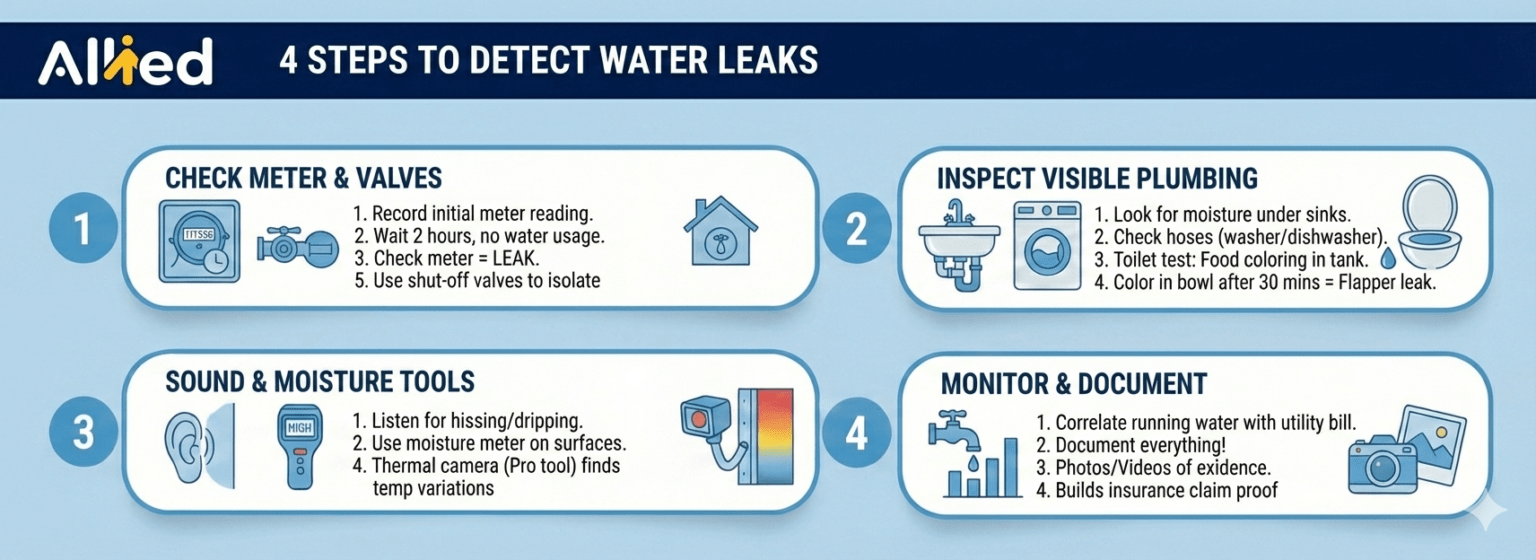
Grab your water meter. Find it outside or in the basement. Turn off all water inside and out—sinks, showers, the ice maker, the whole deal.
Write down the meter reading. Wait two hours without using any water. If the meter moves even a tiny bit, you have a leak. Congratulations? Sorry.
Pro tip: If you have a smart meter, check your app. It might even send you a passive-aggressive notification: “Hey, you’re losing water—maybe don’t ignore me?”
The Toilet Test (Because It’s the Prime Suspect)
Toilets are the biggest leaky villains in most homes. They’re also the easiest to catch. Go to your bathroom and pop open the tank lid—it’s like opening a tiny, watery crime scene.
Drop in a food coloring tablet or a few drops of blue dye into the tank. Don’t flush! Wait 15 minutes. If the water in the bowl turns blue, you’ve got a leaky flapper valve. It’s a cheap, $5 fix—way better than a $200 plumber call.
 How to Find Hidden Water Leaks in Your Home
And no, you don’t need a fancy dye kit. Blue Kool-Aid works in a pinch—just don’t drink it afterward. It’s not a surprise flavor.
The Silent Offenders (Walls, Floors, and the Great Outdoors)
Here’s where it gets real, my friend. Water can hide inside walls like a shy ghost. If you notice warped floorboards, soft spots in the drywall, or a musty smell that reminds you of your college dorm, you’ve got a hidden leak.
Feel the floor near baseboards or where pipes run. Is it squishy? Like a sponge cake that’s been left in the rain? That’s bad. That’s very bad. Call a pro.
Don’t forget the outdoor sillcock—the spigot you use for the hose. If it’s leaking, you’re watering the pavement and your wallet simultaneously.
The Mold Clue (That’s Not a New Flavor of Cheese)
If you see dark spots or black streaks on walls or ceilings, that’s mold. It loves moisture the way raccoons love garbage. It’s also a health hazard, so don’t go sniffing it for science.
Mold usually means persistent dampness. If you find a patch, trace the water source with your fingers—gently, like you’re petting a very damp cat.
And please, don’t cover it with paint. That’s like putting a Band-Aid on a shark bite. Find the leak first.
The No-Brainer Final Checks
Still suspicious? Go on a water patrol before bed. Listen for a drip in the absolute silence of night. It’s like a horror movie, but with less murder and more plumbing.
 How To Detect Water Leaks Inside and Outside Your Home?
Check your water pressure. If it’s suddenly weak or wildly fluctuating, you might have a leak elsewhere. Or a ghost is washing its ectoplasm.
And if you have a basement, smell it. That “wet basement” smell isn’t a charm—it’s a warning. Fresh water has no smell; if it smells like a swamp, your leak has friends.
When to Call the Cavalry (a.k.a. A Plumber)
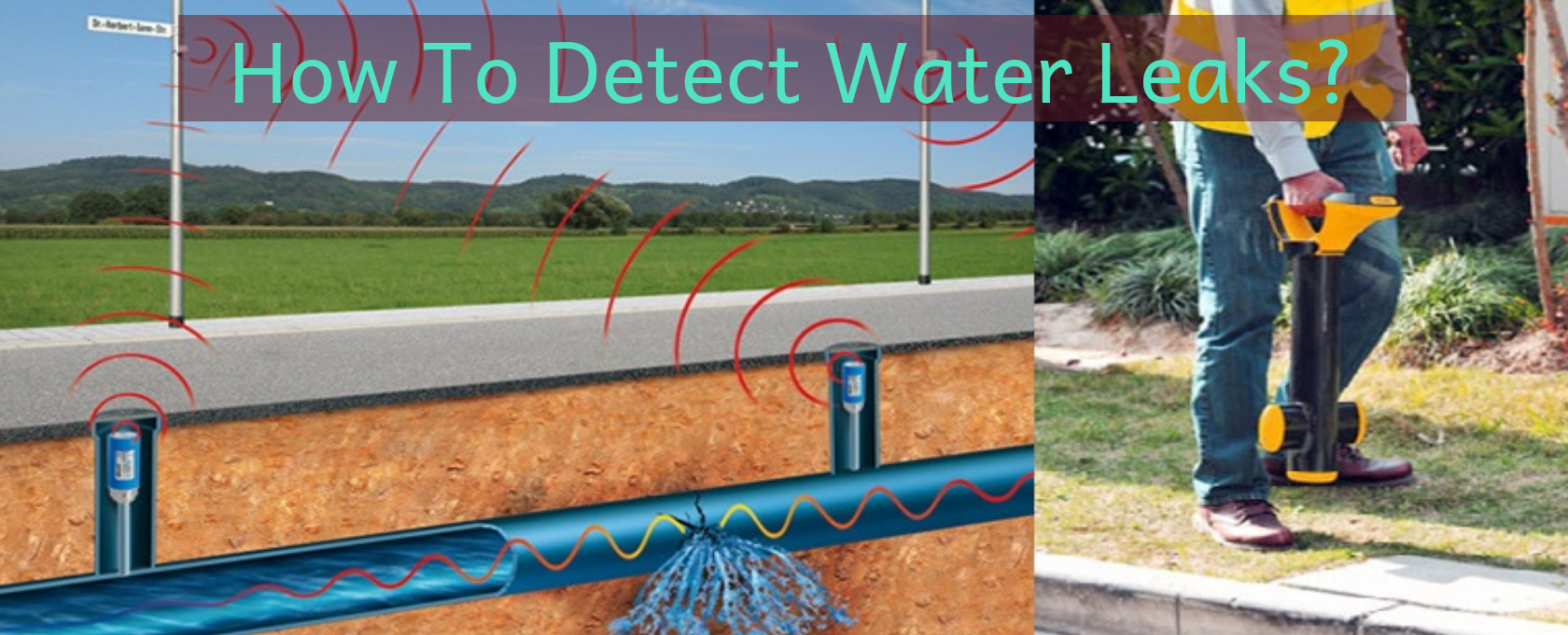
If you’ve done all this and still suspect a leak, call a plumber. Don’t be a hero. Some leaks require special tools—like a thermal camera or an acoustic listening device—that are not in your toolbox unless you’re Batman.
A good plumber is worth their weight in gold (or at least in drywall). They’ll find the leak, fix it, and maybe even tell you a joke while they work. Usually a bad one about pipes.
And hey, if you do find a leak yourself? Pop a little victory dance. You just saved yourself a headache and some serious cash. Go you.
Before You Go…
Water leaks are annoying—like a flea in your sock. But they’re also surprisingly common, and almost always fixable. You’re not the first person to have a mysterious puddle.
Remember: knowledge is power. You can now spot a leaky toilet from a mile away, and you know that mold is not a spice. You’re practically a plumber now—a very enthusiastic one with a Kool-Aid test.
So go forth, brave leak-hunter. Listen to your walls, squish your floors, and stare at your water meter like it owes you money. You’ve got this. And if you don’t? There’s always a very nice plumber with a very big wrench waiting to help. You’re not just saving water—you’re saving your peace of mind. And that, my friend, is priceless.
Now go fix that drip. Your future dry self thanks you.
