How Much Does Water Cost Per Month

Let’s be honest: most of us don’t think about water until the bill arrives. You turn on the tap, fill your kettle, flush the toilet—and then boom, a number appears that makes...

Let’s be honest: most of us don’t think about water until the bill arrives. You turn on the tap, fill your kettle, flush the toilet—and then boom, a number appears that makes you blink twice. But here’s the good news: water is usually one of your cheapest monthly utilities. For the average American household, the cost lands somewhere between $30 and $70 per month. That’s less than your streaming subscriptions, your coffee habit, or even a single tank of gas.
Think about it this way: you get thousands of gallons delivered straight to your home for the price of a nice dinner out. That morning shower? About ten cents. Running the dishwasher? Maybe a quarter. Even a full load of laundry in an efficient machine costs less than fifty cents. Suddenly, that monthly bill feels like a bargain for the magic of clean, safe water on demand.
What’s Actually in Your Water Bill?
Your water bill isn’t just for the H₂O itself. It also covers treatment, delivery, and maintenance of the pipes under your street. Think of it as a membership fee for the world’s most reliable convenience service—no trips to the well, no boiling to make it safe.
Must Read
Most bills break it down into two parts: a fixed charge (a flat fee for being connected to the system) and a usage charge (based on how much you actually use). The usage is measured in units like “CCF” or “gallons.” One CCF equals about 748 gallons, and in many areas, that costs you around $3 to $5.
For a typical family of four, monthly use falls between 8,000 and 12,000 gallons. That sounds like a lot, but it breaks down to just a few dollars per person per day. A leaky toilet, however, can silently double your usage—so keep an ear out for that ghostly hissing sound.
Little Splurges That Add Up (And Don’t)
Remember that time you let the faucet run while brushing your teeth? Each minute wastes about two gallons. If you do that twice a day for a month, you’ve just flushed away 120 gallons—roughly fifty cents down the drain. Not a fortune, but enough to buy a candy bar.
On the flip side, watering a lawn in summer can skyrocket your bill. A single hour of sprinkler use might pump out 1,000 gallons. In some places, that’s an extra $5 to $10 per hour. Suddenly, your green grass becomes a pricey hobby—like paying for a fancy latte every time you turn on the hose.
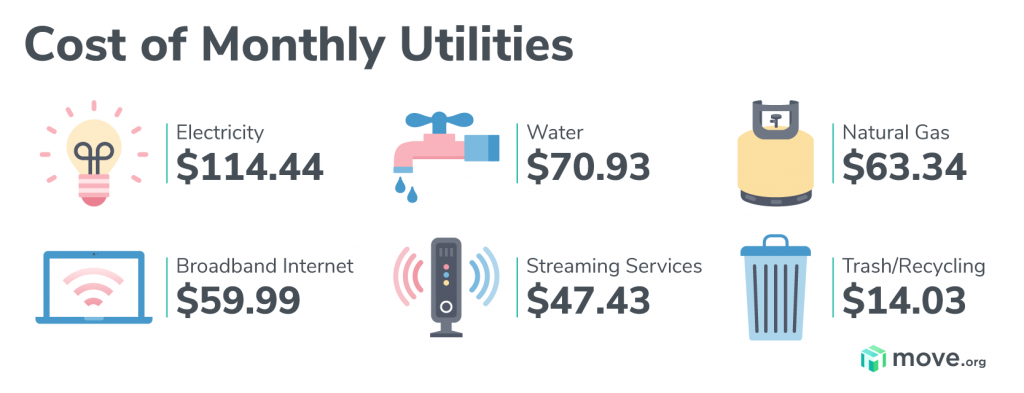 Utility Bills 101: Average Cost of Utilities | Move.org
Here’s a fun reality check: taking a long, hot shower costs about 15 to 30 cents in water and energy combined. That’s cheaper than buying a bottle of water from the store. So go ahead, sing that extra verse in the shower—just don’t leave the water running while you shave.
Why Should You Care? (It’s Not Just About Money)
Sure, saving a few bucks is nice, but water is way more important than your monthly budget. Every drop that comes out of your tap has traveled through a complex system of reservoirs, treatment plants, and pipes. That infrastructure costs serious cash to maintain. When you waste water, you’re essentially asking your community to spend money on nothing.
And let’s not forget the planet. Fresh, clean water is a limited resource—even if it feels infinite when you turn the knob. By using water wisely, you’re helping keep rivers flowing, aquifers full, and your local water rates stable for everyone.
Plus, there’s a hidden bonus: reducing water use often lowers your energy bill too. Heating water eats up about 18% of a home’s energy. So when you take a shorter shower or run full loads, you’re saving cash on both your water and electric bills—like a two-for-one deal at the utility store.
 Rising Water Utility Bills Expected to Go Higher
Simple Ways to Keep Your Bill Low (And Make You Smile)
First, fix that dripping faucet. A slow drip can waste up to 3,000 gallons a year—enough to fill a small swimming pool. A new washer costs about a dollar. Do the math: that’s a huge return on a tiny investment.
Second, try the “dishwasher dance.” Always run your dishwasher full, and skip the pre-rinse cycle. Modern machines are surprisingly tough—they can handle a little guilt from last night’s spaghetti. This simple habit saves about 10 gallons per load.
Third, get a rain barrel for your garden. It’s like having a free water delivery service from the sky. One good storm can fill a 55-gallon barrel, giving you free H₂O for your tomatoes and petunias—and adding a few extra dollars back into your pocket each summer.
The Bottom Line: Water Is a Steal
So, how much does water cost per month? For most of us, it’s a modest $40 to $60. That’s less than your phone bill, your internet, or even your weekly takeout habit. Think of it as the price of having unlimited, safe, delicious water at your fingertips every second of every day.
Next time you fill a glass from the tap, smile. You’re getting one of life’s absolute essentials for pennies. And if you want to keep it that way, just treat it with a little respect—turn off the faucet, fix that drip, and enjoy the fact that you’re already winning the utility lottery. Cheers to that.
