Does Long Island Have Hard Water

So, you’re living on Long Island, right? You fill a glass with tap water, and suddenly you’re staring at a cloudy, milky waterfall that looks like it just escaped a snow globe...

So, you’re living on Long Island, right? You fill a glass with tap water, and suddenly you’re staring at a cloudy, milky waterfall that looks like it just escaped a snow globe. Is your plumbing haunted, or does Long Island just have hard water? Spoiler: it’s the second one, but let’s get gloriously weird with it.
What Even Is “Hard Water,” Anyway?
Imagine your water is on a mineral bender, partying with calcium and magnesium that it picked up from underground rock formations. That’s hard water. It’s not dangerous—you won’t grow a third ear—but it’s like that friend who leaves a mess everywhere: soap scum on your shower, white crust on your faucets, and laundry that feels like sandpaper. Long Islanders, you are basically living in a mineral spa whether you asked for it or not.
Over 80% of American homes have hard water, but Long Island is a special kind of stubborn because of our aquifer. Our water comes from a massive underground layer of sand and gravel that’s basically a giant filter—and also a mineral sprinkler. The Island’s water is typically moderately hard, clocking in around 100 to 200 parts per million, but some areas—like Nassau County near the south shore—can get super-crusted levels. You might need a chisel just to clean your coffee pot.
Must Read
But Why Does It Feel Like I’m Showering in Gravel?
Here’s the part that’ll make you snort your iced coffee. Hard water doesn’t just leave residue on your dishes—it reacts chemically with soap. Soap contains sodium, which bonds with calcium to form a sticky, greasy layer called soap scum. That’s why your hair feels like straw after a shower: the soap scum coats each strand, trapping dirt and making you look like you fought a losing battle with a wax statue. The Island’s water is so rich in minerals that even your shampoo gives up halfway through.
But here’s the mind-bending science: hard water actually tastes better to most people than soft water. Soft water, stripped of minerals, can taste flat or salty. Long Island’s water, with its mineral zing, is why your bagel dough rises perfectly (no, that’s not the only reason, but it helps). Your tap water is a secret ingredient in every crumb from here to Montauk.
 Five Questions with a Scientist & Professor
The Surprising Perks You Didn’t Ask For
You know that annoying white crust on your kettle? That’s calcium carbonate, which is basically the same stuff as limestone. You could theoretically build a tiny castle with it. But here’s the kicker: hard water is actually good for your bones—as long as you’re drinking it. That extra calcium and magnesium are a free dietary bonus, assuming you don’t have a kidney stone issue. Long Island’s water is basically a multivitamin that tastes like Long Island.
And get this—research from the World Health Organization suggests that drinking moderately hard water may reduce the risk of heart disease. No, you can’t replace your cardio with a glass of tap water, but it’s a nice excuse to gloat at your friends who buy fancy bottled water. “Oh, you’re drinking melted snow? I drink ancient aquifer sweat, thank you very much.”
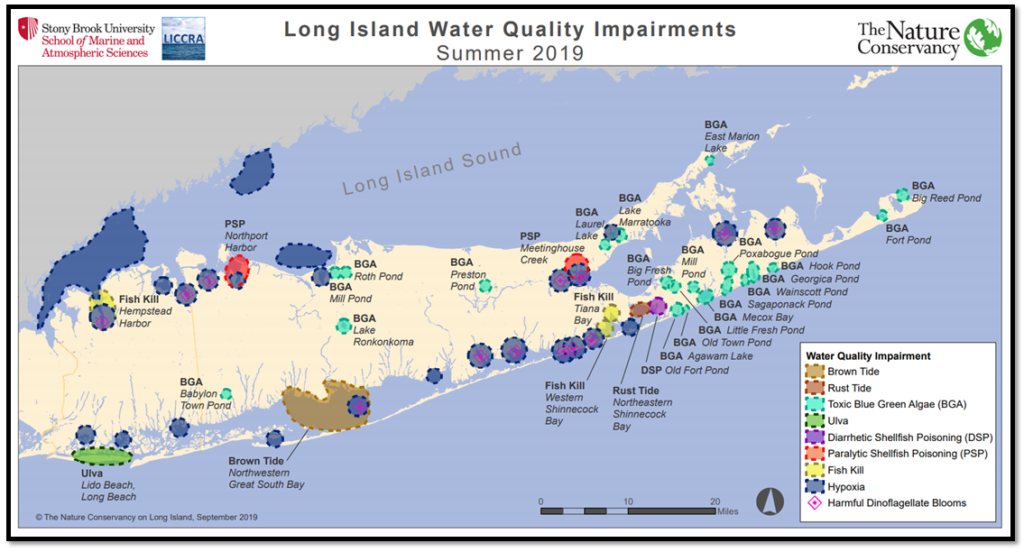
 Long Island Water-Quality Assessment Shows Cause for Concern - SBU News
The Downside: Your Appliances Are Plotting Against You
Hard water is the enemy of anything that heats water. Your water heater, your dishwasher, your washing machine—they all build up scale (that white crust) over time. Scale acts like an insulating blanket, making your water heater work 15-20% harder. That means higher electric bills and a shorter lifespan for your appliances. It’s like your water is slowly turning your home into a fossil. Some estimates say hard water costs a typical Long Island household an extra $200–$500 per year in energy and appliance repairs. But hey, at least your pipes are extra shiny on the inside!
What Can You Do? (Besides Moving to the Moon)
You have three options: live with the crust, buy a water softener, or go full conspiracy theorist and use distilled water for everything. A water softener replaces calcium and magnesium with sodium ions, which makes water “soft” but adds a tiny amount of salt. That’s why soft water tastes a little like the ocean if it were also sad. Alternatively, you can just embrace the hardness and use more soap, more vinegar for cleaning, and have a laugh every time your glass looks like a foggy window.
Most Long Islanders actually don’t bother with softeners, and their water is perfectly fine. The Island’s aquifer is considered some of the cleanest in the country, despite the hardness. So next time you see that cloudy glass, just remember: you’re not drinking hard water—you’re consuming mineral-rich, badge-of-honor Long Island nectar. It’s the price of living in a place where bagels are sacred, traffic is a hobby, and your water will never let you forget where you live.
