How To Get Rid Of Sulphur Smell

Last week, I walked into my kitchen after a weekend away and was hit by a smell so foul, so aggressively eggy, that I actually checked under the sink for a dead rodent. No jok...
:max_bytes(150000):strip_icc()/what-causes-sulfur-burps-4587735-01-dda6a0c753b044139e79f6bb9cc2cc40.png)
Last week, I walked into my kitchen after a weekend away and was hit by a smell so foul, so aggressively eggy, that I actually checked under the sink for a dead rodent. No joke. It was my water heater, quietly plotting against me with a sulfuric whisper that said, "You forgot about me, didn't you?" That’s when I realized: sulphur smell doesn’t care about your plans. It just shows up.
That smell—often described as rotten eggs—is usually caused by bacteria living inside your water heater or plumbing. The bacteria feast on a tiny bit of magnesium or aluminum in the water and release hydrogen sulfide gas. It’s not dangerous in small amounts, but let’s be honest: you don’t want your shower to smell like a swamp.
So, how do you kick this stench out of your house? Let’s roll up our sleeves (and maybe hold our noses) for a few simple fixes. Ready? Let’s go.
Must Read
First Up: The Water Heater Shock Treatment
Your water heater is the prime suspect. If the smell only comes from hot water taps, we’ve got our culprit. The easiest fix? Turn up the heat. Most heaters are set around 120°F (49°C), but cranking it to 140°F (60°C) for a few hours will kill the bacteria.
But wait—don’t burn yourself, okay? After those two hours, turn it back down to a safe 120°F. Then flush the tank by attaching a garden hose to the drain valve and running it until the water runs clear. You’ll see how gross your “clean” water really was.
If that fails, shock the system with hydrogen peroxide. Pour one to two cups of 3% hydrogen peroxide into the water heater’s inlet, let it sit for an hour, then flush it. No bleach—bleach can damage your tank and create toxic fumes. Hydrogen peroxide is your friend here.
The Anode Rod: Your Stinky Secret Weapon
Inside every water heater is a sacrificial metal rod called the anode rod. It’s there to prevent rust, but it can also feed the bacteria that make the smell. If your water is high in sulfur, the rod reacts and creates that rotten egg odor.
You can replace the standard aluminum or magnesium anode rod with one made of zinc or a zinc-aluminum alloy. Zinc naturally suppresses bacterial growth. It’s a $30 fix that takes about 20 minutes with a wrench. Just unscrew the old rod from the top of the heater, slide in the new one, and breathe easy.
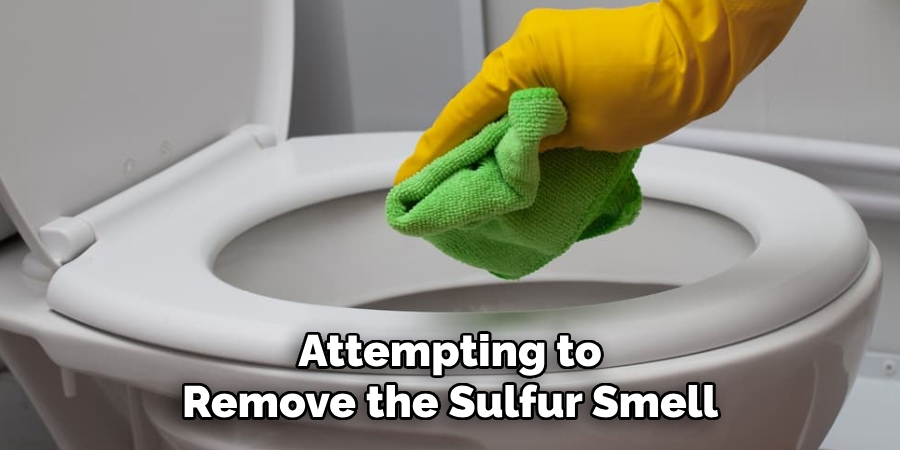 How to Get Rid of Sulphur Smell in Toilet | 10 Easy Methods
(Side note: if you rent, call your landlord. Don’t go DIY on someone else’s property unless you enjoy awkward conversations.)
Don’t Forget the Drains: A Forgotten Stink Hole
Sometimes the smell isn’t your heater—it’s your drain. Bacteria can grow in the pipes of a sink you barely use, or in the P-trap under your kitchen sink. Pour a cup of baking soda down the drain, followed by a cup of white vinegar. Let it fizz for 10 minutes, then flush with hot water.
For a deeper clean, use a drain snake or a brush to scrub the inside of the pipe. And if you have a garbage disposal, grind up a lemon peel and some ice cubes. Your kitchen will smell like a spa instead of a sewer.
Check Your Well Water (If You Have One)
If you’re on a private well, the sulphur smell might be coming from your groundwater itself. In that case, a simple whole-house activated carbon filter can help. There are also specialized “greensand” filters that oxidize sulfur and remove it.
You can also chlorinate your well once a year—a process called shock chlorination. Add a gallon of bleach down the well casing, let it sit overnight, then flush every tap until the chlorine smell is gone. Do this carefully and follow safety guides; chlorine is strong stuff.
 Simple Tricks to Banish Sulfur Smells from Laundry Fast
A Quick Fix for Travelers and Weekend Warriors
If you’re just dealing with a one-off stink after being away, run all your taps for five minutes. Stagnant water grows bacteria, so letting it flow pushes out the smelly water. Running the hot water especially helps clear the bacteria in the pipes.
Add a splash of white vinegar to your dishwasher’s rinse cycle too—it kills odor-causing bacteria that hide in the appliance. Your clothes won’t smell like salad, I promise.
The Ironic Truth: You Might Get Used to It
Here’s the weird part: our noses adapt to familiar smells. You might walk into your house and think it’s fine, while visitors wrinkle their noses. That’s why you should ask a friend for an honest sniff now and then. Embarrassing? Maybe. But less embarrassing than being the person whose house smells like a science experiment.
Finally, if none of this works, you might have a gas leak. Natural gas companies add a sulfur-like smell to detect leaks. If you ever hear a hissing sound or feel dizzy, get out, call 911, and let the professionals handle it. Your nose is not the only tool for that job.
So, there you go. That eggy monster from my kitchen? Gone after a peroxide flush and a new anode rod. Now my water smells like water—boring, clean, and glorious. Your turn. Grab a wrench, a cup of vinegar, and show that sulphur smell who’s boss.
You’ve got this. And if you don’t, just call a plumber. They’ve seen worse.
:max_bytes(150000):strip_icc()/what-causes-sulfur-burps-4587735-01-dda6a0c753b044139e79f6bb9cc2cc40.png&description=How+To+Get+Rid+Of+Sulphur+Smell)