How To Apply For A Water Meter

You know that moment when your water bill arrives and it feels like a cryptic novel written in a language you don’t speak? That’s the universe tapping you on the shoulder to g...
You know that moment when your water bill arrives and it feels like a cryptic novel written in a language you don’t speak? That’s the universe tapping you on the shoulder to get acquainted with your water meter. Applying for one isn’t just about utility—it’s about taking control of your daily ritual.
Why Bother With a Meter at All?
Think of a water meter as your home’s personal financial advisor, but for H₂O. Without one, you’re often paying a flat rate based on property size or neighborhood averages. That’s like paying for an all-you-can-eat buffet when you only nibble on a salad.
Studies show households that switch to metered billing reduce water usage by up to 40%. It’s not about austerity—it’s about awareness. Suddenly, every drop has a price tag, and you become a mindful steward of your tap.
Must Read
The Prep Work: Gather Your Papers, Not Your Nerves
Before you dial up your local water authority, assemble your paperwork like a game-show contestant grabbing clues. You’ll need proof of ownership or your tenancy agreement, a photo ID, and sometimes the property’s valuation certificate. Pro tip: Snap a photo of your current bill—it often contains your account number, which is the golden key.
If you’re renting, your landlord might need to co-sign or provide written consent. Be the squeaky wheel here—a polite email works wonders. In some regions, you can even apply online with a few clicks, which feels like ordering pizza but for civic duty.
Choosing Your Application Method
Most water utilities offer three pathways: online portal, phone call, or in-person visit. The online route is the modern-day hero—fast, trackable, and you can do it in your pajamas. But if your local system is a bit retro, a phone call with a live human might be your best bet.
In-person visits are for the truly committed—or if you enjoy small talk with civil servants. Bring a coffee and patience; these counters often have the charm of a DMV. Whichever you choose, keep a reference number or confirmation email like a digital trophy.
The Application Form: A Field Guide
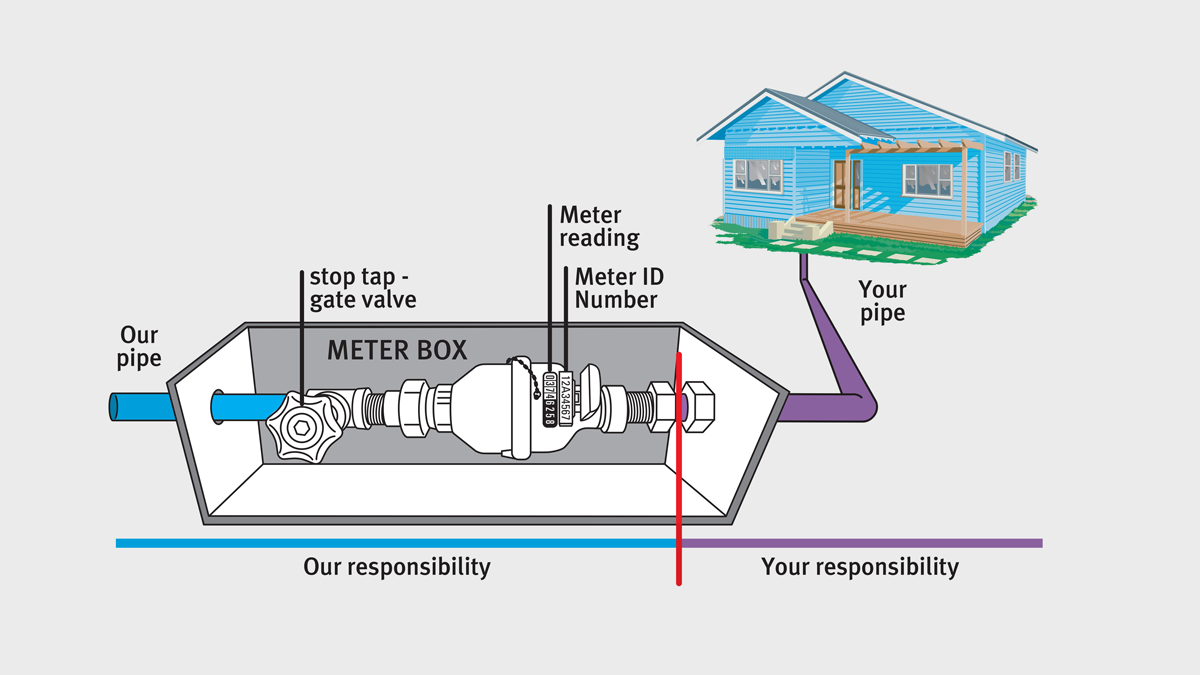
The form itself is deceptively simple—name, address, contact, and a tick-box about the property type. But here’s a fun fact: some forms ask for the “meter location.” If you don’t know, look near the front wall, basement, or under a metal cover outside. It’s like a treasure hunt, but the prize is accurate billing.
 How To Apply For A Water Meter » Spiteleader
Another curveball: they might ask for your preferred billing cycle (monthly vs. quarterly). Monthly helps with budgeting; quarterly feels less frequent but can shock you with a bigger number. Choose based on your wallet’s temperament.
The Installation: When a Stranger Enters Your Lawn
Once approved, a technician will schedule a visit to install the meter. Clear the area around your main water pipe—think of it as prepping for a date with a plumber. Don’t panic if they need to dig a small trench; that’s normal.
The actual installation takes under an hour, and they’ll usually test for leaks. Offer them a glass of water—it’s a nice gesture and slightly meta. Afterwards, they’ll hand you the meter’s serial number; write it down somewhere safe, like on your fridge or in your phone’s notes app.
Practical Tips to Smooth the Process
First, check for subsidies. Many municipalities offer free meter installations for low-income households or seniors. You might be leaving money on the table, and that cash could fund a weekend brunch. Second, track the installation date—you don’t want a surprise visit when you’re mid-workout.
Pro tip: ask about “smart meters” that transmit readings automatically to the utility. They cost a bit more upfront but save you from future manual reading headaches. It’s like upgrading from a flip phone to a smartphone for your water supply.
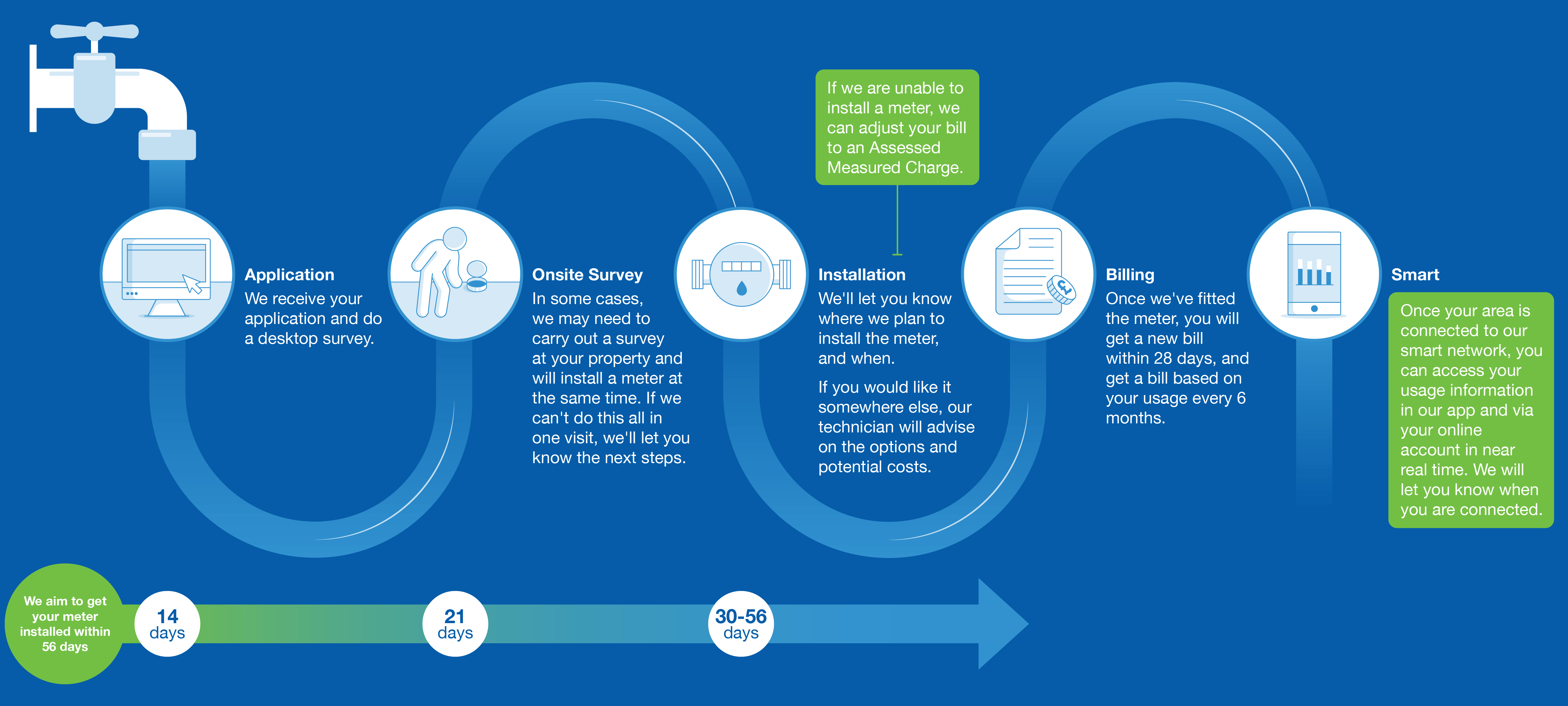 Apply for a meter
Cultural Footnotes: Water Meter Wisdom Around the World
In Tokyo, water meters are often read by a person on a bicycle every month—a charmingly analog approach in a hyper-digital city. Meanwhile, in the UK, some water companies use drones to read meters in rural areas. Yes, drones. Your meter might be monitored from the sky, which sounds like something from a sci-fi novel.
Fun fact: The first modern water meter was invented in 1825 in England. It was originally designed to measure water for breweries. So every time you check your meter, you’re connected to a 200-year-old tradition tied to making beer. Cheers to that.
What Happens After: Your New Water Life
Once the meter is active, you’ll start seeing bills based on actual usage. The first few months might feel like a game—taking shorter showers, fixing a dripping faucet, celebrating if your usage dips. You’ll become a data junkie for your own water habits.
And if you’re eco-conscious, consider installing rain barrels or low-flow fixtures. A meter rewards efficiency like a personal trainer who claps for every drop saved. Small changes compound into real savings—both for your pockets and the planet.
A Reflection on Daily Flow
Water meters are unsung heroes of modern life—quiet sensors of our daily choices. They don’t judge you for the long bath on a cold evening, but they do remind you that every resource has a footprint. Applying for one isn’t a bureaucratic chore; it’s an act of presence.
So as you turn the tap to fill your kettle or water your basil plant, remember: you’re now part of a global network measuring life’s most essential element. Stay curious, stay hydrated, and always read the fine print.
