What Does Alkaline Mean In Ph

Picture this: you’re in a high school chemistry class, half asleep, and the teacher scribbles “pH” on the board. Your brain translates that as “Pretty Horrible” and you nod of...

Picture this: you’re in a high school chemistry class, half asleep, and the teacher scribbles “pH” on the board. Your brain translates that as “Pretty Horrible” and you nod off. But here’s the secret: pH is actually the universe’s way of rating how angry a liquid is. And when something is alkaline, it’s the chillaxed opposite of angry.
Alkaline means a substance has a pH greater than 7—it’s the “basic” cousin of the pH family. While acids are busy dissolving your teeth and burning through carpets (looking at you, battery acid), alkaline things are gentle, slippery, and a little bit soapy. Think of pH as a scale from 0 (super-acid, don’t touch) to 14 (super-alkaline, also don’t touch your eyeball afterward).
The weird part? Pure water sits exactly at pH 7—the boring middle child. Acidic water has more hydrogen ions (H+), which make it anxious and reactive. Alkaline water has more hydroxide ions (OH-), making it calm and ready to neutralize an acid attack. It’s like the Zen master of liquids.
Must Read
So, What Exactly Is “Alkaline” in Real Life?
Alkaline is basically anything that makes an acid shut up and go away. If you’ve ever had heartburn and gulped down an antacid, you’ve weaponized alkalinity. That chalky pink tablet? It’s loaded with alkaline compounds, like calcium carbonate—the same stuff in seashells and chalk—that neutralizes stomach acid.
But my favorite example is bleach. Bleach has a pH around 13—so alkaline it makes your skin feel slick as a dolphin and starts dissolving dirt. And if you’ve ever accidentally mixed bleach with an acidic cleaner like vinegar? Run. You’ll create chlorine gas, which is the universe’s way of saying “Stop being a chemistry cowboy.”
On the other hand, your blood is a fussy little diva. It likes to stay at a pH of about 7.35 to 7.45—slightly alkaline. If it drifts even a tiny bit, your cells start panicking and you might pass out. Your body spends all day, every day, using lungs and kidneys to keep that pH balanced. It’s like a 24/7 cocktail party where the bouncer is your pancreas.
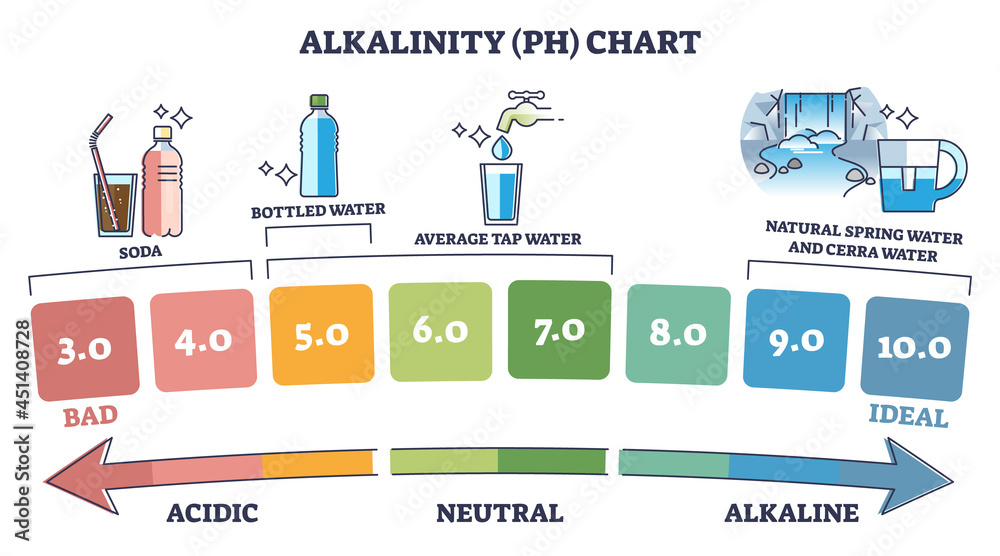 Alkalinity PH chart with water acidity from bad to ideal outline
The “Alkaline Water” Craze: Hype or H2Whoa?
You’ve seen those expensive bottles: “Alkaline Water, pH 9.5!” It promises to hydrate you better, cure your hangover, and maybe even teach your dog to fetch the remote. Let’s be real: drinking alkaline water won’t make you a superhuman. Your stomach is a pocket of hydrochloric acid with a pH of about 2—it’s basically the acid-tank of the Incredible Hulk. That fancy pH 9.5 water gets instantly neutralized the moment it hits your gut.
Here’s a surprising fact: some studies suggest alkaline water might help with acid reflux or hydration after exercise, but the effect is tiny. You’re better off eating a banana (pH ~5.5) and drinking tap water. But hey, if you like paying five bucks for fancy spit-neutralized water, go for it. Just don’t trick yourself into thinking you can fight a bear afterward.
The Wildest Alkaline Thing You’ve Never Seen
Meet the “pH 14” club. The champion of alkalinity is sodium hydroxide—aka lye. This stuff is so caustic that if you drop a chicken leg into a bucket of it, the meat will dissolve into brown soap sludge. It’s used to unclog drains, make soap, and produce pretzels (yes, that glossy brown crust on a pretzel is from a quick alkaline bath!).
And here’s a jaw-dropper: ammonia (pH ~11) is alkaline, but so is egg white (pH ~7.6). Your breakfast omelet is a mild alkaline, while your toilet bowl cleaner is a raging acid (pH 1). See? pH is just a scale of chemical personality disorders.
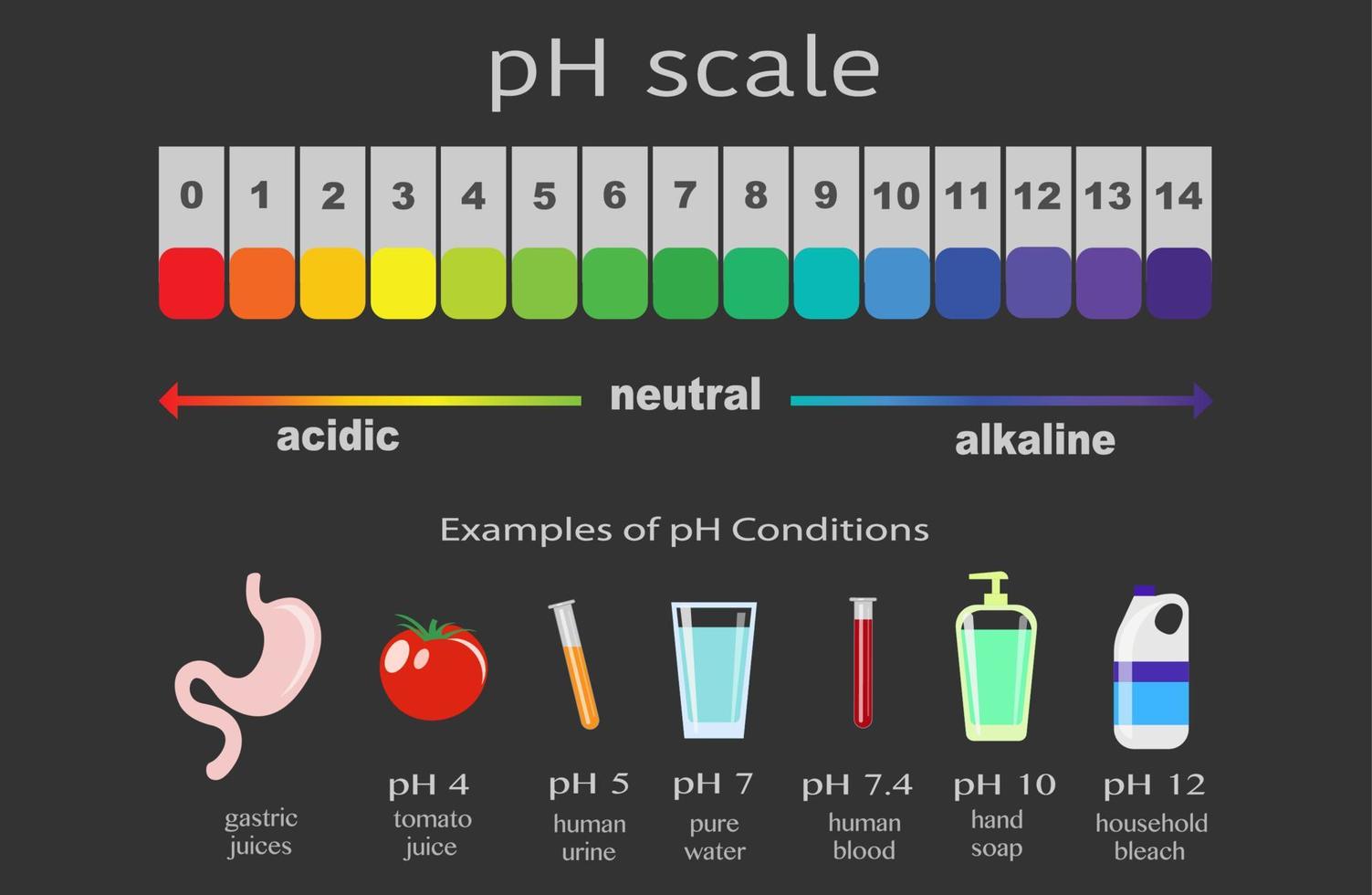 scale of ph value for acid and alkaline solutions, infographic medical
One more fact to blow your mind: the pH scale isn’t linear. It’s logarithmic. That means a pH of 4 is ten times more acidic than a pH of 5, and a pH of 13 is ten thousand times more alkaline than a pH of 9. So a tiny number change is a huge chemical difference. It’s like saying a Chihuahua yipping is ten times louder than a mouse squeak—except it’s chemistry, not dog training.
So, Should You Care About Alkalinity?
Yes, because it’s everywhere. Your soil needs a certain pH for plants to grow. Blueberries love acidic soil (pH ~5); asparagus is an alkaline lover (pH ~8). If you put a blueberry in alkaline soil, it throws a tantrum and dies. Your fish tank needs a specific pH too—or your goldfish will get grumpy and float belly-up.
And here’s the best party trick: you can test pH with red cabbage juice. Boil some red cabbage, and the purple water changes color—turns pink with acid, blue-green with alkaline. It’s the original mood ring. Pour baking soda (alkaline) in, and it goes green. Squeeze lemon juice (acid) in, and it goes hot pink. You’ll feel like a wizard, though you’ll look like a mad scientist with purple fingers.
In the end, alkaline is just the term for anything that loves to hug acid molecules until they calm down. It’s the chemical equivalent of a deep breath and a cup of chamomile tea. Just don’t drink lye, okay? Leave that to the drain spiders.
