What Does Wet Mean On A Bill

So, you’re staring at a bill — maybe for a fancy dinner, a new gadget, or that mystery charge from a website you swear you only “browsed” — and there it is: the word “Wet.” Yo...

So, you’re staring at a bill — maybe for a fancy dinner, a new gadget, or that mystery charge from a website you swear you only “browsed” — and there it is: the word “Wet.” Your first thought? Did someone spill a drink on my paper bill? Nope. Unless your waiter is catastrophically clumsy, we need to decode this.
In the world of money and banking, “Wet” is shorthand for something far less sticky. It usually describes a transaction that hasn’t “settled” yet — like a signature that’s still drying on a check or a payment that’s in limbo. Think of it as the purgatory of payments: it’s been processed, but it’s not quite real yet.
The Origin Story: Why “Wet”?
Imagine the olden days (way before your phone could pay for coffee with a magical tap). People wrote paper checks. When you signed one with actual ink, the signature was wet — literally, like wet ink. If a bank saw “wet,” it meant the check was pending and could still be reversed.
Must Read
Today, it’s a digital ghost. That “wet” charge on your credit card bill means the money is moving from your account to theirs, but the transaction hasn’t fully dried yet. It’s like ordering a pizza and seeing “order received” but your pizza is still a doughy lump in the oven.
What Does “Wet” Mean in Practical Terms?
If you see a charge labeled “Wet” on your bill, don’t panic. It usually means the merchant has authorized the payment but hasn’t captured the funds yet. For example, you fill up your gas tank, and the pump puts a $1 hold on your card. That $1 is “wet” — it may stay that way for a few days.
Another classic scenario: you pay for a hotel room. The hotel “pre-authorizes” your card for the room cost plus a deposit for mini-bar disasters. That pre-auth? You guessed it — wet. It’s a placeholder that says, “Hey, we might take this money, but not yet.” It’s like a ghost that haunts your bank account.
How to Spot a “Wet” Charge on Your Bill
Check your online banking or credit card statement. You’ll see something like “PENDING,” “AUTHORIZATION,” or the delightful “WET” next to an amount. It’s usually smaller than the final bill (like that $1 gas hold) or the full amount (like a hotel). Remember: it’s not a charge yet — it’s a warning shot.
Most “wet” charges disappear within 3–7 days. If you see one that’s been hanging around longer than your ex’s favorite hoodie, call the merchant or your bank. It might mean the transaction failed halfway — like a rained-out picnic.
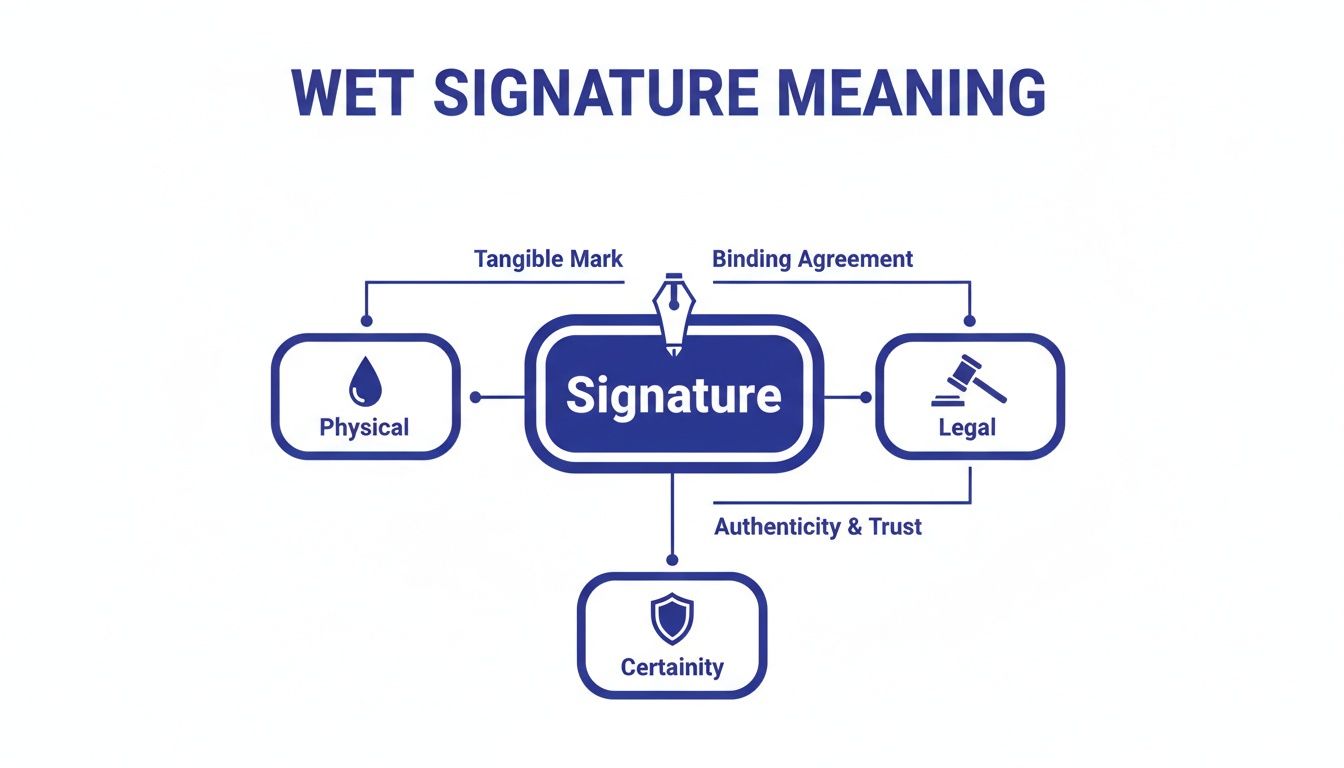 Wet Signature Meaning Explained for Modern Business • BlueNotary
The Joke’s On Us:“Wet” vs. “Dry” Bills
If “Wet” means pending, does “Dry” mean confirmed? Sort of! In accounting slang, a “dry” transaction is settled and final. It’s like the pizza has arrived, you’ve eaten it, and there’s no take-backs. A “wet” one is still questionable — like a slice you ordered but haven’t seen yet.
Here’s a joke to remember: A “wet” bill is like a fish out of water — it’s floppin’ around but hasn’t landed. A “dry” bill is smoked salmon — it’s ready to eat! (Okay, fish analogies are slippery, but you get it.)
Why Do Banks Use This Confusing Term?
Honestly? Tradition. Banks love old-timey words. “Wet” comes from the era of ink pens and ledger books. They could have called it “unsettled,” “pending,” or “ghost money,” but no — they had to keep “wet”. It’s their way of sounding mysterious, like a secret club.
Also, it makes for excellent confusion at dinner parties. “No, Karen, I’m not saying my mortgage payment is soaked in water. It’s wet, meaning I haven’t paid it yet. Please pass the breadsticks.”
What Should You Do If You See a “Wet” Charge?
First, chill. Your money isn’t gone — it’s just in a holding pattern. Check if you made a purchase recently. If yes, you’re fine. If no, it might be a mistake or fraud. In that case, call your bank and say, “Hey, there’s a wet charge I didn’t authorize.” Expect them to ask, “Is it dripping?” (They won’t, but it’s fun to imagine.)
 What is a Wet Signature? Full Guide, Definition and FAQs - e signature
Pro tip: Never assume “Wet” means the merchant can’t take the money. They can — eventually. It’s like a dog holding a treat: they haven’t swallowed yet, but they will. Don’t spend that money again unless you want to risk an overdraft.
A Quick Summary So You Don’t Drown in Confusion
Wet = pending, unconfirmed, temporary. Think of it as a promise to pay, not a payment itself. It will either dry into a real charge or evaporate. Either way, your bank account will survive.
If you look at your bill and see a wet charge that looks suspicious, it’s probably just a glitch or a pre-auth. Don’t panic — just wait a few days. If it doesn’t go away, then you can gently harass your bank with a phone call. Use your inside voice, please.
The Uplifting Conclusion (You’ve Earned It)
So, there you have it: “Wet” on a bill isn’t about spilled water or damp paper. It’s just a fancy way of saying, “Hold your horses, we’re not done yet.” And honestly, isn’t that a comforting thought? In a world of instant everything, some things still take a little time to dry. It’s like a slow-cooked meal for your bank account.
Next time you see that funny little word, smile. You’re now in on the joke. You’re a wet bill expert. Go forth, read your statements with confidence, and maybe — if you feel fancy — tell a friend, “Hey, my transaction is wet.” Watch them panic. Then laugh. Because now you know it’s all just temporary nonsense before the good stuff happens. And that, my friend, is something to be dry happy about. Cheers to you, you brilliant finance detective!
