How Does A Water System Work

Picture this: It’s 3 AM, and you’re stumbling to the kitchen for a glass of water. You twist the faucet, and *bam*—cold, clear water pours out like magic. You don’t even think...
Picture this: It’s 3 AM, and you’re stumbling to the kitchen for a glass of water. You twist the faucet, and bam—cold, clear water pours out like magic. You don’t even think about it. You just drink, go back to bed, and never thank the invisible army that made it happen.
That army? It’s not wizards. It’s a water system. And trust me, it’s way more dramatic than your late-night snack run.
Where Does Your Water Come From?
Let’s start at the source. Your water isn’t born in a pipe—it’s stolen from a river, a lake, or an underground aquifer. (Yeah, it’s basically heist-level looting, but legal.)
Must Read
Think about your local reservoir. That’s a big, man-made lake where water chills out, waiting for its big break. Nobody drinks it raw, though. It’s full of fish poop, algae, and who-knows-what else. You’re not that desperate.
So, the system sucks it up via giant intake pipes. And here’s the kicker: those pipes can be huge—like, big enough to drive a car through. Wild, right? (Please don’t test that theory.)
The Treatment Plant: Water’s Spa Day
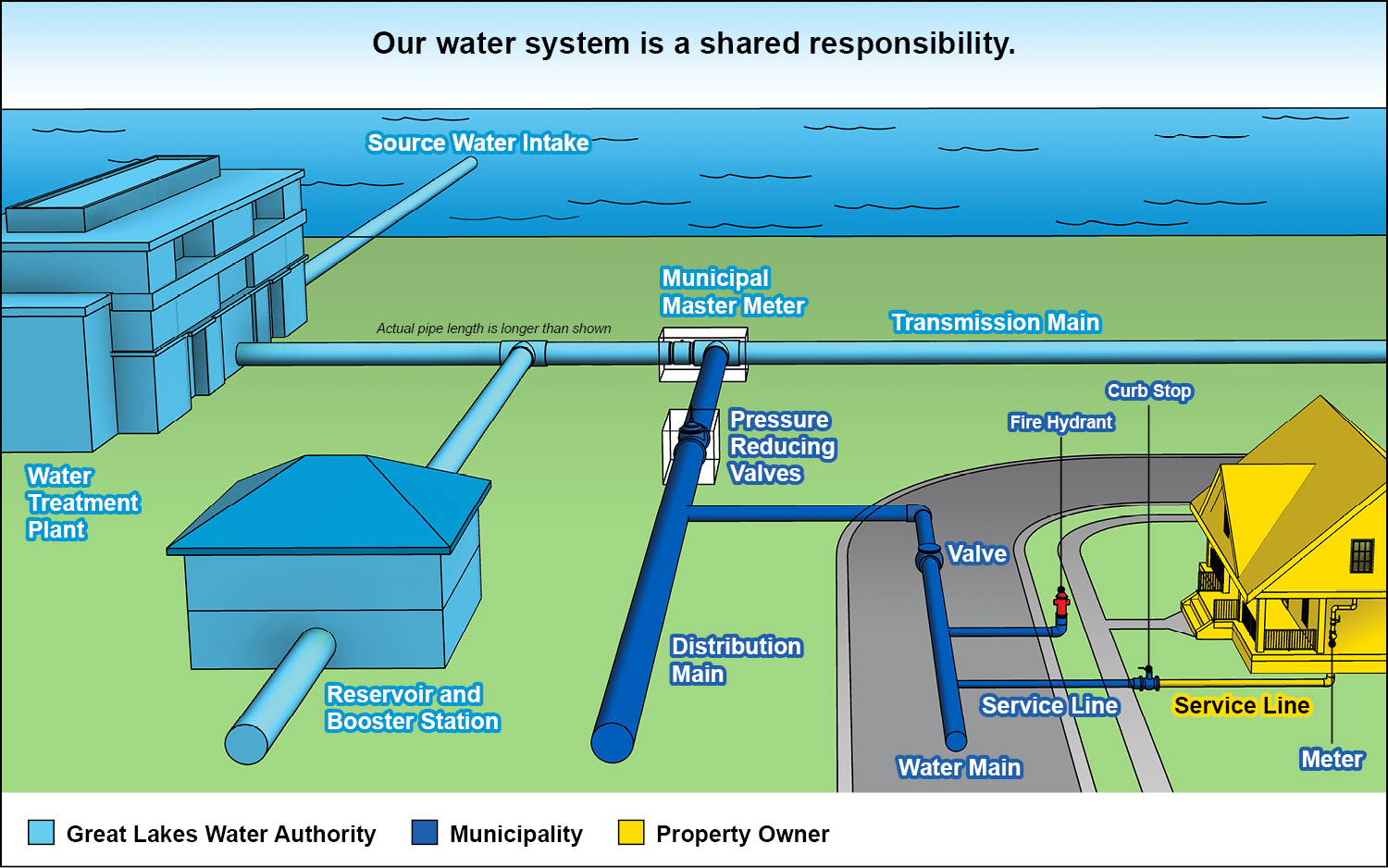
Now your water enters a treatment plant, which is basically a fancy spa for dirty liquids. First stop: coagulation. Chemical powders are added to make tiny particles clump together into bigger chunks called “floc.” Sounds like a bad indie band name, I know.
Next comes the sedimentation basin. The water sits still, and all that heavy floc sinks to the bottom like a lazy cat. The clear water on top gets skimmed off—think of it as the “clean kid” in a messy classroom.
Then filtration hits. Water passes through layers of sand, gravel, and charcoal. This step catches the tiny leftover bits. Finally, disinfection happens, usually with chlorine or UV light. It kills bacteria and viruses that would love to party in your gut.
Side note: Ever wonder why tap water smells like a pool? That’s chlorine doing its job. It’s not trying to ruin your morning shower—it’s saving you from dysentery. You’re welcome.
 Water Supply System Diagram at Tiffany Baker blog
From Plant to Your Faucet: The Piping Odyssey
Once clean, water doesn’t teleport to your sink. It needs a transport system. That’s where a maze of underground pipes takes over, called the “distribution network.” Some pipes are ancient—like, 100 years old—and still chugging along. (Your plumbing is literally older than your grandparents.)
Gravity does most of the heavy lifting. Treatment plants are usually built on high ground, so water flows downhill naturally. If you’re in a flat area? No problem—pumps scream to life and shove the water along. These pumps are loud, by the way. Don’t stand near one unless you want your ears to ring for a week.
And here’s the scariest part: water travels miles through dark, cramped tunnels. It could pick up rust, dirt, or—gulp—dead critters along the way if the pipes are damaged. But fear not! Water systems constantly test samples at your faucet. That funny-tasting glass you just drank? It passed the test. Probably.
Pressure: The Invisible Bouncer
You know how water shoots out when you turn the tap? That’s pressure. Water towers are the secret bosses here. They’re those big tanks on stilts you see in every town. They store water high up, and gravity pushes it down into your pipes.
Pressure can be finicky. If you live on a hill, your water might trickle like a sad garden hose. That’s because the tower isn’t high enough to bully the water into your home. Solution: pressure booster pumps, which are basically angry fans that yell at the water to move faster.
Ever flushed a toilet while someone’s in the shower? That pressure drop is real. Boom—scalding hot water for the shower victim. Sorry, not sorry. Blame the system’s physics, not your timing.
 How Does A Water Distribution System Work at Ilene Haase blog
What Happens After You Use It?
You flush, you wash, you drain. That water—now called wastewater—disappears down a hole and enters another world. It flows through sewer pipes that are literally tunnels of horror. (But let’s not dwell. Pun intended.)
It ends up at a wastewater treatment plant. There, solids settle out, bacteria eat the gross stuff, and chemicals kill the rest. The water is then cleaned enough to be released back into rivers or oceans. So, yeah, your pee is recycled into drinking water eventually. Cheers.
That’s the cycle: source → treatment → pipes → you → sewer → treatment → nature → source again. It’s like a really unglamorous, but vital, conga line.
The Big, Sobering Truth
This entire system—the miles of pipes, the 3 AM pumps, the chemical wizards—is underfunded and aging. Many U.S. water systems are from the 19th century. They’re held together by duct tape and stubbornness. Literally, some pipes are wood.
Climate change is messing with sources. Droughts dry up rivers; floods contaminate them. And your water bill? It’s artificially cheap. Most people don’t pay the real cost of that late-night glass.
So next time you twist that faucet, spare a thought for the engineers, the operators, and the old pipes doing the grunt work. They’re the unsung heroes of your midnight hydration. Now go drink—you’re thirsty. And maybe send a thank-you note to your local water plant. They’d appreciate it. (I’m half-serious.)
