How Much For Water Softener

Let’s be real for a second: no one wakes up dreaming about buying a water softener. You’re more likely to be fantasizing about that perfect latte or a weekend hike. But then y...

Let’s be real for a second: no one wakes up dreaming about buying a water softener. You’re more likely to be fantasizing about that perfect latte or a weekend hike. But then your shower feels like sandpaper, your dishes look haunted by ghost spots, and your plumber gives you a knowing, pitying look. That’s when the question hits: how much for water softener, anyway?
Don’t panic. We’re going to peel back the price tag like a sticky label on a new coffee mug. The answer isn’t one number—it’s a range as wide as your local farmer’s market selection. But with a little know-how, you’ll find the sweet spot between your wallet and your water.
The Price Spectrum: From Budget to Bougie
Think of water softeners like sneakers. You can get a functional pair for a hundred bucks, or drop a grand on limited-edition kicks that also track your sleep. For water softeners, entry-level models start around $400 to $600. These are usually basic, single-tank units perfect for a small household.
Must Read
Mid-range softeners hit $800 to $1,500. This is your “sweet spot” zone—like finding a great pair of jeans that don’t need hemming. You’ll often get digital controls, better efficiency, and a brand with solid customer support. This is where most of us should land.
Then there’s the high end: $2,000 to $4,000+. These are the smart-home kings with Wi-Fi, super-efficient salt usage, and warranties that outlast your car loan. Think of them as the Peloton of water treatment—impressive, but only necessary if you’re training for the hydration Olympics.
Installation: The Hidden Handshake Fee
Here’s where the price tag gets a little high-minded. The unit itself is only half the story. Professional installation typically runs $200 to $600. If you’re handy, you can DIY and save big, but remember: plumbing gremlins are real. One wrong PVC joint and you’re starring in your own home repair reality show.
Fun fact: According to the Water Quality Association, hard water affects 85% of U.S. homes. That means you’re in a very large, slightly crusty club. And here’s the kicker—soft water can extend the life of your appliances by up to 30%. So spending now is like buying a time machine for your washing machine.
Salt, Maintenance, and the Monthly Sip
Don’t forget the recurring costs. Softeners need salt, and salt costs $5 to $20 per bag. A typical household goes through one or two bags a month. That’s roughly $100 to $250 a year—about the same as your Spotify and Netflix combined. Priorities, people.
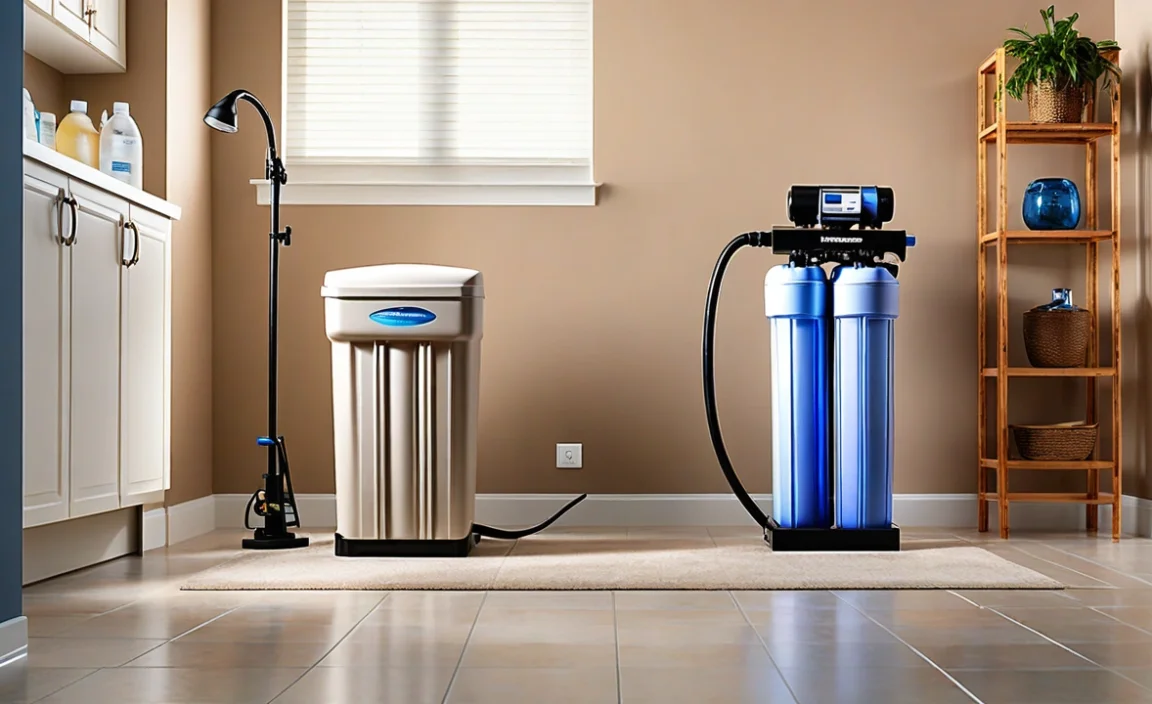 Kinetico Water Softener Cost? Get the Facts!
You’ll also need to clean the brine tank annually. It’s not glamorous, but neither is scrubbing calcium scale off your kettle. Pro tip: set a phone reminder for “Softener Spa Day.” Channel your inner minimalist and enjoy a moment of quiet satisfaction.
Cultural reference check: Remember Ross from Friends obsessing over his “moisture” problems? That’s you now, but with better water. You’ll become the friend who gently touches someone’s glassware at a dinner party and whispers, “No spots. Nice.”
Rent vs. Buy: The Eternal Dilemma
Some companies offer a rental model for $20 to $40 per month. This covers installation, maintenance, and salt delivery. It’s the subscription box approach to water. Great if you hate commitment or live in a rental yourself. Over five years, though, buying is usually cheaper.
Here’s the math: renting for five years costs about $1,800. Buying a solid mid-range unit with installation might run $1,500. After that, you own it, and your only cost is salt and the occasional scrub. Feel that savviness? That’s fiscal responsibility with a side of hydration.
Quick tip: Always ask if the softener removes iron. Hard water is annoying, but iron-laced water can turn your white socks orange. That’s not a good look, even for Instagram irony.
The “Wait, Do I Even Need This?” Check
Before you spend a dime, check your water’s hardness level. A simple test kit costs $10 to $15 at a hardware store. Or call your municipal water supplier—they often publish data online. If your water is above 7 grains per gallon, you’re a candidate for softness.
 Can You Drink Softened Water? Facts, Myths & Health Insights!
Signs you have hard water: soap doesn’t lather well, your hair feels like straw post-shower, and your coffeemaker has a mineral crust that looks like a science experiment. If you nod while reading this, your wallet is already opening. It’s okay. We’ve all been there.
Smart Shopping: Your Saturday Morning Strategy
Don’t buy the first unit you see. Price-check on at least three websites. Big box stores like Home Depot or Lowe’s are fine, but specialty dealers often have better quality for similar money. And avoid those late-night infomercials—unless you also want a set of Ginsu knives and a magic mop.
Check online reviews for “regeneration noise.” Some softeners sound like a washing machine on spin cycle at 3 AM. Unless you live alone in a soundproof bunker, you want a quiet model. Your relationship with sleep is sacred.
Fun fact: The concept of water softening dates back to ancient Romans, who used lime to treat aqueduct water. They had epic baths but no salary to negotiate. You have both. Use your power wisely.
A Short Reflection on the Flow of Life
In the end, a water softener isn’t about luxury—it’s about the quiet moments. It’s the gentle glide of clean hair under a hot stream. It’s the sparkle of a wine glass you didn’t polish. It’s one less friction in your daily rhythm. We spend so much time chasing big happiness that we forget how small comforts—like truly clean water—anchor our days.
So how much for water softener? Enough to make your life a little smoother, your morning a little brighter, and your laundry a lot less complicated. And honestly? That’s a price worth paying. Now go sip something delicious from a spotless glass. You’ve earned it.
