How Does Water Affect Skin

Okay, let’s talk about water. Not the kind you chug after a workout (though that’s important too). I’m talking about the magic liquid that splashes on your face every morning...

Okay, let’s talk about water. Not the kind you chug after a workout (though that’s important too). I’m talking about the magic liquid that splashes on your face every morning and night. Does it really make your skin happy, or is it just…wet?
Short answer: Yes, water is basically your skin’s BFF. But it’s a complicated friendship. Think of it less like a simple hug and more like a high-maintenance relationship where timing and technique matter.
Let’s dive in (pun absolutely intended).
Must Read
Your Skin’s Thirst Trap
Imagine your skin cells as tiny, grumpy sponges. When they’re dry, they shrink, tighten, and look a little deflated—like a forgotten grape left in the sun. Not cute.
Water is what plumps them up. Hydrated skin is bouncy, smooth, and reflects light like a disco ball. Dehydrated skin? Dull, flaky, and prone to throwing wrinkles. Water is the ultimate fill-up station for those spongey cells.
But here’s the kicker: slathering water on your face isn’t enough. You need to keep it there. Think of your skin as a leaky bucket. Water goes in, but if you don’t have a lid, it all drips out. That lid is called a moisturizer.
Tap Water vs. Your Face: A Dramatic Showdown
Not all water is created equal. Tap water? It’s got minerals (like calcium and magnesium) that can be too rough for some skin types. Hard water leaves a film that clogs pores and makes your moisturizer slide off like a greased watermelon.
If your face feels tight or weird after washing, don’t blame the soap. Blame the water quality. A filter on your faucet can be a game-changer. Or, you can use micellar water (which is basically water that went to charm school).
And please—please—avoid hot water. Yes, a steamy shower feels like a hug from a cloud, but high heat strips your skin’s natural oils faster than you can say “oops.” Lukewarm water is the Goldilocks choice: not too hot, not too cold, just right.
Drinking Water: The Inside-Out Miracle (Health) Myth
You’ve heard it a million times: “Drink more water for perfect skin!” I hate to burst your bubble, but guzzling eight glasses won’t turn you into a dewy goddess overnight. Your body is smart—it sends water to your organs first, and your skin gets the leftovers.
 What is Trans-Epidermal Water Loss (TEWL) and why does it matter for s
That said, chronic dehydration will make your skin look tired, sallow, and sad. Think of drinking water as giving your skin an extra whisper of support, not a fire hose. It helps, but it’s not a magic eraser for acne or wrinkles.
So yes, keep sipping. But don’t expect your pores to throw a parade every time you finish a glass.
The Science of Soggy: How Water Really Gets In
Here’s where it gets clever. Skin doesn’t just absorb water like a paper towel. It’s picky. The outer layer (the stratum corneum) has natural compounds called Natural Moisturizing Factors (NMFs). They grab water from the environment and hold it tight. Fancy, right?
When you wash your face, you can accidentally wash away these NMFs. That’s why a splash-and-dash routine can backfire. You need to apply a moisturizer while your skin is still damp. That locks the water in like a hug after a sprint.
Pro tip: After washing, pat your face dry—don’t rub. Rubbing is aggressive and irritating. Patting is gentle and polite. Your skin appreciates manners.
Water’s Weird Side: The “Over-Wetting” Problem
Believe it or not, you can have too much of a good thing. Soaking in a bath for an hour? That’s called maceration. Your skin gets pruney, weak, and its barrier gets all wobbly. It’s like leaving a sandwich in the rain—eventually, it falls apart.
Over-washing (like cleansing five times a day) can strip oils so badly that your skin starts screaming in redness. Balance is key. Wash twice a day (or after sweating), and don’t let water linger.
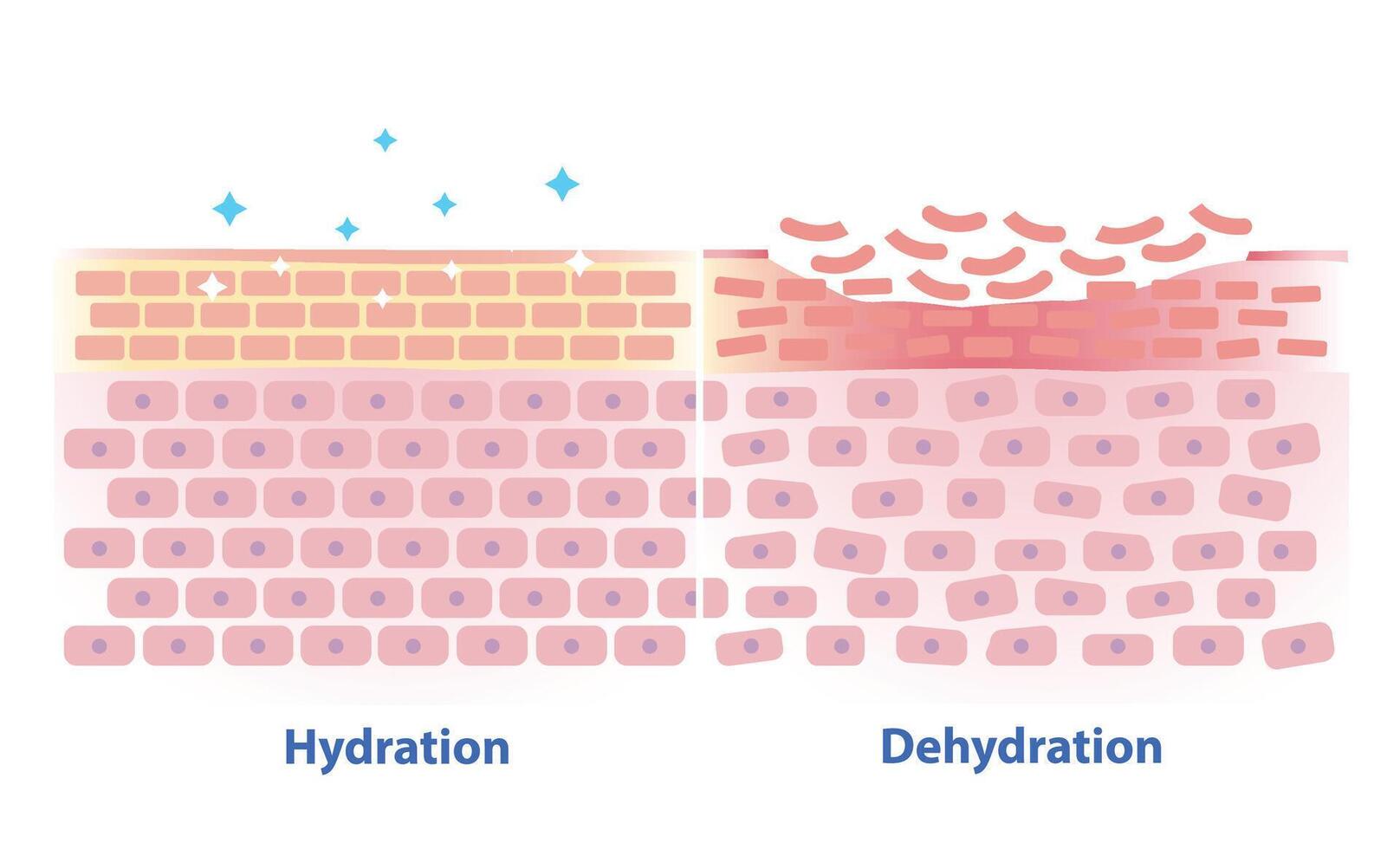 Comparison of hydration and dehydration skin illustration. Cross
Also, swimming pools? That chlorine is great for killing germs, but it’s basically a chemical peel for your skin. Rinse off immediately afterward. Chlorine is no joke—it’s water’s angry cousin.
DIY Water Face: Does Splashing Help?
Washing your face with water alone? It’s okay for some people, but water can’t dissolve oil. So if you wear sunscreen or makeup, you’ll just be smearing it around like a sad artist. Use a cleanser. Water is the carrier, not the cleaner.
However, a quick splash of cool water mid-day is a fantastic pick-me-up. It wakes up your circulation and makes you look less like you’ve been staring at spreadsheets for three hours. Try it. It’s free, and your face will think you’re a spa.
The Final Rinse: What You Should Actually Do
So, how does water affect skin? It’s the stage, not the star. Water sets the scene, but moisturizers, serums, and sunscreens are the actors. Without water, your skin is a dry desert. Without a moisturizer? It’s a desert with tiny, screaming cacti.
Here’s your cheat sheet: Use lukewarm water. Pat dry. Lock in moisture immediately. Don’t over-wash. And maybe invest in a shower filter if your tap water is aggressive.
And for heaven’s sake, enjoy your water—drink it, splash it, but don’t let it rule your life. Your skin is resilient, wonderful, and already doing its best. A little hydration helps, but you are already glowing more than you realize.
So go ahead. Take a sip. Splash your face. Smile. And remember: water is amazing, but you are the main event. Your skin knows it, even if it’s being a tiny bit dramatic today.
