How Does An Ro System Work

Ever wondered how that glass of water got so incredibly clear and tasty? You know, the one that doesn’t taste like your basement or that weird plastic bottle. Well, my friend,...

Ever wondered how that glass of water got so incredibly clear and tasty? You know, the one that doesn’t taste like your basement or that weird plastic bottle. Well, my friend, you’ve just met the magic of an RO System—Reverse Osmosis. It sounds like science fiction, but it’s actually a fun little water party happening right under your sink.
What in the World is Reverse Osmosis?
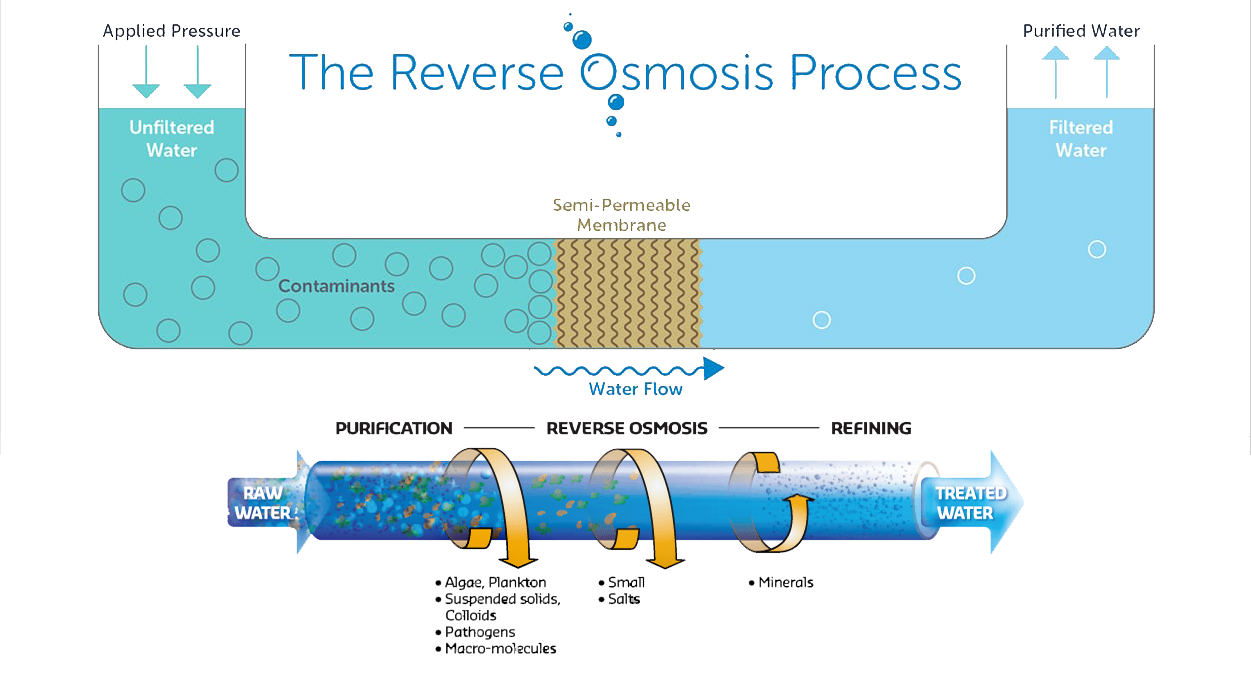
Let’s ditch the scary chemistry textbooks. Imagine you have a very picky bouncer at a club. That bouncer only lets water molecules through the velvet rope. Everything else—the dirt, the chlorine, the weird tasting minerals—gets told, "Sorry, not tonight." That picky bouncer is a semi-permeable membrane in your RO system.
And "osmosis"? That’s just nature’s way of trying to balance things out. Reverse osmosis is when we use a little pressure to push water against that natural flow. It’s basically saying, "Hey, nature, we’re doing this our way!"
Must Read
The result? Water so pure it practically sparkles. You’re not just filtering; you’re transforming the liquid in your glass.
Step One: The Pre-Filter Party
First, your tap water goes through a pre-filter. Think of this as the warm-up act before the main show. It catches the big stuff—sand, silt, and rust particles that make water look cloudy or taste gritty.
Without this step, the main membrane would get clogged up faster than a drain full of hair. So yeah, it’s a crucial little helper. Move along, big sediment!
Step Two: The Carbon Filter Boogie
Next up is a carbon filter. This is the deodorant and makeup remover for your water. It grabs chlorine, bad smells, and any funky tastes that come from the city pipes.
Ever noticed that pool-water aftertaste from tap water? That’s chlorine. The carbon filter says, "Bye-bye, chlorine! Have fun elsewhere." Your water is now starting to feel a lot more like a refreshing stream than a chemical lab sample.
Step Three: The Main Event—The RO Membrane
Now for the star of the show: the RO membrane. This is that picky bouncer we talked about. It’s a super-thin sheet rolled up like a jelly roll, with pores so tiny only water can squeeze through.
 What Is Reverse Osmosis And How Does It Work
Everything else—lead, arsenic, fluoride, even most viruses—gets pushed away and washed down a separate drain. This is where the magic of pure water really happens. It’s like squeezing an orange and only keeping the juice, tossing the seeds and pulp.
Fun fact: It’s the same technology used to make seawater drinkable on ships. You’ve got a tiny ocean desalinator in your kitchen. How cool is that?
Step Four: The Final Polish
After the membrane, the water isn’t quite ready for its close-up. It goes through a final polishing filter. This is the last spritz of perfume before the date.
This step removes any remaining whispers of taste from the storage tank. It ensures every drop that hits your glass is cold, crisp, and absolutely delicious.
And boom! Water that makes ice cubes crystal clear and tea taste like it was brewed by your favorite aunt. You’re now a water-purification VIP.
Why Should You Care? (Spoiler: It’s Fun!)
Honestly, drinking amazing water changes your whole day. Your morning coffee becomes bolder. Your lemonade tastes more lemony. Even your soup gets a flavor upgrade!
 Reverse Osmosis Filter Replacement And RO Membrane Guide (2026)
You also stop buying plastic bottles. That’s a win for your wallet, your fridge space, and your carbon footprint. RO makes you feel like a fancy restaurant every time you fill a glass.
And installation? Most systems are like building a basic Lego set. You can get a countertop unit that plugs in in ten minutes. No plumber needed, just a little curiosity and a screwdriver.
The One Little Catch
Sure, RO systems do waste a bit of water—usually about three parts wasted for every one part purified. But don’t let that discourage you! Modern systems are getting way more efficient.
Plus, you can use that "waste" water to water your houseplants or wash your car. Your spider plant won’t know the difference, and you’ll feel like an eco-superhero.
So there you have it. A RO system is basically a tiny, smart, water-obsessed robot that loves you. It’s simple, it’s science, and it makes life a little more fun with every sip.
Go ahead—treat yourself to that glass of perfect, guilt-free water. You’ll be surprised how something so small can make your whole day feel a little brighter. Cheers to H2O!
