Why Use A Water Softener

Let’s be honest: hard water is the passive-aggressive roommate we never asked for. It leaves those chalky white spots on your glasses, turns your shiny faucets into a crusty m...
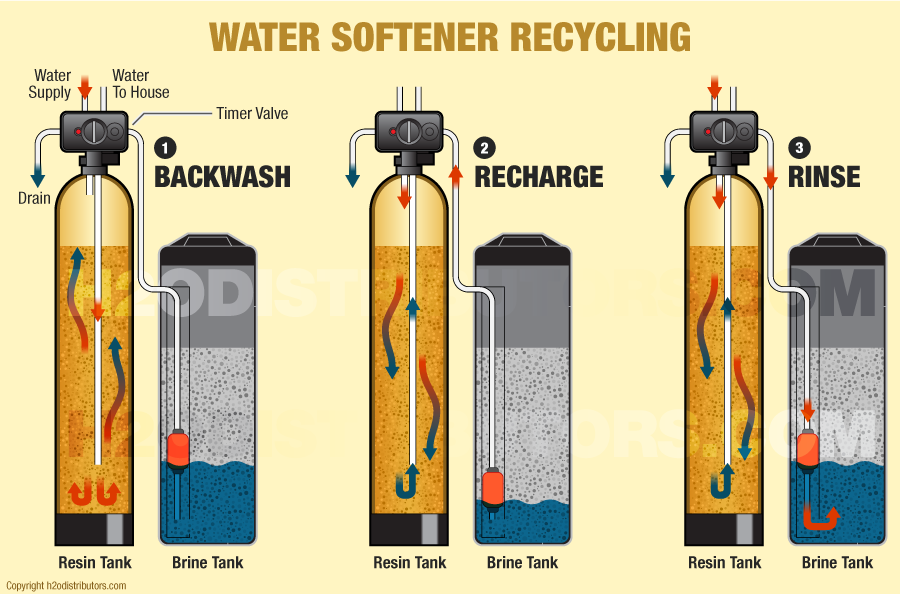
Let’s be honest: hard water is the passive-aggressive roommate we never asked for. It leaves those chalky white spots on your glasses, turns your shiny faucets into a crusty mess, and makes your hair feel like straw after a shampoo. You scrub and scrub, but that filmy residue clings on like a stubborn burr on a wool sweater.
So, why use a water softener? Because life is too short to fight with your own tap water. Think of it as hiring a calm, efficient assistant to handle the grunt work your water refuses to do on its own.
Goodbye, Soap Scum Battles
Remember that time you used half a bottle of shower gel just to get a decent lather? That’s hard water stealing your suds. Soft water, on the other hand, loves soap. A tiny drop creates mountains of fluffy foam, like a cappuccino machine that actually works.
Must Read
Your skin and hair will thank you, too. Hard water leaves a mineral crust on your body that feels like you’ve been dusted with talcum powder from a haunted house. Soft water rinses clean, leaving you feeling slippery-smooth instead of squeaky-chalky.
I once visited a friend’s house with a softener and took a shower. I swear, I thought my conditioner had somehow turned into moisturizing magic. It didn’t—it was just the water not fighting back.
The Great Appliance Rescue
Hard water is a silent assassin for your appliances. That coffee maker you love? It’s slowly being strangled by calcium deposits, brewing weaker coffee by the week. Your water heater works overtime, heating a rock-hard kettle of sediment instead of pure water.
A water softener is like platinum insurance for your washing machine, dishwasher, and pipes. You’ll notice your clothes stay brighter longer because soap actually rinses out. No more grayish, stiff towels that feel like sandpaper after a few washes.
I had a neighbor who replaced her dishwasher every three years. After installing a softener, she’s on year seven and still laughing.
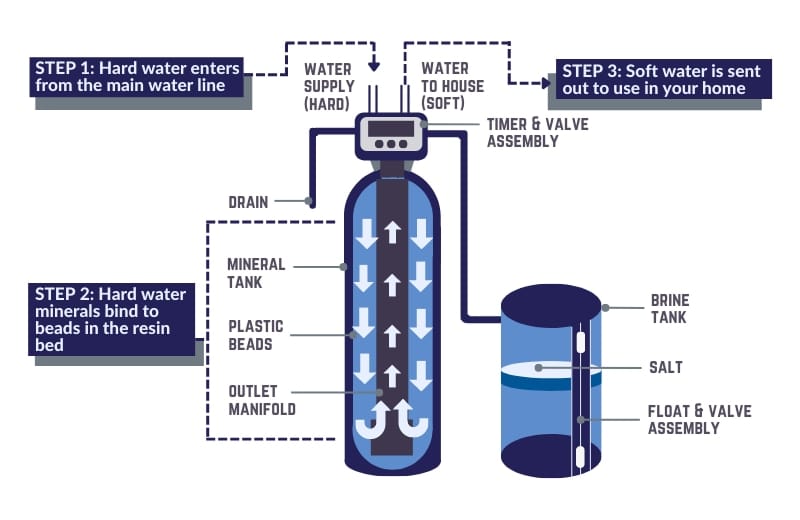 How Does A Water Softener Work Step By Step | Detroit Chinatown
Money Talks (and Soft Water Sings)
You might think, “A softener is expensive!” But cheap hard water is a lie. That “free” calcium and magnesium in your tap ends up costing you in soap, detergent, appliance repairs, and energy bills. A water softener pays for itself faster than you can say “spotless glassware.”
You’ll use less detergent, less shampoo, and less dish soap. I cut my laundry detergent usage by half. The first time I used a softener, I got soaped up in the shower and couldn’t stop giggling—it was like washing in a luxury hotel for pennies.
Think of it this way: you’re not buying a machine; you’re buying back your time. No more scrubbing hard water stains off the shower door. No more soaking your kettle in vinegar.
The Little Things That Make You Smile
It’s the weird, small wins that sell a water softener. Like how your ice cubes stay crystal clear instead of cloudy. Or how your tea doesn’t develop a weird metallic scum on top. That fancy glass you saved from your aunt? It actually shines now.
You’ll start noticing soft water everywhere. Your skin feels like a baby’s elbow. Your hair bounces like a shampoo commercial. And honestly, you’ll catch yourself running your hand over a clean, spotless faucet and just nodding with satisfaction.
 Do Inline Water Softeners Work at Kevin Davidson blog
It’s the upgrade you didn’t know you needed, like switching from dial-up to fiber internet. Once you have it, you’ll wonder how you ever tolerated the crummy old version.
But Wait, Isn’t It a Hassle?
Some folks worry about salt. Fair point. But modern softeners are smart. They only regenerate when needed, using less salt than your grandma’s old model. You can buy salt at any hardware store, and it lasts months. It’s one bag, once a month—like refilling a salt shaker, but for your whole house.
And no, soft water doesn’t taste salty. That’s a myth. It just tastes clean and neutral, like water should. Your lemonade will taste brighter, not like a pickle jar.
The Bottom Line
You don’t need a water softener. You could keep battling scale, dull hair, and chalky dishes. You could keep buying expensive cleaning products that barely work. You could keep your plumbing slowly calcifying like a cave stalactite.
Or you could just soften up and let your water work with you, not against you. It’s a small change that makes everyday life noticeably nicer. And hey, if your future self could send you a message, it would be a smiling emoji followed by the words: “Do it. Your hair will thank me.”
