Best Under Sink Ro Water Filter

Picture this: you’re at a fancy dinner party, bragging about your $30-a-month artisanal water subscription. Your friend snorts and says, “I get mine from under my sink. It’s f...

Picture this: you’re at a fancy dinner party, bragging about your $30-a-month artisanal water subscription. Your friend snorts and says, “I get mine from under my sink. It’s free, and it’s better than your designer stuff.” That friend, my friends, has an under-sink reverse osmosis (RO) water filter. And they’ve just become the smug hero of the kitchen.
So, what’s the big deal? Reverse osmosis is like a bouncer at the world’s strictest nightclub for water molecules. It shoves your tap water through a semi-permeable membrane so tight that only pure H₂O gets through—while salts, lead, chlorine, and even microscopic plastic bits are left crying on the sidewalk. We’re talking about removing up to 99% of contaminants. That’s not a filter; that’s a water exorcist.
But isn’t this fancy tech only for chemists and survivalists?
Nope. The under-sink RO filter is the unsung hero of the average kitchen. It hides under your sink like a ninja, purring away while you scroll through TikTok. You’ll never have to wrestle another Brita pitcher again, or pretend that last squirt of “spring water” from the fridge actually tastes good. It turns your tap into a private glacier—without the iceberg.
Must Read
And here’s a surprising fact: most people think RO water is “dead” water or that it leaches minerals from your body. That’s complete nonsense. The minerals you get from food dwarf anything in your tap water—you’d need to drink a swimming pool of tap water to match a single banana’s potassium. So relax, your skeleton isn’t going anywhere.
Now, let’s talk installation. If you can change a lightbulb without setting off the smoke alarm, you can install an under-sink RO system. Most kits come with color-coded tubes and push-fit connectors that even a three-toed sloth could manage. You’ll feel like a plumbing demigod—until you realize you accidentally connected the waste line to your dishwasher. Oops. But seriously, it’s about as hard as assembling IKEA furniture, but with fewer leftover screws.
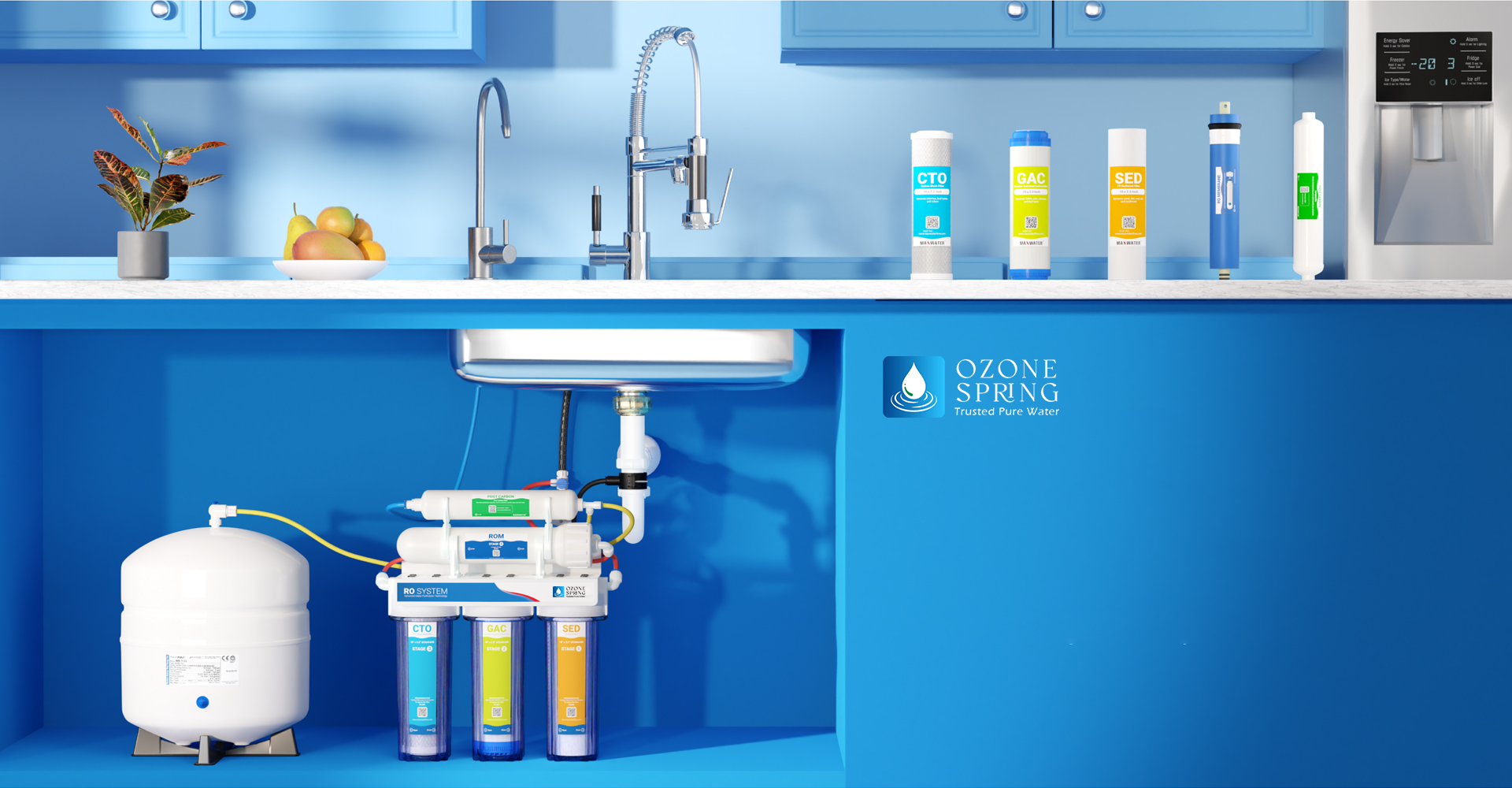 Best Under Sink RO Water Filter System Dubai | 11 Stage RO System
The dirty secret: it wastes water. Like, a lot.
Here’s the kicker: for every gallon of pure water you get, an RO system flushes 3 to 4 gallons down the drain. Yes, that’s wasteful. But think of it as a sacrifice—like burning a few hot dogs to make the perfect s’more. Newer models are getting smarter, with some wasting only 1:1. That’s still a luxury tax on purity, but hey, it’s cheaper than Evian delivered by drone.
And taste? Oh, the taste. Tap water often carries a ghost of swimming pool chlorine or a metallic tang. RO water is so clean it tastes like a whisper. People swear it makes their coffee taste like it’s from a $7 Manhattan café. One sip and you’ll start talking in a British accent and demanding “scones, please.” I’m not kidding—my neighbor now insists her iced tea “sounds better” after the filter. It’s that good.
:max_bytes(150000):strip_icc()/Best-Under-Sink-Water-Filters-SPR-tout-2fd7ba49006c4fe9beada85f46c97038.jpg) The 9 Best Under-Sink Water Filters of 2024
The 9 Best Under-Sink Water Filters of 2024
The best part? These systems cost between $100 and $500, with replacement filters every 6–12 months for about $50 to $100 a year. Compare that to bottled water: the average family spends $1,200 a year on plastic bottles. So an RO filter pays for itself in about three months, plus you’ll save the planet from 15,000 plastic bottles swimming in the Great Pacific Garbage Patch. That’s a win for your wallet and your guilt.
What to look for when buying one
First, check your water pressure. RO systems need at least 40 psi to work well—otherwise, you’ll get a trickle slower than a Congress’s decision. If your pressure is low, get a booster pump (yes, that’s a thing, and it sounds like a jet engine). Also, look for a system with a dedicated faucet—it’s the tiny chrome one that screams, “I hydrate better than you.”
 The Best Under-Sink Water Filters of 2026, Tested by Experts
Second, filter stages matter. A good system has at least three: sediment, carbon, and the RO membrane. Fancy models add a UV light to zap viruses, or a remineralization filter to add back magnesium for taste. But honestly, the basic three-stage is like a smart watch for your water—useful and cool, but you’ll forget it’s there.
Third, size and storage. Most under-sink systems have a small tank that holds about 2–3 gallons. That’s enough for a family of four to make coffee, fill water bottles, and still have some left for your pet hamster’s spa day. If you’re hosting a pool party, you might need a larger tank or a tankless system—but let’s be real, you’re not doing that.
 Top 12 Best Under Sink RO Water Filter You Need Now - American Gun Works
A cautionary tale: the membrane’s mortal enemy
Don’t feed your RO system hot water. It will scream internally and die. The membrane hates heat like a vampire hates garlic. Also, if you have heavy sediment in your water, you’ll need a pre-filter or the whole thing will clog faster than a teenager’s pores. Learn from my mistake: I once tried to filter water from a garden hose. It took me three days to unclog the thing. Do not do this.
In the end, an under-sink RO water filter is the secret weapon of hydration snobs and bargain hunters alike. It’s cheaper than bottled, cleaner than tap, and so satisfying that you’ll start offering water to visitors like it’s a sommelier’s tasting flight. “This one has notes of... nothing. It’s perfect.”
So go ahead, buy one. Your taste buds will thank you, your wallet will relax, and you’ll finally be that friend at the party who smirks while the Evian drinkers weep. Just don’t forget to change the filters. Otherwise, you’ll end up with a $200 science experiment growing under your sink. And trust me, that’s a story for another café chat.
