Cost Whole House Water Filtration System

So my neighbor, let’s call him Dave (because that’s his name), spent last Saturday trying to convince me that his tap water “smells like a swimming pool.” He wasn't wrong. The...

So my neighbor, let’s call him Dave (because that’s his name), spent last Saturday trying to convince me that his tap water “smells like a swimming pool.” He wasn't wrong. The chlorine was so strong you could practically taste it from the driveway. And then he told me the price tag for fixing it—a whole house water filtration system.
I nearly choked on my (filtered) coffee. That much? For water? But here’s the thing: Dave now drinks straight from the tap, his skin stopped itching, and his washing machine hasn’t needed a descale in two years. So, let’s pull back the curtain on what this actually costs—and whether it’s worth your hard-earned cash.
The Brutal Truth: It’s Not One Price
Here’s the first curveball—there is no single price for a whole house water filtration system. You’re not buying a toaster. You’re buying a customized solution for your specific water demons. (And yes, your water has demons. Sorry.)
Must Read
You’ll see prices ranging from a “hey, that’s reasonable” $800 all the way up to “am I buying a used car?” $6,000. The gap is huge because the system is only part of the story. The real cost lives in installation, water quality, and how fancy you want to get.
Quick side note: If a plumber quotes you $300 for a “whole house system” on Facebook Marketplace, run. That’s a water softener in a box, and it probably won’t handle sediment or chemicals. You get what you pay for, folks.
What Drives the Price? Your Water’s Dirty Laundry
The biggest factor is what’s actually in your water. Is it hard water (calcium and magnesium)? Iron? Chlorine? Or are you dealing with industrial runoff and pesticides? A simple sediment filter setup costs less than a heavy-duty catalytic carbon system designed to remove prescription drugs. (Yes, that’s a real thing. Your tap might have traces of Xanax. Cheers.)
You’ll need a water test first. Most companies offer this for free, or you can buy a $20 kit from a hardware store. The results dictate whether you need a basic filter, a backwashing system, or a full reverse osmosis setup. Don’t skip this step—otherwise, you’re buying a Ferrari for a gravel road.
The Price Breakdown (Get Your Wallet Ready)
Let’s get into the gritty numbers. For a basic system (sediment + carbon filter), you’re looking at $800 to $1,500 for the unit. Installation usually adds another $300 to $600. This handles chlorine, bad taste, and small particles. It’s the entry-level ticket.
For a mid-range system (with a water softener or iron filter), expect $1,500 to $3,500. Installation can hit $800 to $1,500 because you need a drain line, brine tank, and possibly electrical work. This is the sweet spot for most homes with hard water.
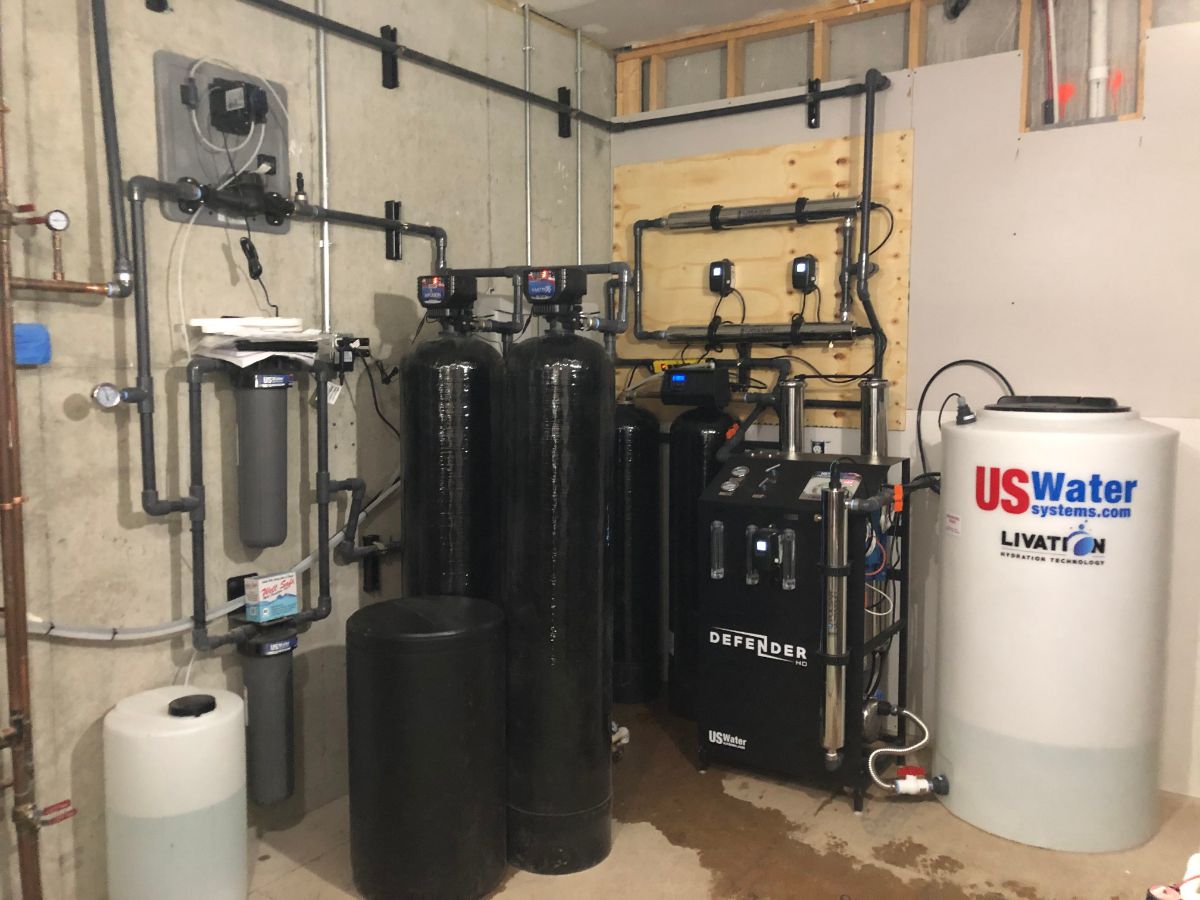 Whole Home Water Filtration System Cost | Water Filter Guru
And then there’s the deluxe system—UV sterilization, acid neutralizer, whole house reverse osmosis. Prepare for $3,500 to $6,000+. Installation can go beyond $2,000 if your plumbing is weird or you need a sump pump. This is for people who want to bottle their own Evian.
The Hidden Costs That Bite You Later
Wait, there’s more? Yes. Filter replacement cartridges cost $50 to $200 per year. Salt for a softener runs $5 to $15 per bag, and you’ll use a bag a month. And if you skip maintenance? Your system clogs and you buy a new one. Pretty ironic, right?
Also, installation isn’t DIY for everyone. Unless you’re comfortable soldering copper pipes at 3 a.m. while water sprays in your face, hire a pro. A bad install can flood your basement. Trust me, your carpet doesn’t appreciate that.
Is It Worth the Investment? Let’s Do the Math
You might be thinking, “That’s a lot of money for something I flush down the toilet.” But think about this: bottled water costs $1.50 per gallon on average. A family of four can easily spend $1,000 to $2,000 per year on bottled water alone. A whole house system pays for itself in two to three years if you stop buying plastic.
Plus, your appliances last longer. Water heaters, dishwashers, and washing machines choked with scale die early. Hard water can cut their lifespan by 50%. A $3,000 system might save you from buying a new $700 water heater every four years. Do the math.
The Real “Cost” Nobody Talks About
The biggest cost is actually your time and patience. You have to change filters. You have to add salt. You have to call the plumber when the system beeps at 2 a.m. It’s a relationship, not a one-night stand. But the payoff? Water that tastes like a mountain spring, skin that doesn’t feel like sandpaper, and never fighting with a plastic bottle again.
So, is it worth it? Yes, if you’re in it for the long game. If you just want cheaper water today, buy a fridge filter. But if you want to protect your pipes, your health, and your sanity—and you can swallow the upfront cost—go for the whole house system. Dave, call me; I’m now a believer. And no, I’m still not borrowing your truck.
