What Temperature Of Water Kills Bacteria

So, you’re wondering what temperature of water actually kills bacteria. Maybe you’re paranoid about your sponge, or you just want to win an argument with your roommate. Either...

So, you’re wondering what temperature of water actually kills bacteria. Maybe you’re paranoid about your sponge, or you just want to win an argument with your roommate. Either way, you’ve come to the right place—pull up a chair, and let’s spill the (hot) tea.
The Short Answer: It’s Not Just About Boiling
You’ve probably heard that boiling water kills everything. That’s mostly true, but it’s a bit like using a sledgehammer to crack a walnut. Pure boiling—212°F (100°C)—will annihilate most bacteria in about one minute.
But here’s the kicker: you don’t always need that much heat. Some bacteria die at much lower temperatures. It’s all about the combination of heat and time.
Must Read
The Magic Number: 140°F to 165°F
If you’re washing dishes or doing laundry, aim for 140°F (60°C) or higher. That’s the sweet spot where most common pathogens—like Salmonella or E. coli—start throwing in the towel. At 165°F (74°C), they’re toast in seconds. Literally. Poof.
But wait—don’t take your coffee mug's word for it. A quick rinse with tap water? That’s usually around 120°F. That’ll just give the bacteria a nice, warm bath. They’ll probably send you a thank-you note.
The "Pasteurization" Trick (You Use It Every Day)
Remember milk? It’s not boiled, yet it’s safe. That’s pasteurization: heating to 161°F (72°C) for just 15 seconds. It’s like a mic drop for bacteria. Same principle works for your water: hold it at 150°F for a few minutes, and you’ve got a sterile-ish situation.
But here’s where I get to be the fun-sucker: not all bacteria are created equal. Some bacterial spores (looking at you, Clostridium botulinum) can survive boiling. That’s why canners use pressure cookers to hit 250°F. But for your daily cup of tea? Boiling is fine.
What About Cold Water? Does It Kill Anything?
Oh, honey, no. Cold water (below 40°F) just puts bacteria into hibernation. They wake up grumpy and hungry when it warms up. So if you’re hoping your fridge water will kill germs, you’re basically giving them a nap. Nice try, though.
And ice water? That’s just a temporary freeze. Bacteria can survive for years in ice. Have you ever seen a science experiment with frozen mammoth bacteria? Yeah, they wake up. Don’t let that ruin your next cocktail.
Your Kitchen Sink: The Ultimate Test
Let’s get practical. You’re washing a cutting board that touched raw chicken. What water temp? As hot as your hands can stand—around 120°F—plus soap. The soap does the heavy lifting; the hot water just helps the soap work faster. Don’t scald yourself trying to get to 165°F. That’s just silly.
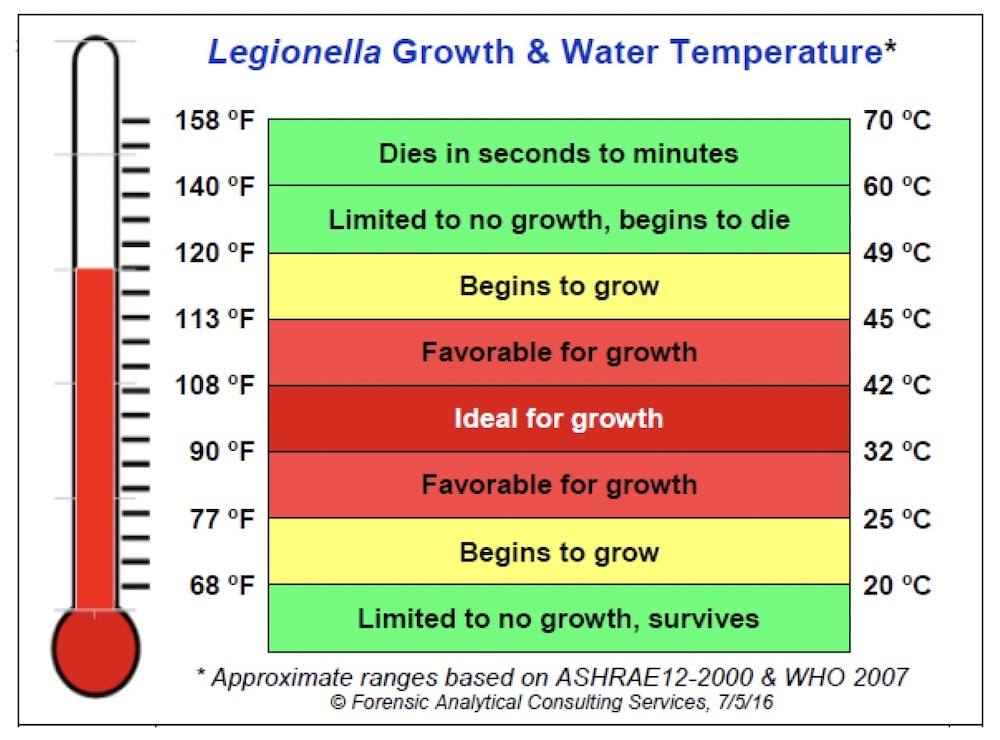 What Water Temperature Kills Legionnaires Disease at Harold Olmstead blog
For dishwashers: they heat water to 140°F–150°F and add a drying cycle. That’s enough to kill most kitchen creeps. If you’re hand-washing, just make sure the water is too hot to keep your hand under for more than a few seconds. You’ll know.
Laundry: Hot Water is a Bacteria-Buster
Your gym socks? They’re a bacterial playground. For truly germ-free laundry, hot water (140°F) is your best friend. Cold water won’t cut it—it just makes the stink smell fresher. But honestly? Most modern detergents are so good that warm water (90°F–110°F) is enough for normal loads. Save the scalding for when someone’s been sick.
The "But Mom Said" Rule
Here’s the thing your grandma probably told you: boiling kills everything. That’s 99% accurate. The 1% are those pesky spores (like Bacillus cereus in rice). They need pressure canning or 250°F for a full wipeout. But for day-to-day stuff? Boiling for 10 minutes is your gold standard.
And no, you don’t need a thermometer. If you see a rolling boil—big, active bubbles—you’re at 212°F. That’s the party temperature for bacteria death.
One Last Tip: Don’t Overthink It
Bacteria are fragile in some ways, tough in others. Most of them die at 140°F within minutes. The scary ones need 165°F–212°F. The super-tolerant ones? They’re rare, and you probably won’t meet them unless you’re a home canner or a zombie apocalypse survivor.
So here’s your cheat sheet: Boil for 1 minute to kill everything you should worry about. Wash with hot, soapy water for daily stuff. And if you’re using cold water? Just know you’re giving the germs a spa day. They’ll thank you later.
Now go wash that mug. You know which one I mean.
