What Do Whole House Water Filters Remove

So, my friend Karen—bless her heart—invited me over for a glass of water the other day. She handed me this crystal-clear glass, beaming with pride. I took one sip and immediat...

So, my friend Karen—bless her heart—invited me over for a glass of water the other day. She handed me this crystal-clear glass, beaming with pride. I took one sip and immediately felt like I was licking the inside of a swimming pool. Chlorine city, population: my taste buds.
It got me thinking: what exactly is swimming around in our tap water? And more importantly, what can a whole house water filter actually do about it? Spoiler alert: a lot more than just banishing that pool-party flavor.
The Big Bad Boys: Sediment, Rust, and Silt
First up, the obvious stuff you can see with your own two eyes (if you look hard enough). We’re talking about sediment, rust flakes from aging pipes, and fine sand-like silt. These gritty particles are what make your bathtub develop that annoying ring and shorten the life of your washing machine.
Must Read
A whole house filter catches them at the main water line—right where water enters your home. Game changer. No more stained laundry or faucets that spray like a firehose from built-up gunk.
Chlorine and Chloramine: The Chemical Cocktail
Remember Karen’s pool water? That’s chlorine doing its job—killing bacteria at the treatment plant. But once it hits your pipes, it’s just a harsh chemical that dries out your skin and makes your hair feel like straw. Not cute.
Some municipalities also use a stabilizer called chloramine, which is even harder to remove. A good whole-house system with catalytic carbon will strip out both. You’ll notice the difference in your shower: less fog on the mirror, and your scalp will finally stop throwing a tantrum.
Heavy Metals: The Silent Creeps
Here’s where it gets spooky. Lead, copper, mercury, and arsenic can all leach into your water from old pipes or natural deposits. You won’t taste them—they’re silent. But long-term exposure is no joke, especially for kids and pregnant folks.
Whole house filters with specialized media (like KDF or reverse osmosis for certain models) can yank out heavy metals before they reach your tap. Peace of mind in a glass. No more wondering if that brownish tint is “just minerals.”
Pesticides and Herbicides: The Farm Runoff
Unless you live on a pristine mountain top, your water likely carries traces of weed killers and bug sprays. Atrazine is a common one—used heavily in corn and soybean fields. It gets into groundwater, and standard city treatment doesn’t always filter it out completely.
A whole house filter with activated carbon will trap these organic chemicals. You’ll literally be drinking cleaner water than what’s served at many fancy restaurants. Take that, sparkling water snobs.
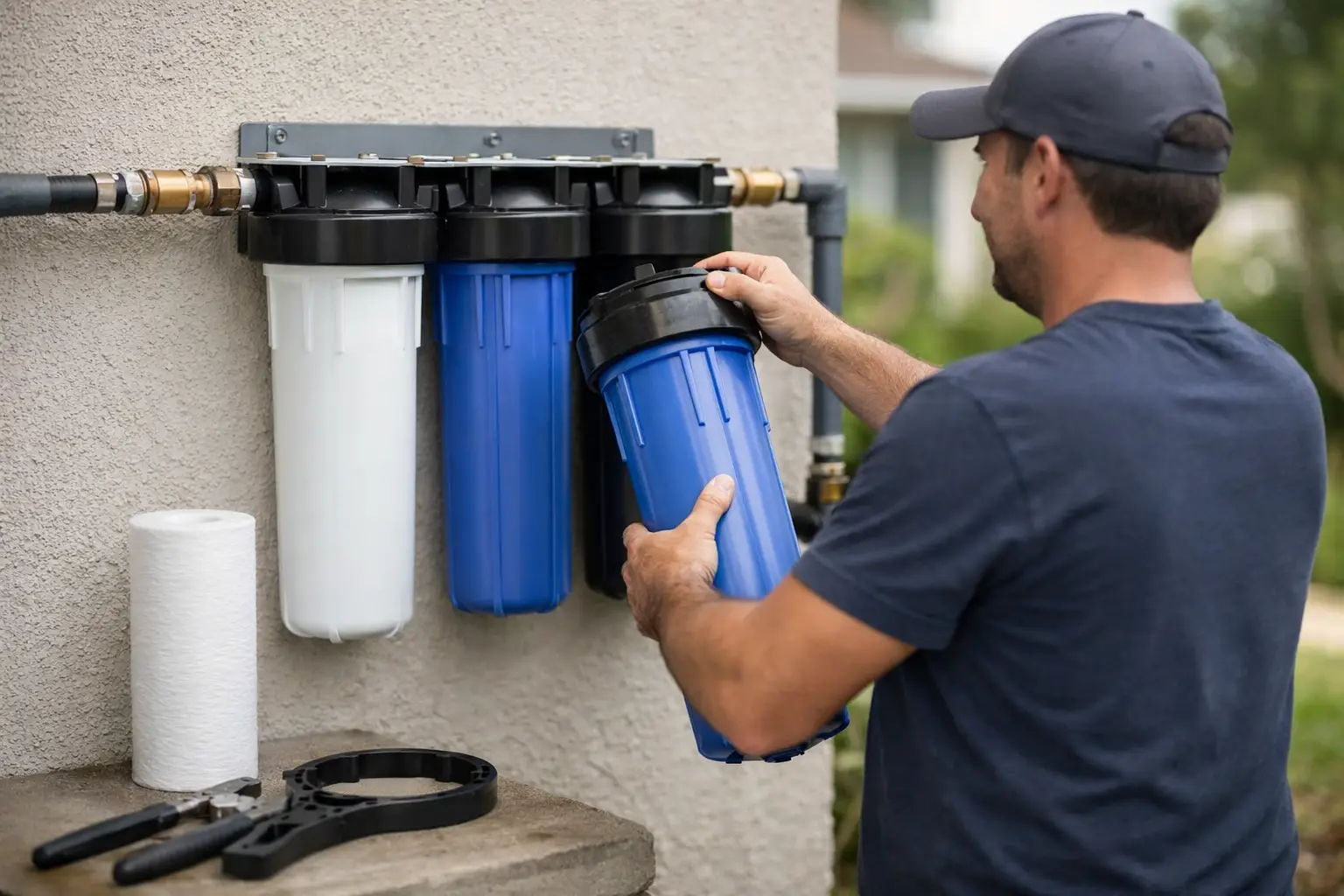 How to Replace Whole House Water Filter System – Aqua Mantra Filters
Microplastics: The Invisible Invaders
I know, I know—microplastics are everywhere. They’re in the air, in your salt, and yes, in your tap water. These tiny plastic particles (from clothing fibers, packaging, etc.) are small enough to slip through municipal filters. But a high-quality whole house system with a micron rating of 1 micron or less will catch them.
You’ll seriously reduce your plastic consumption without even trying. Bonus: you get to feel smug about the environment.
What It Doesn’t Remove (Let’s Be Real)
Alright, let’s not pretend it’s a magic wand. A standard whole house filter does not remove dissolved minerals like calcium and magnesium—that’s what a water softener is for. It also won’t zap out bacteria or viruses unless you specifically buy a UV or ultrafiltration model. Know your gear, folks.
And if you have truly sketchy water (like well water with high nitrates or E. coli), you need a system that’s designed for that specific problem. Don’t just buy the first box on Amazon because it looks shiny.
The Bottom Line: Your Whole House Is the Hero
So, back to Karen. She bought a whole house filter after that pool-water comment. Now her water tastes like… well, water. Clean, crisp, boring in the best way possible. Her skin stopped flaking, and her coffee machine hasn’t needed descaling in months.
A whole house filter removes the stuff that makes you wonder, “Is it safe to brush my teeth with this?” It tackles sediment, chlorine, heavy metals, pesticides, and microplastics—all before they touch a single pipe in your home. It’s the bouncer at the club of your plumbing system, kicking out the riffraff.
So, go ahead, pour yourself a glass. Your water should taste like nothing. And that, my friends, is a beautiful thing.
