Is Deionized Water The Same As Distilled

You’re standing in the grocery aisle, bottle in hand, staring at two very similar labels: deionized water and distilled water. They look the same, cost the same, and promise p...
You’re standing in the grocery aisle, bottle in hand, staring at two very similar labels: deionized water and distilled water. They look the same, cost the same, and promise purity. But are they the same? The short answer is no, and the longer answer is actually pretty fascinating—and might save you a headache.
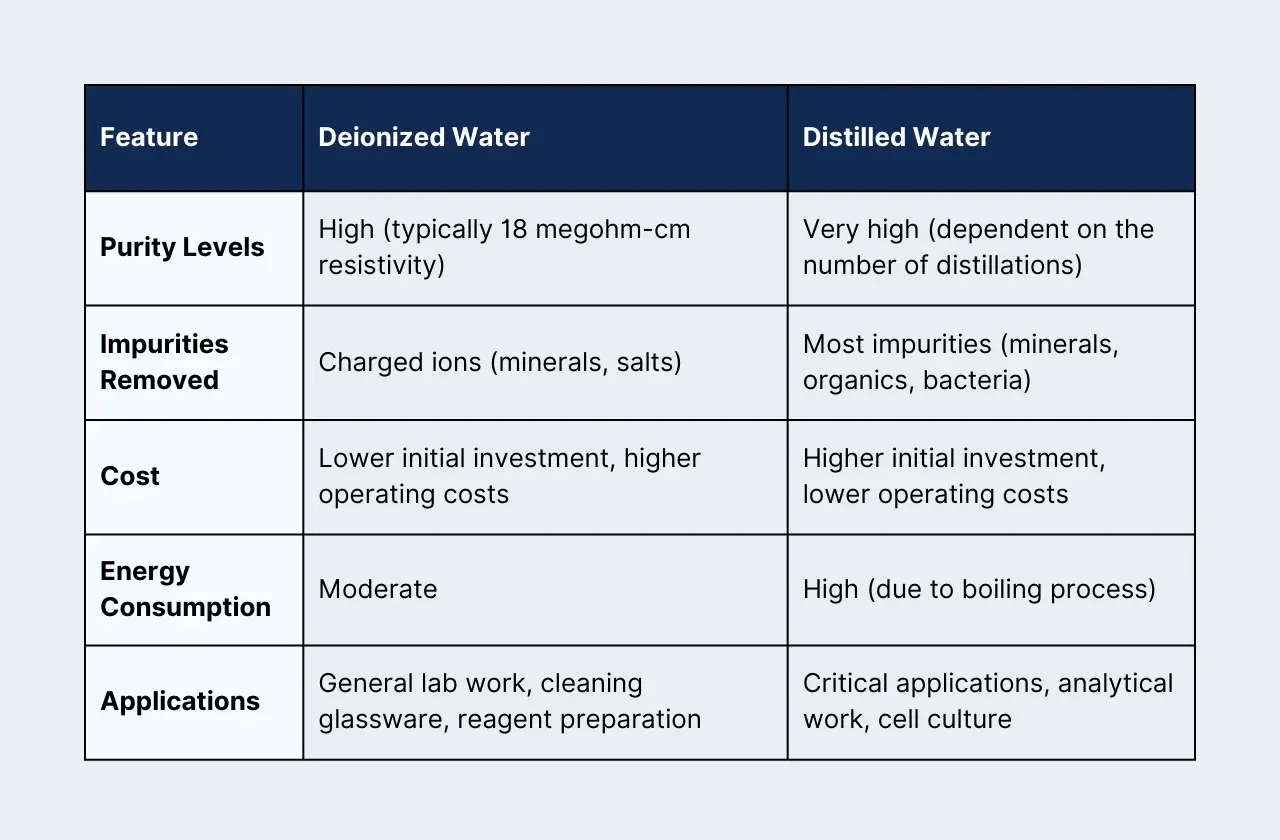
Think of distilled water as the old-school purifier. It’s made by boiling water until it turns to steam, then condensing that steam back into liquid. This process leaves behind minerals, bacteria, and most impurities—making it one of the purest forms of water you can get outside a lab. It’s the method your grandmother might have used for her iron or her car battery.
The Science of Clean: Two Different Tools
Deionized water, on the other hand, takes a high-tech shortcut. It uses special resins that act like magnets, pulling out charged mineral ions like calcium, magnesium, and sodium. The result is water that’s incredibly pure in terms of dissolved solids—but it doesn’t remove uncharged particles like viruses or organic molecules.
Must Read
In other words, distilled water is purified by phase change (boiling), while deionized water is purified by chemical exchange. One is a steam bath; the other is a magnetic spa treatment. Both are clean, but they’re clean in different ways.
Fun fact: Deionized water is so hungry for ions that it can actually leach metals from pipes if stored improperly. That’s why you rarely see it sold in the same plastic bottles as distilled water—it’s a bit of a troublemaker once it leaves the care of its ion-exchange resins.
Which One Should You Use?
Let’s cut to the practical chase. For your household appliances—think steam irons, humidifiers, and car batteries—distilled water is the safe bet. It’s consistent, non-reactive, and won’t leave scale or damage your gear. Distilled water is the reliable friend who always shows up on time.
For aquariums, car cooling systems, or lab experiments, deionized water often gets the nod. It’s cheaper to produce in large batches and has extremely low conductivity, which matters in science and electronics. But be warned: if you put it in a fish tank, you’ll need to add back essential minerals first, or your fish will get confused and look at you with sad little eyes.
And here’s a cultural plot twist: coffee snobs and cocktail enthusiasts generally avoid both. Top-tier baristas use water with a specific mineral profile—not pure H₂O. Distilled or deionized water makes coffee taste flat, like listening to a song on mute. The third-wave coffee movement is basically a love letter to the right balance of calcium and magnesium.
The Great Taste Debate
If you take a sip of deionized water versus distilled water, you probably won’t tell the difference. Both taste flat and slightly “empty” compared to tap or spring water. That’s because your tongue is wired to detect trace minerals—when they’re gone, your brain registers that as “boring.”
 Distilled Water Vs. Deionized Water — Microbe Online
Yet, there’s a cult following for distilled water among health enthusiasts. Some claim it helps “detox” the body, while scientists gently remind us that your kidneys already do that job for free. Drinking distilled water long-term might actually leach electrolytes from your body, so it’s best used occasionaly—like a spa day, not a daily diet.
Fun fact: NASA uses deionized water on the International Space Station because it’s easier to recycle. Astronauts have been drinking recycled deionized water for decades. If it’s good enough for floating in zero gravity, it’s probably fine for filling your iron.
Practical Tips to Take Home
Next time you’re in the store, check your appliance manual. If it says “distilled water,” don’t swap in deionized—unless you enjoy cleaning mineral deposits from weird corners. If you need water for a chemistry set or a laptop cooling pad, reach for deionized. And if you’re just thirsty, grab a good spring water and enjoy the minerals.
A quick life hack: you can make distilled water at home by boiling water and collecting the condensation with a pot lid. It’s slow, but it’s real. Deionized water is harder to DIY—you’d need a resin filter setup, which is more of a weekend project.
Also, don’t be fooled by fancy labels at fancy grocery stores. “Deionized” and “Distilled” are often used interchangeably in marketing, but now you know the difference. You’ve leveled up from casual water drinker to water connoisseur. Congratulations—you’re officially the most interesting person at the kitchen sink.
Reflection: The Everyday Connection
In the end, the question of deionized versus distilled water is a tiny reminder of how we choose tools for our lives. We often reach for the cleanest option, the purest path, without asking if it’s the right fit for the job. Distilled water works because it removes everything; deionized water works because it removes only what’s charged. Both are purifying, but in different ways.
Maybe life is like that, too. Sometimes we need a boiling, transformative cleanse—losing everything to start fresh. Other times, we need a selective filter, letting go of what doesn’t serve us while keeping the essential structure. Neither is wrong, and both can lead to clarity. So whether you’re filling an iron or just sipping from a glass, take a second to appreciate the chemistry behind the simplicity. It’s all just H₂O—but how we clean it tells us a lot about how we choose to live.
