Where Is A Water Meter Located On A House

You just bought a charming fixer-upper, or maybe you’ve lived in your place for years without a second thought. Then, the water bill spikes, or a plumber asks for “the meter,”...
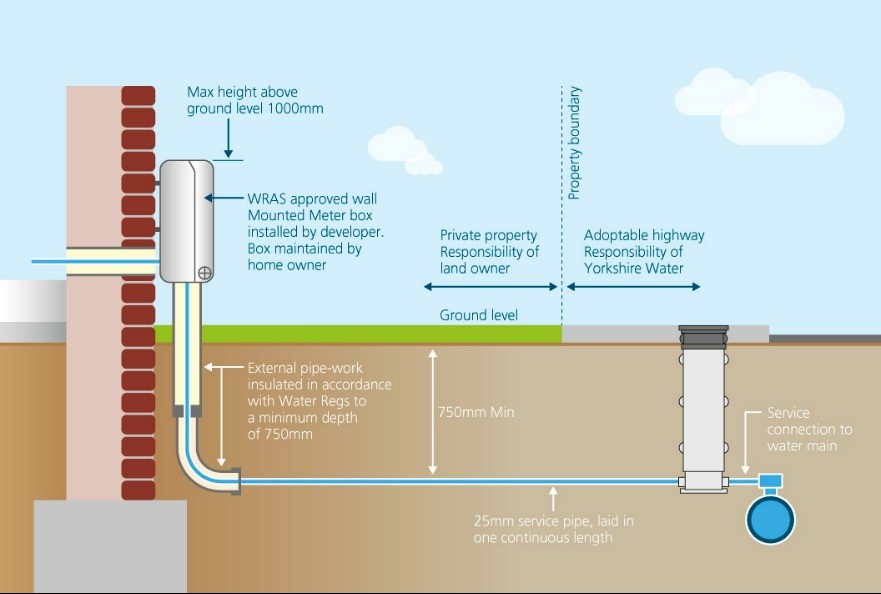
You just bought a charming fixer-upper, or maybe you’ve lived in your place for years without a second thought. Then, the water bill spikes, or a plumber asks for “the meter,” and you freeze. Where exactly is that little device hiding, anyway? Don’t worry—you’re not alone; it’s one of those quiet household mysteries, right up there with where the pilot light lives.
Let’s turn this into a treasure hunt. A water meter is your home’s hydration accountant, silently measuring every drop you use. Finding it isn’t just about bill accuracy—it’s about knowing your home and being ready for emergencies.
The Most Common Hiding Spots
For the vast majority of houses, especially in suburban America, the meter lives outside. Look near the street, in the front yard, often between your sidewalk and the curb. You’ll spot a round or rectangular metal or plastic cover—sometimes marked “Water” or with a local utility logo.
Must Read
If you’re in a warmer climate or an older home, the meter might be nestled inside a concrete box flush with the lawn. Gently pry the lid open with a screwdriver (watch your fingers—those lids are heavy). Underneath, you’ll find the meter itself, usually a glass- or plastic-covered dial.
Fun fact: In many parts of the United Kingdom and Europe, meters are often inside the house, typically under the kitchen sink or near the main stopcock. It’s a cultural quirk—blame centuries of damp, cold winters and a preference for indoor pipes.
What About Cold Climates? (The Frozen North Edition)
If you live where winter actually freezes things—think Minnesota or Canada—the meter is probably inside, in a basement or crawl space. Utility companies really don’t want the meter to freeze and burst, so they install it where it stays warm. Check near the front wall of the basement, often where the main water line enters the house.
For homes on slabs (no basement), the meter might be indoors in a utility closet, garage, or even under a bathroom sink. Pro tip: If you have a house built after 1990, there’s a solid chance the meter is outside in a pit—utility companies now prefer easy access for meter readers (and smart meters).
And for the adventurous: Some city lots have meters tucked behind bushes, under decorative rocks, or even inside an old flower pot. A neighbor once told me hers was inside a fake hollow log—she found it after a year of wondering why her sprinkler system “talked to ghosts.”
How to Find Yours: The Step-by-Step Clue Kit
Start by listening. Turn off all water inside and outside your home. Then, press your ear to the ground or the wall near your main water shutoff valve. If you hear a faint, rhythmic ticking or humming, that’s your meter’s heartbeat.
Next, trace your pipes. The main water line usually comes from the street into your home through a wall or floor. Follow that pipe until you see a brass or copper mechanism with numbers or a spinning dial. That’s it—congratulations, you’ve found the unicorn.
If you’re still lost, check your property survey or call your water utility company. They often have maps and can tell you exactly where the meter is. Some utilities even have online portals where you can view your meter’s location on a digital map—talk about modern convenience.
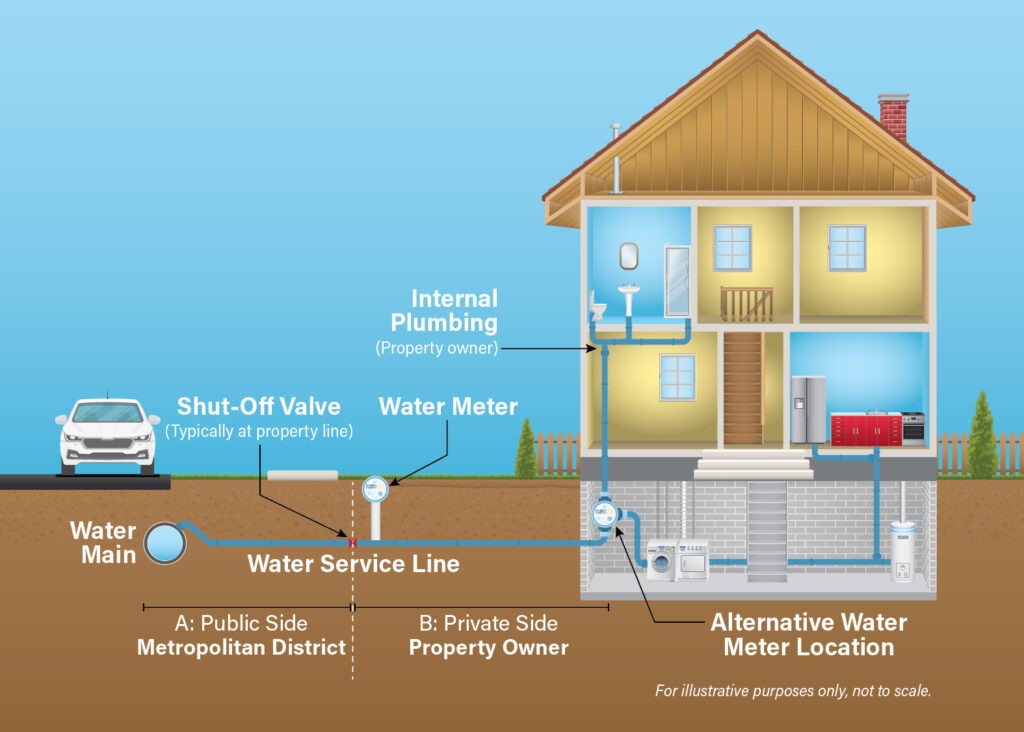 Water Meter Inside House
The Smarter (But Less Romantic) Future
By the way, many homes now have smart meters that transmit data wirelessly. These often don’t have a visible dial, just a small electronic box attached to the pipe. They’re usually in the same locations—outside in a pit or indoors near the shutoff—but they look less like a clock and more like a Wi-Fi router.
The upside? You can sometimes access your water usage in real-time via an app. The downside? You lose the satisfying ritual of reading the little spinning wheel to detect a leak. Progress, eh?
Practical Tips for the Curious Homeowner
Once you’ve located your meter, mark it. Use a small flag, a painted stone, or a metal garden stake. This is especially useful if you ever need to shut off the water in an emergency (like a burst pipe) and don’t want to fumble in the dark.
Check the meter periodically for leaks. Turn off all water, then watch the small triangle or dial. If it’s still moving, you have a leak somewhere—possibly a silent one inside a wall or under the foundation. That little spinning triangle just saved you hundreds of dollars.
Also, don’t plant bushes or shrubs on top of your meter. Utility workers need access, and roots can damage the box. Plus, you’ll look a lot more relaxed when the meter reader doesn’t have to crawl through your rhododendrons.
A Reflection for Your Daily Pour
Think about it—a tiny, unassuming gadget is the reason you can take a hot shower, water your tomatoes, and make that iced coffee. We rarely think about it, but the water meter is a quiet steward of our most precious resource. It doesn’t complain, it doesn’t text you, it just counts.
Next time you hear that faint metallic hum while brushing your teeth, smile. You now know exactly where it lives. And in a world full of digital noise, there’s something beautifully analog about a little spinning wheel that tells the story of your day—one drip at a time.
So go ahead, lift that lid, dust off that glass cover, and say hello. Your water meter is the most reliable friend you never knew you had.
