Do Strong Electrolytes Dissociate In Water

Alright, let’s get one thing straight right off the bat: Yes, strong electrolytes absolutely dissociate in water. In fact, they do it so completely and so enthusiastically tha...
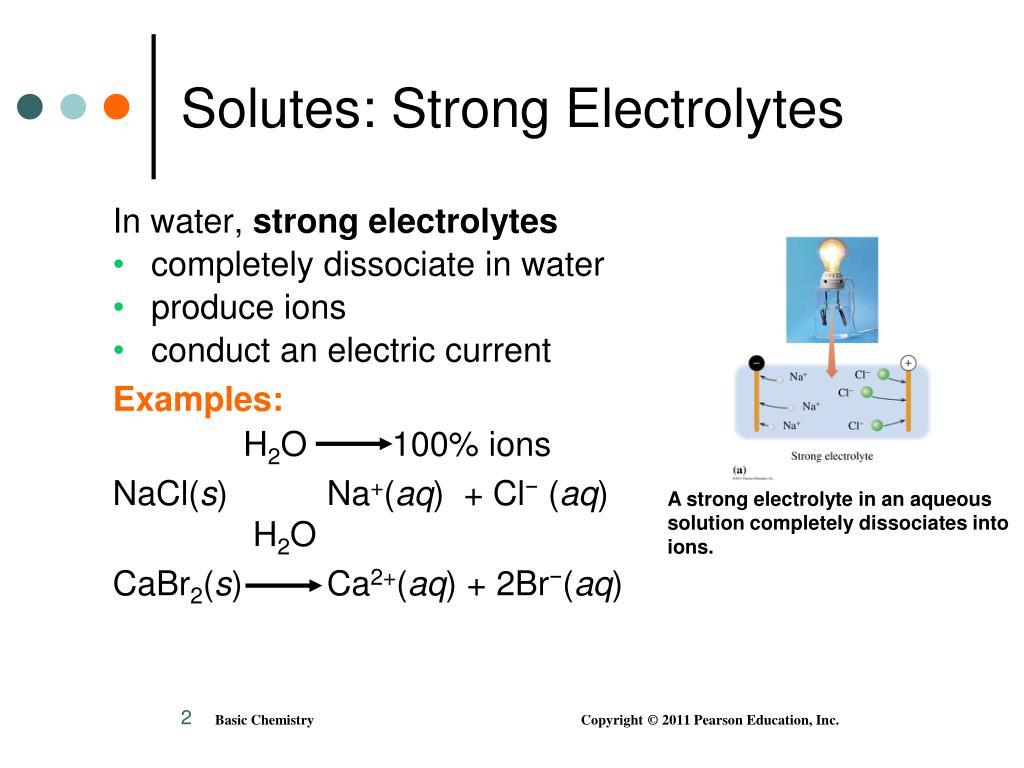
Alright, let’s get one thing straight right off the bat: Yes, strong electrolytes absolutely dissociate in water. In fact, they do it so completely and so enthusiastically that it’s almost like they’re jumping into a pool and screaming “CANNONBALL!” with every single molecule. No half-measures, no shyness. Just pure, 100% splitting apart.
What Even Is a Strong Electrolyte?
Think of a strong electrolyte as that one friend who always commits. If they say they’re coming to your party, they show up, they bring chips, and they stay until the end. In chemistry world, a strong electrolyte is a substance that, when dropped into water, breaks apart completely into charged particles called ions. We’re talking salts like sodium chloride (table salt), strong acids like hydrochloric acid, and strong bases like sodium hydroxide.
When they hit the water, there’s no “maybe” or “I’ll think about it.” They just go. Every single molecule or formula unit dissociates. It’s like a flash mob—sudden, complete, and a little bit electric (literally, because now you have ions swimming around conducting electricity).
Must Read
Contrast that with a weak electrolyte, which is more like that flaky friend who says they’ll come to your party but then texts you an hour later saying, “I’m kinda tired, maybe next time.” Weak electrolytes only partially dissociate. They’re the introverts of the chemistry world. Strong electrolytes? Total extroverts.
The Magic of Water: The Ultimate Wingman
Here’s the secret sauce: Water is amazing at this. It’s polar—meaning it has a slightly positive end and a slightly negative end—like a tiny magnet. When a strong electrolyte like table salt (NaCl) enters the scene, water molecules swarm it like fans at a concert. The positive end of water pulls on the negative chloride ion, and the negative end of water pulls on the positive sodium ion.
And pop! The salt crystal falls apart into individual sodium and chloride ions, each one happily surrounded by a hydration shell. It’s not just a break-up; it’s a reunion with water. Sodium ions get a little “water hug,” and chloride ions get a water high-five. So yes, dissociation happens, and it happens instantly.
If you had X-ray vision, you’d see that within a fraction of a second, the solid salt vanishes from sight, and the water is now filled with free-floating, electrically charged partygoers. No salt chunks. No drama. Just ions.
Why Does This Matter? (Besides Being Cool)
Great question! Because those free ions are what allow the water to conduct electricity. Pure water is a terrible conductor—it’s like trying to get a conversation going with a brick wall. But add a strong electrolyte, and suddenly the water becomes a superhighway for electric current. That’s why your car battery uses sulfuric acid (a strong electrolyte) and why Gatorade has salts in it—to help your body conduct tiny electrical signals.
Also, strong electrolytes are why you shouldn’t drop a toaster into your bathtub. The dissolved ions in your bathwater (thanks to soap, sweat, and minerals) turn the water into a really good conductor. Zap. Lesson learned. But seriously: dissociation is what makes your nerves fire, your muscles twitch, and your favorite salty snacks taste so good.
And let’s not forget cooking! When you dissolve salt in pasta water, that’s dissociation in action. Those sodium and chloride ions spread out evenly, season the noodles, and make your dinner delicious. Science + dinner = win.
How Do We Know It’s 100%?
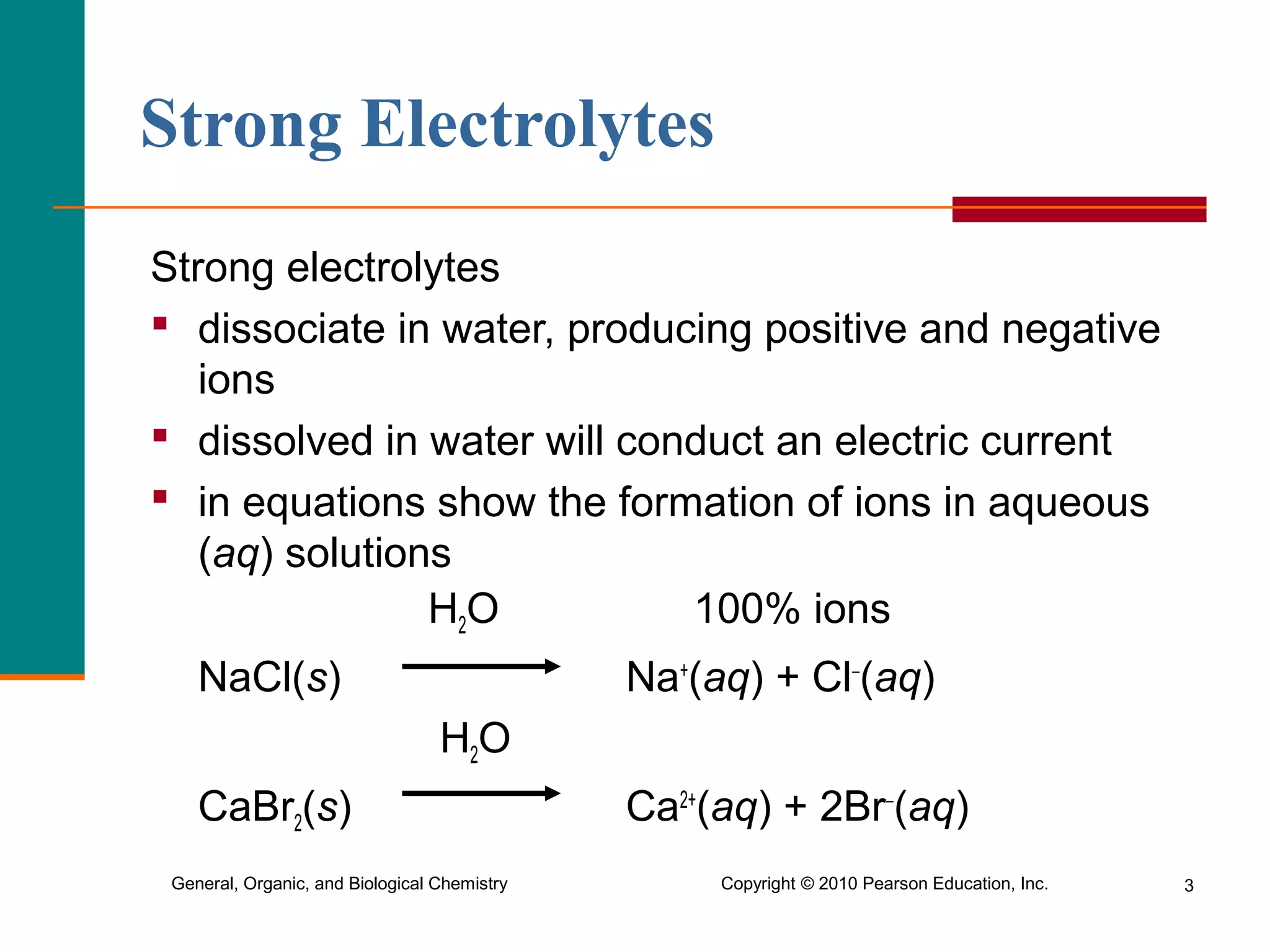
This is where it gets really fun. Chemists measure how much electricity a solution conducts to figure this out. A strong electrolyte solution lights up a lightbulb like a Christmas tree. A weak electrolyte solution gives you a dim, sad little glow—like a firefly with a dead battery. And a non-electrolyte (like sugar water) gives you nothing. Dead dark.
 Elektrolit dan Nonelektrolit | PPT
So when we say strong electrolytes dissociate completely, we aren’t guessing. We have a lightbulb as a witness. And that lightbulb screams: “BABY, I’M SHINING BRIGHT! THESE IONS ARE ALL HERE!”
It’s also why you can calculate exactly how many ions you’ll get. One mole of NaCl gives you exactly one mole of Na⁺ and one mole of Cl⁻. No leftovers, no stragglers. It’s chemistry’s version of a sure thing—like knowing the sun will rise tomorrow.
A Little Caveat (Because Life Isn’t Perfect)
Okay, I have to be honest with you for a second. “Complete dissociation” is a tiny bit of a white lie. In the real world, even strong electrolytes have a teeny, tiny, minuscule fraction that might momentarily pair up again. But it’s so small—like 0.001%—that we round it to zero. Chemists are cool with that. We call it “effectively complete.”
Think of it this way: It’s like saying “I’m definitely not going to eat that last cookie.” Then five minutes later, you do. But in the world of strong electrolytes, they never sneak back. They stay dissociated because water is just that good at keeping them apart.
So yes, for all practical purposes, strong electrolytes dissociate in water with total and utter commitment. They are the overachievers of the solution world.
The Grand, Uplifting Conclusion
So, to answer our big question: Do strong electrolytes dissociate in water? Absolutely, 100%, yes. They don’t just dissociate—they celebrate dissociation. They break apart completely, glow with electric joy, and make the world a brighter, better-conducting place. Next time you sprinkle salt on your fries, take a moment to appreciate the little ion party happening in your mouth. Each grain is a tiny firework of sodium and chloride ions, all thanks to the magic of water.
And honestly, that’s a beautiful thing. In a world full of uncertainty—like traffic, weather, and whether your phone battery will last the day—you can always count on strong electrolytes to go all in. They don’t hesitate. They don’t hold back. They just dissociate with flair. So go ahead, dissolve some salt, and let your inner chemistry nerd smile. The universe is full of tiny, dependable miracles, and this is one of them.
Stay curious, stay salty, and keep dissociating your problems into manageable pieces. 💧✨
