A Water Softener Works By The Principle Of

So, you’ve got hard water. You know the signs: that chalky white crust on your faucets, the way your soap refuses to lather no matter how hard you scrub, and the feeling that...

So, you’ve got hard water. You know the signs: that chalky white crust on your faucets, the way your soap refuses to lather no matter how hard you scrub, and the feeling that your hair has been lightly starched. It’s a battle, and it’s been raging in your pipes for years. But there is a hero in this fight, and it’s a big, beige tank that looks like a sci-fi prop. I’m talking, of course, about the water softener.
How in the World Does That Thing Actually Work?
You might think it uses magic, or maybe tiny, exhausted kittens with sponges. Nope. The entire process is based on a surprisingly simple, almost boring, scientific principle called ion exchange. Don’t let the fancy name fool you; it’s just a fancy game of “musical chairs” for minerals. The bad guys in your water are calcium and magnesium ions – the party crashers that leave hard-water stains everywhere.
A water softener is basically a tall, hollow cylinder filled with thousands of tiny, sticky resin beads. These beads are negatively charged, like that one friend who’s always overly attracted to drama. And guess what attracts negative charges like a moth to a flame? Positively charged ions, which is exactly what calcium and magnesium are. It’s a chemical love story, happening at microscopic levels.
Must Read
As the hard water flows past these beads, the calcium and magnesium ions scream, “Ooh, shiny!” and they latch onto the beads for dear life. But here’s the trick: the beads were already holding onto something else – sodium ions, which are basically the friendly, squatters on the couch. When the tough minerals show up, they kick the sodium right off the bead and take its place. It’s a violent eviction, but for a good cause.
The “Brine” of the Problem: Regeneration
But wait, the story doesn’t end there. After a few days of kicking out sodium, the resin beads get completely covered in calcium and magnesium. They become full, like your stomach after a Thanksgiving dinner. If you did nothing, your softener would just be a very expensive, very useless canister of rocks. This is where the real fun begins, a process called regeneration.
Your softener has a backup tank full of super-concentrated salt water, or brine. Think of this as the “reset button” for the beads. The system flushes this brine over the exhausted beads, and the sheer volume of sodium ions overwhelms the calcium and magnesium. It’s like sending in a thousand new roommates to force the old ones out. The calcium and magnesium are flushed down the drain, and the beads are recharged with fresh, sticky sodium, ready for another round.
So your water softener is basically a chemical janitor that takes a power nap, then wakes up for a salty, violent purge in the middle of the night. It’s a little dramatic, but it gets the job done. And yes, you do add salt to the machine, but you are not drinking salty water. The salt is only used for the cleaning cycle, and most of it is flushed away. That glass of water you pour is sodium-free (or very, very low).
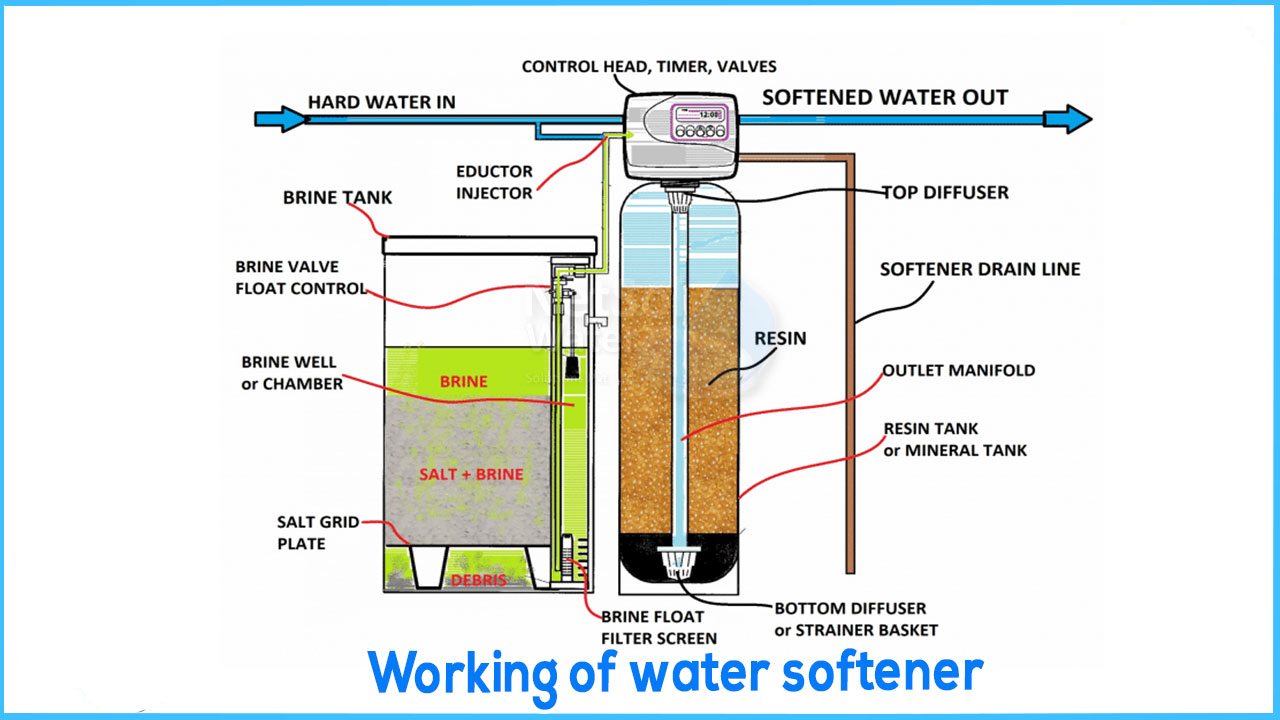 Do Tac Water Softeners Work at Joel Donovan blog
Surprising Fact: It’s Almost Like Giving Your Appliances a Spa Day
Here’s a weird truth: hard water is actually great for your bones – it adds calcium! But for your coffee maker, it’s a death sentence. A water heater running on hard water builds up a thick layer of mineral scale, like arteries clogged with cholesterol. This can make your water heater 25% less efficient, which is basically like feeding your furnace a cheeseburger every day. A water softener prevents that, saving you money.
And let’s talk about your laundry. Hard water makes detergent less effective, so you have to use more. It’s a conspiracy! Without soft water, your clothes get that “crunchy” feeling from soap scum that didn’t fully rinse out. With a softener, your t-shirts feel like clouds and your towels actually absorb water instead of just repelling it like a freshly waxed car.
The Punchline: It’s Just Really Good Chemistry
So next time you see that big brine tank in your basement, don’t be afraid. It’s not a mutant washing machine. It’s a marvel of simple physics and chemistry, a silent guardian that fights the mineral apocalypse one ion at a time. It works on the principle of attraction, eviction, and salt-induced recovery. And honestly, isn’t that how we all handle our problems? Attract something nice, kick out the bad stuff, and then take a very salty bath to recover?
You’ll never look at a cup of coffee the same way again. Well, you will, because it will taste better and your machine won’t be dying on the inside. Now go forth and enjoy your squeaky-clean hair and spotless glasses. And maybe pour one out for the hard-working resin beads – they’re the real heroes.
