Can You Use Distilled Water In A Fish Tank

Can You Use Distilled Water In A Fish Tank? Let’s Dive In! You’re staring at a jug of distilled water. It looks so pure. Like a tiny cloud in liquid form. But should you pour...
Can You Use Distilled Water In A Fish Tank? Let’s Dive In!
You’re staring at a jug of distilled water. It looks so pure. Like a tiny cloud in liquid form. But should you pour it into your fish tank?
Spoiler alert: Probably not. At least not straight up. Think of distilled water as a blank slate—too blank for your finned friends. It’s like serving a gourmet meal on a plate with no food. Your fish will starve for minerals.
The Crazy Science of Nothing
Distilled water is basically rain’s shy cousin. It’s boiled into steam, then condensed back. Every single mineral, salt, and trace element gets stripped away. Sounds clean, right? For your coffee maker, yes. For your fish? It’s a mineral desert.
Must Read
Fish need calcium, magnesium, and potassium to live. These ions help their gills breathe! They also keep their blood stable. Drop a fish into pure distilled water, and it will become a soggy, stressed blob. Osmosis starts working backwards—water rushes into the fish’s cells. That’s bad. Really bad.
The Quirky Reality: Fish Are Like Tiny Chemists
Here’s a fun fact: your fish’s body is a saltwater battery. Distilled water has zero charge. It throws that battery into chaos. Some fish, like delicate Discus, need soft, acidic water. But even they can’t handle pure nothingness. They’d get the “shakes.” Literally—their fins might tremble from stress.
You know what happens if you use only distilled water long-term? Your tank becomes a ghost town. Beneficial bacteria—the invisible heroes of your filter—die without minerals. They’re like tiny janitors who need a balanced diet to work. Without them, ammonia spikes. Fish get sick. You cry. It’s a whole mess.
But Wait… There’s a Sneaky Use!
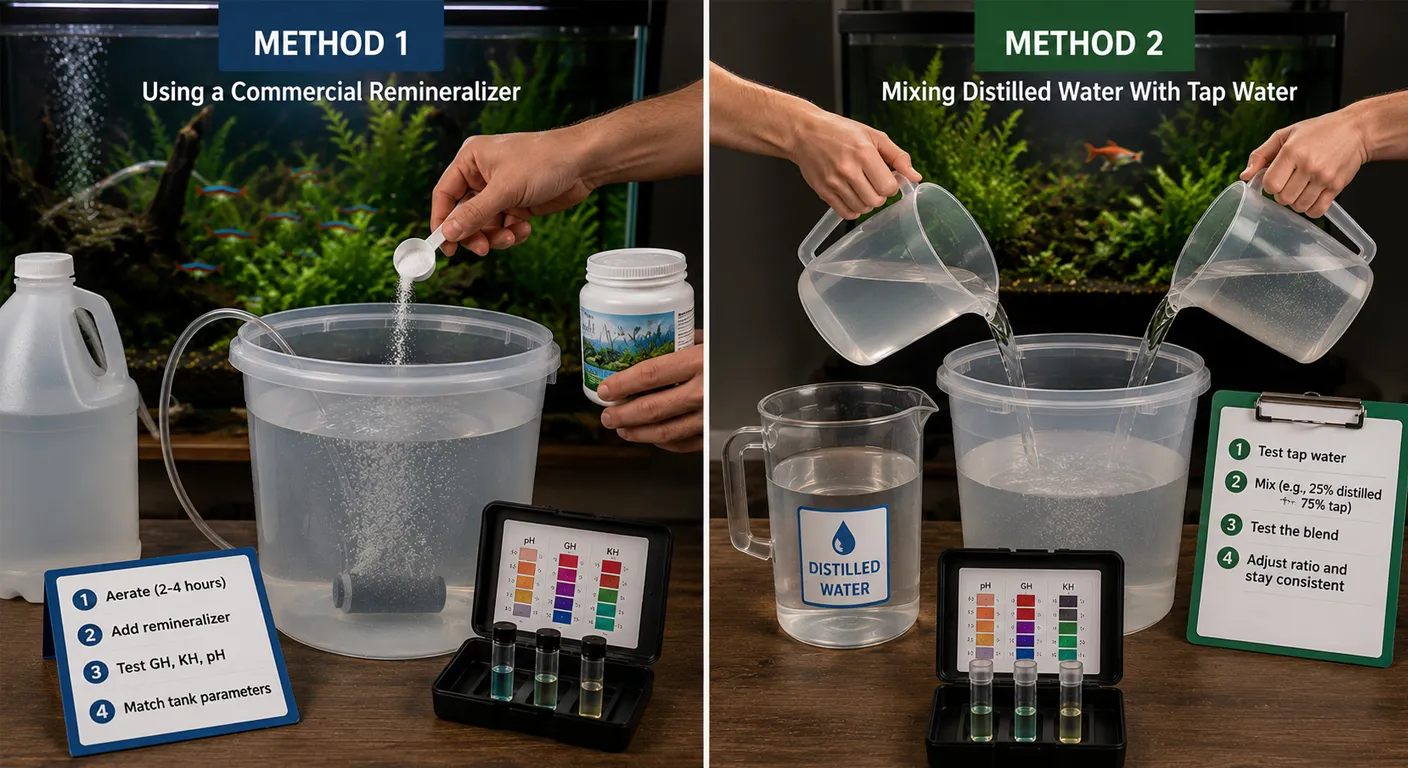
Here’s the twist: you can use distilled water, but only as a remix artist. Think of it as a base for your own Franken-water. You can add remineralizing drops or buffers from the pet store. Suddenly, your blank slate becomes a custom cocktail!
Professional aquarists do this for sensitive species. Like crystal shrimp (yes, they’re real) or certain Amazonian tetras. They mix distilled water with tap water or mineral salts. It’s like being a mad scientist with a bucket. Fun, right? But for beginners? Skip the chemistry lesson.
The Gross, Honest Truth About Tap Water
Most people don’t realize this: tap water is already filtered by the city. It has chlorine (which kills fish), but you can treat that with a simple conditioner. Tap water also has natural minerals. It’s like your fish’s comfort food. Why mess with a good thing?
 Is Distilled Water Safe for Freshwater Aquariums? - Aqua Revolt
Even well water works, as long as you test for heavy metals. Distilled water? It’s the white bread of water—zero nutrition. Would you feed your fish only white bread? No. That’s dumb.
Quirky Fact Alert: Rainwater vs. Distilled
Rainwater is sort of like distilled water. But it picks up dust and CO2 from the air. That makes it slightly acidic. Some fish actually love acidic water! But you still can’t dump untreated rainwater in a tank. It might carry bacteria or pollution. Distilled water is just too sterile. It’s like inviting a fish to a party where all the snacks are gone.
How to Use Distilled Water Like a Pro (Without Killing Anything)
Okay, so you’re stubborn. You want to use that jug. Fine. Here’s the only safe way:
- Mix it with tap water. Use a 50/50 ratio for soft-water fish. Always test pH and hardness first.
- Add a commercial remineralizer. Follow the instructions exactly. It’s like adding electrolytes back into Gatorade.
- Use distilled water for top-offs. When water evaporates, minerals stay behind. Adding distilled water just to replace evaporation is safe! It keeps your tank’s chemistry stable.
Never use distilled water for water changes unless you’re a pro with a test kit. Pro tip: Buy a TDS meter. That’s a “total dissolved solids” gadget. It measures minerals. Your tank should read 150–300 ppm. Distilled water? Zero ppm. That’s a red flag.
The Bottom Line (Splashy Conclusion)
So, can you use distilled water in a fish tank? Only if you’re smart about it. Otherwise, it’s a one-way ticket to Fish Funeral City. Stick with treated tap water for most tanks. It’s easier, cheaper, and your fish will thank you with happy wiggles.
Curious to try the mad scientist method? Go ahead! But start with a small tank. Distilled water is a tool, not a magic potion. Use it right, and your fish will live their best lives. Use it wrong? Well… let’s just say you’ll have a story to tell.
Now go check your water parameters. Your fish are judging you. 🐟
