Is Distilled Water Same As Deionised Water

Hey there, water wizard! Have you ever stood in the grocery aisle, staring at a bottle of distilled water and a jug of deionised water, and thought, “Are these two just the sa...
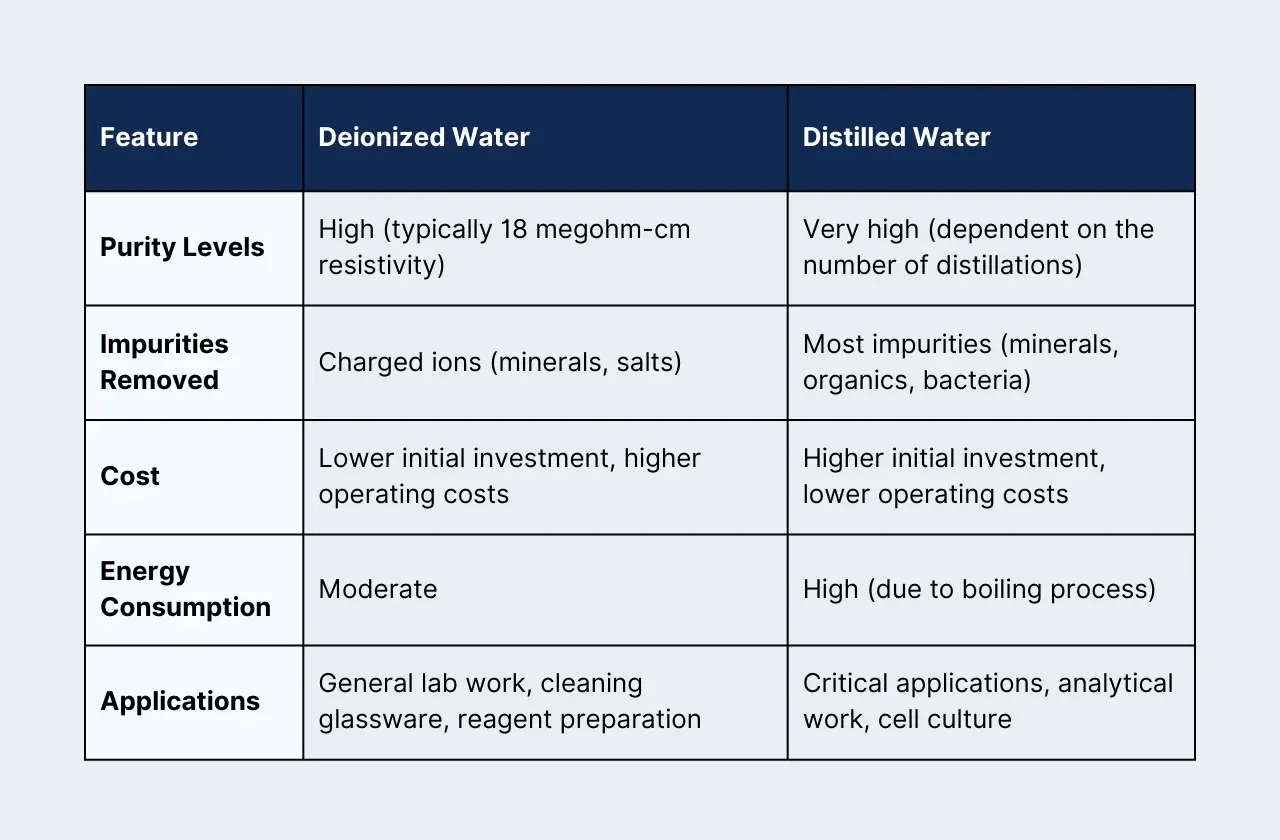
Hey there, water wizard! Have you ever stood in the grocery aisle, staring at a bottle of distilled water and a jug of deionised water, and thought, “Are these two just the same thing with fancy names?” You’re not alone. It’s a mystery that has baffled kitchen chemists and plant parents everywhere. Let’s clear the air (and the water) once and for all!
The Short Answer: Nope, They’re Not Twins
Distilled water and deionised water are not the same. They’re more like cousins who went to different finishing schools. Both are incredibly pure, but they achieve that purity through totally different methods. Think of it like this: one is a steam-powered superhero, the other a magnetic magician.
Distilled water is made by boiling water into steam, then condensing that steam back into liquid. It’s like a spa day for water—it sweats out all its impurities. Deionised water, on the other hand, is run through special resin beads that act like tiny, electro-magnetic bouncers, kicking out dissolved salts and minerals. Fancy, right?
Must Read
So, can you swap them in your coffee maker or car battery? Usually, yes—but not always. Let’s dive into the bubbly details!
How Distillation Works: The Old-School Steam Clean
Picture this: you’ve got a pot of tap water full of minerals, bacteria, and mysterious floaty bits. When you boil it, the H₂O turns to steam and rises up, leaving the heavy gunk behind. That steam is then cooled and collected as pure, liquid water. It’s the original “clean sweep” method, used by sailors and alchemists for centuries.
The result? Water that’s almost entirely free of contaminants—including minerals, bacteria, viruses, and even heavy metals. It’s like the water went to a five-star resort, did a detox, and came back glowing. But here’s the funny part: distillation is slow and uses a lot of energy. Your kettle works up a sweat just to make one cup!
Also, distilled water can taste a bit flat because it loses the oxygen and natural minerals that give tap water its zing. Some people say it tastes like “nothing,” which is scientifically accurate but not very exciting. Still, it’s perfect for steam irons, medical equipment, and keeping your car battery happy.
How Deionisation Works: The Electrifying Makeover
Deionised water (DI water) doesn’t boil anything. Instead, it’s pushed through tanks filled with special resin beads that are charged like tiny magnets. These beads grab onto dissolved salts, like sodium and calcium, and swap them for hydrogen and hydroxide ions. In the end, you get water that’s essentially stripped of all its charged particles (ions).
It’s incredibly fast and efficient—like a lightning bolt of purification. But here’s the catch: deionisation doesn’t remove bacteria, viruses, or organic molecules. If you start with dirty tap water, you’ll get deionised water that’s still swimming with microbes. That’s why labs often pre-filter or distill water first, then deionise it for ultra-purity.
And taste? Deionised water is also pretty bland, but sometimes it can have a slight plastic or resin aftertaste if the setup is fresh. It’s not your imagination—it’s just the water making new friends on its journey through the beads!
The Big Showdown: Distilled vs. Deionised
Okay, so which one is better? That’s like asking if cats or dogs are better—it depends on your lifestyle. Distilled water is your go-to for killing bacteria and removing heavy metals. It’s the safe choice for drinking in survival situations or for humidifiers where you don’t want white dust.
 Distilled Water Vs. Deionized Water — Microbe Online
Deionised water, however, is the champion of labs and factories. It’s used to rinse microchips, mix medicines, and even in car washes to prevent spots. It’s water with zero electrical charge, which makes it perfect for experiments. But don’t drink it long-term—it can be harsh on your teeth and gut because it’s so aggressively “empty.”
Also, a fun fact: deionised water can be corrosive. Yes, it’s so pure that it wants to steal ions from whatever it touches, including your metal pipes. Distilled water is much gentler. So if you’re refilling a fish tank, use distilled—unless you want your fish to develop tiny metal cravings!
When Can You Use Them Interchangeably?
Let’s be real: for most everyday stuff, like topping off your iron or mixing baby formula, both are fine. Your coffee maker won’t explode if you use deionised water instead of distilled. Your car battery won’t file a complaint. But if you need water that’s sterile (like for contact lenses), stick with distilled.
If you’re a plant parent, you might prefer distilled. Some plants, like carnivorous Venus flytraps, are super sensitive to minerals. Deionised water can work, but it might actually pull minerals out of the soil, causing problems. So for your leafy friends, distilled is the safer, kinder choice.
And for making the world’s best cup of tea? Honestly, just use filtered tap water. Both distilled and deionised can make tea taste like sad, watery regret. Save the ultra-pure stuff for chemistry sets and steam irons!
The Takeaway: You’re Already Winning
Here’s the uplifting truth: whether you pick distilled or deionised, you’re already making a smart, clean choice. You’re not drinking out of a puddle or using muddy hose water. You’re a champion of purity! The only real difference is the method, and now you’re armed with the knowledge to decide.
So next time you’re in that grocery aisle, give yourself a little pat on the back. You’re not just buying water—you’re choosing between a steamy old friend and a zesty new pal. And both will keep your gadgets happy and your experiments solid. You’ve got this!
And remember: no matter which bottle you grab, you’re hydrating like a hero. So go forth, drink up, and let the good times flow—pure and simple. Cheers to you, you magnificent water connoisseur!
