How Many People Die A Year From Dehydration

Ever had that moment where you reach for a glass of water, but your hand is shaking like it’s trying to win a shaky-cam Oscar? Yeah, we’ve all been there—and it’s a lightheart...
Ever had that moment where you reach for a glass of water, but your hand is shaking like it’s trying to win a shaky-cam Oscar? Yeah, we’ve all been there—and it’s a lighthearted sign of dehydration. But when we ask how many people actually die from it each year, the numbers get a bit more serious.
The World Health Organization estimates that dehydration—from things like diarrhea, heatstroke, and plain old not drinking enough—kills around 1.5 to 2 million people annually. That’s roughly the population of Houston, Texas—gone, just like that. It’s the universe’s way of reminding you that your body is basically a houseplant with a complicated job.
Why is dehydration so sneaky?
Dehydration isn’t like a dramatic movie villain; it’s more like that friend who steals your fries one at a time. You don’t notice until suddenly your fries are gone and you’re irritable. Your body feels fine one minute, then you’re dizzy, your tongue is a desert, and your brain is running on dial-up internet.
Must Read
It’s especially deadly for young children and older adults, because their fluid systems are like old laptops—prone to overheating. In many cases, a simple case of diarrhea or a fever spirals into a fatal loss of water and electrolytes.
The silent killer in plain sight
Think about your last hangover: that pounding headache, the dry mouth, the feeling that you’ve been licked dry by a pack of stray cats. That’s mild dehydration. Now imagine that feeling multiplied by a thousand, with no barista in sight—and that’s the reality for many people in hot climates or conflict zones.
In places where clean water is scarce, dehydration isn’t a “remember to drink more” problem; it’s a life-or-death obstacle course. It’s the difference between laughing with friends and collapsing under a tree. We often take our tap water for granted, like we take an endless supply of memes for granted.
The ironic twist: we’re all water balloons
Your body is 60% water, which means you’re basically a fancy water balloon with a smartphone. Lose just 2% of that water, and your performance drops—you get foggy, clumsy, and start making bad decisions, like trying to reheat pizza in the microwave without a plate.
Lose 10% or more, and your organs start to argue with each other, like a family road trip gone wrong. Your kidneys wave the white flag, your heart races, and your brain starts sending out SOS signals. That’s when a simple “I’m thirsty” becomes a medical emergency.
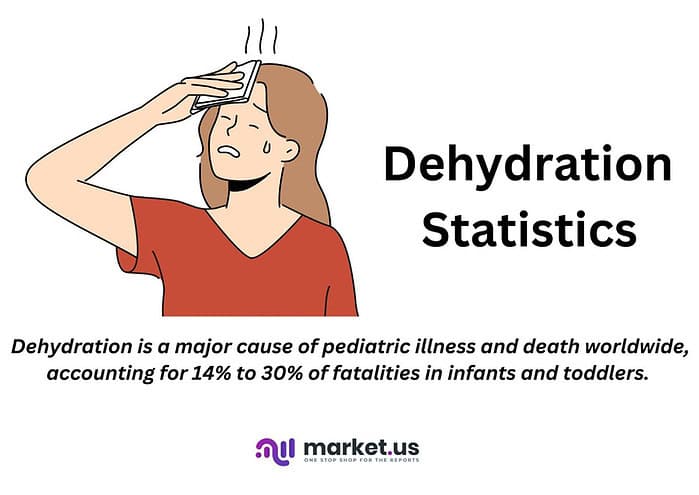 Dehydration Statistics and Facts (2026)
Everyday anecdotes from the dehydration front
I once went hiking on a “cool” summer day—you know, the kind where you think, “I’ll just bring a small bottle.” Two hours in, I felt like a raisin trying to walk. My friend had to share his water, and I learned that pride goes before a fall—and also before a dry mouth. I didn’t die, but I sure felt like I’d auditioned for a dried-fruit commercial.
Then there’s the classic office scenario: you’re on back-to-back Zoom calls, your water bottle is just sitting there, judging you. You promise to sip after this one call, but by 3 p.m., your brain is a fossil. That’s not just a productivity tip—it’s a survival tip.
So, what’s the takeaway?
Dehydration deaths are remarkably preventable, yet they still happen because life gets busy. It’s like forgetting to charge your phone, but your phone is your body. For most of us, the risk is low if you carry a bottle and listen to your thirst signals—the body’s own annoying alarm clock.
But globally, the numbers remind us that not everyone has a clean, safe drink within arm’s reach. 1.5 to 2 million deaths is a big number—it’s like the entire crowd at a rock concert of life, silenced. So next time you chug a glass of cold water, do it with a little joy. You’re not just hydrating—you’re beating the odds.
And if you’re feeling extra fancy, raise your glass in a toast: to not being a statistic, and to remembering that water is humanity’s original energy drink. Cheers—now go fill up that bottle.
