How Often To Change Reverse Osmosis Filters

Let’s talk about RO filters. Reverse osmosis systems are the ninjas of your kitchen. They silently battle contaminants while you sleep. But here’s the kicker: they need your h...
Let’s talk about RO filters. Reverse osmosis systems are the ninjas of your kitchen. They silently battle contaminants while you sleep. But here’s the kicker: they need your help to stay sharp.
You might think filters last forever. Nope. They get clogged, tired, and cranky. Like a grumpy old sponge, they stop doing their job. The water you adore turns sad and mediocre.
The Great Filter Time-Out
Every filter has a lifespan. It’s not a suggestion—it’s a biological imperative. Think of it as a vacation schedule for your water’s bodyguards. They earn a break after too many shifts.
Must Read
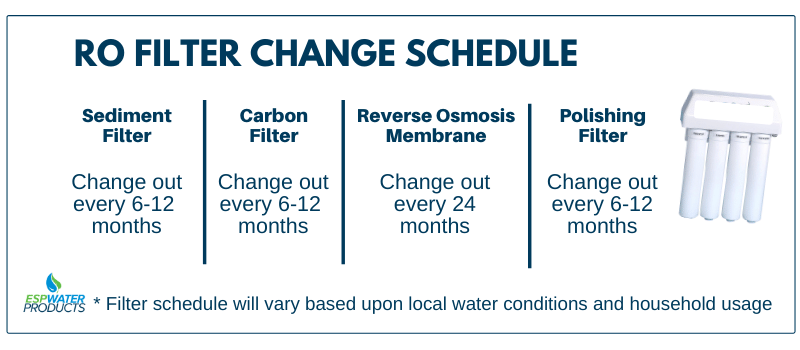
Your pre-filter (the sediment guy) usually taps out every 6-12 months. It catches sand, dirt, and tiny rocks. Imagine your poor filter eating gravel for breakfast. It deserves a medal, then a replacement.
The carbon filter is next. It tackles chlorine and weird tastes. This hero lasts about the same: 6-12 months. After that, it’s just a pretty tube doing nothing. Your water will taste like a swimming pool’s afterthought.
The RO Membrane: The VIP
The RO membrane is the star of the show. It does the heavy lifting—removing up to 99% of dissolved solids. This diva demands respect and a longer timeline. It usually lasts 2-3 years with good care.
But here’s a quirky fact: a membrane can die early if ignored. Hard water? That’s like kryptonite. It builds up scale and suffocates the membrane. You’ll know because your water flow slows to a tragic drip.
Check your water pressure, friend. Low pressure makes the membrane work overtime. It’s asking for a raise you don’t want to pay. Don’t make it unionize.
The Post-Filter: Cherry on Top
There’s a final filter—the polishing filter (or post-filter). It gives water that final, crisp taste. This little guy lasts about 12 months. It’s the trusty sidekick that doesn’t complain.
Skip it, and your water might taste flat. Or like old plastic. Ever sipped from a forgotten water bottle? Yeah. That. Just replace it. Your taste buds will thank you silently.
Funny Signs You’re Late
How do you know you’ve waited too long? The water starts acting weird. It might look cloudy, smell like a swamp, or taste like a penny. That’s your filter screaming for help in its silent, watery way.
Another clue: your ice cubes look haunted. They become cloudy or develop weird white flakes. That’s sediment throwing a party in your glass. Not the good kind of party.
Some people ignore changes for months. They convince themselves it’s “fine.” It’s not fine. Your system is basically a fancy pipe with a grudge. Don’t be that person.
The “Wait, I Forgot” Schedule
No judgment here. We all forget things. Here’s a cheat code: change the pre-filter and carbon filter every 6 months. Mark it on your calendar with a glitter pen. Visibility matters.
The RO membrane gets a 2-3 year pass. But set a reminder for year two. Check the manual for your specific system. Some are drama queens with unique needs.
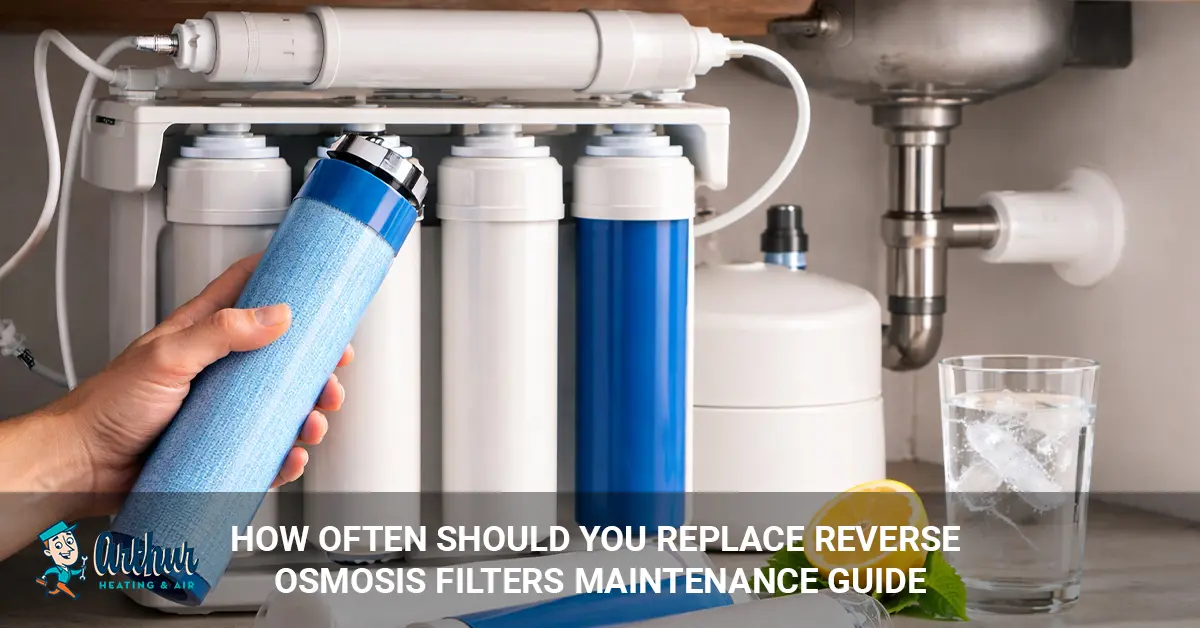 How Often Should You Replace Reverse Osmosis Filters? Maintenance Guide
The post-filter? Annually. Think of it as a birthday gift for your water. Every birthday deserves a fresh filter.
The One Exception
Here’s a funny twist: if your water source is well water, everything changes. Well water carries more grit and gross stuff. Your filters might beg for mercy every 3-4 months. Yes, really.
Even city water varies. Some towns have extra chlorine or sediment. You’ll become a filter-change detective. Check your system’s pressure gauge. A drop means it’s time to act now.
And don’t forget the storage tank! It doesn’t need replacing often, but it needs air pressure checked yearly. A flat tank is like a deflated balloon. It ruins the whole magic trick.
Why This Matters (With a Wink)
This isn’t just about water. It’s about your morning coffee or tea. Bad water ruins your precious caffeine. You wouldn’t make espresso with swamp juice, right? Right?
Also, old filters waste water. RO systems already produce 3-4 gallons of wastewater for every gallon of pure water. A clogged filter makes that ratio worse. Your water bill cries a little.
Replacing filters keeps the system efficient. Less waste, more goodness. The planet thanks you. Your wallet sighs with relief. It’s a win-win-win situation.
Fun Fact: The Dripless Truth
Ever seen a neglected system? It can grow biofilm. That’s science talk for slime. Imagine drinking slime-adjacent water. Not cute. Not fun. Just ick.
Another quirky detail: modern systems have indicator lights. Fancy! Some beep or flash when filters expire. Ignore them, and the beeping will haunt your dreams. Listen to the robot.
But if you have an old system without lights, become a calendar wizard. Use your phone. Use sticky notes. Use a carrier pigeon if needed. Just don’t wing it.
Final Sip of Advice
So, how often? The short answer: pre-filters and carbon every 6 months. Membrane every 2-3 years. Post-filter yearly. Read your manual because life is short.
Your system isn’t immortal. It’s a team of hardworking parts. Treat them like the heroes they are. Replace filters on time. Your water will be crisp, clean, and utterly delightful.
And when you take that first sip of perfectly filtered water? Imagine your filters doing a tiny happy dance. They earned it. Now go change them already.
