Whole House Water Filtration For Well Water

So, you’ve got a well. Congratulations! You’re practically a feudal lord, with your own private water source, no water bill, and a direct line to the Earth’s chilly, undergrou...
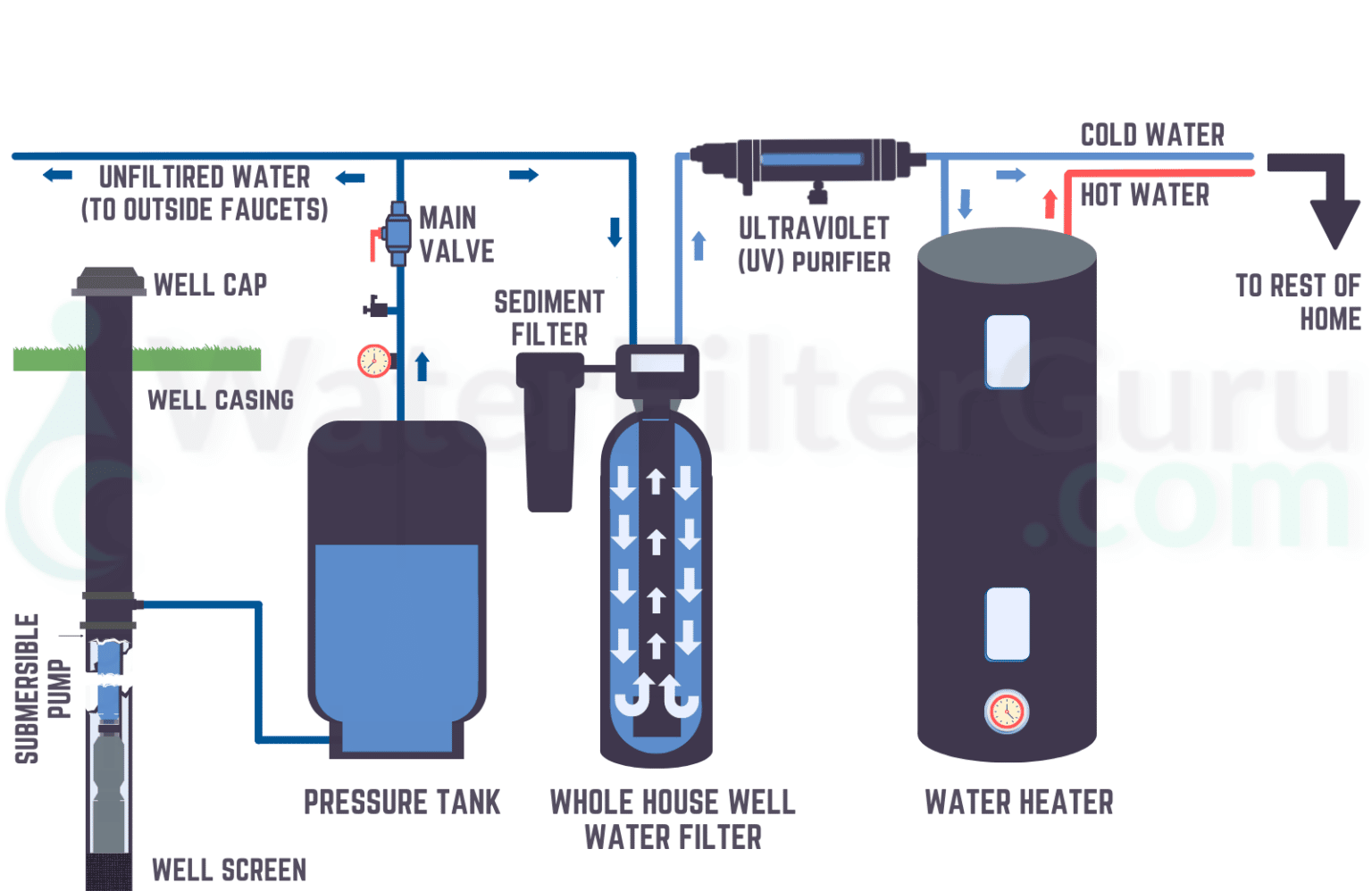
So, you’ve got a well. Congratulations! You’re practically a feudal lord, with your own private water source, no water bill, and a direct line to the Earth’s chilly, underground mojo. But let’s be real for a sec—that well water can sometimes taste like it’s been filtered through a pair of old gym socks.
That’s where whole house water filtration for well water comes in. It’s like hiring a tiny, tireless butler who lives in your basement, dedicated to making sure every drop of water in your home is delicious, clean, and won’t turn your white socks orange. We’re about to dive in together, so grab a glass of (ideally filtered) water, and let’s chat.
Why Your Well Water Might Be Acting Up
Well water is basically nature’s cocktail, and Mother Nature is a bit of a wild bartender. She might accidentally add a splash of iron (hello, rusty stains on your toilet), a hint of sulfur (that classic “rotten egg” surprise), or some sediment that looks like tiny, unhappy snowflakes.
Must Read
The worst part? Your guests will absolutely notice. That mysterious smell from the bathroom sink, or the way your supposedly white shirts turn a distressing shade of light rust, is a dead giveaway. A whole house system fixes all that before it even reaches your faucet.
You can’t just “boil away” hard water or iron—sorry, that’s not how this works. A point-of-use filter under the kitchen sink is like putting a Band-Aid on a broken leg. You need the big guns, the VIP pass for every pipe in your house.
Step One: The Sediment Problem (aka The Chunky Stuff)
Imagine your water is a smoothie—but not a good one. Sand, silt, and little bits of rust are the uninvited chunks. A whole house system starts with a sediment filter, which is basically a giant, polite bouncer that says, “No grit allowed.”
This filter catches all the chunky nonsense so it doesn’t clog up your showerheads or ruin your washing machine. Your dishwasher will suddenly stop sounding like it’s gargling rocks, which is a win for everyone’s sanity. Your appliances will thank you with longer lives and fewer repair bills.
Plus, nobody enjoys scrubbing pink-orange stains off a white bathtub. Trust me, that is not a hobby you want to cultivate.
Step Two: Tackling Iron and Manganese (The Rust Monsters)
If your water looks like weak iced tea when it first comes out of the tap, you’ve got iron in your life. It’s not dangerous to drink, but it will absolutely ruin your laundry, your hair, and your sink. Manganese is its sneaky cousin that leaves dark, sticky sludge everywhere.
A good whole house system uses either an oxidation filter or a water softener with a special iron-removal setting. It basically grabs those metal particles and flushes them down a drain pipe, far away from your favorite jeans. No more pretending rusty streaks are a “design choice” on your shirts.
And for the love of all that is holy, that means no more red-stained fingernails after watering the garden. Your manicurist will be so confused, but very proud.
Step Three: The Sulfur Smell (The Party Pooper)
That rotten egg smell? It’s sulfur gas, and it usually comes from bacteria living inside your well or water heater. It’s not dangerous, but it turns your morning shower into a scent-based horror movie. Nobody wants to greet the day smelling like a damp basement.
The fix here is often an aeration system or a catalytic carbon filter. These systems introduce air or a special media that oxidizes the sulfur, killing the smell before it even gets to your pipes. Suddenly, your bathrooms will smell like soap and happiness, not a science experiment gone wrong.
Your house guests will stop making that polite, pinched-nose face when they use your powder room. You know the one—I see you, Aunt Carol.
 Whole House Water Purification System For Well Water at Myrtle Jackman blog
The Water Softener Connection: Hard Water’s Nemesis
Most well water is hard, meaning it’s full of calcium and magnesium. Hard water doesn’t smell, but it leaves white scale on your faucets, makes soap scum cling to your shower door like a needy ex, and dries out your skin until you resemble a lizard. A whole house system often includes a water softener as part of the package.
The secret weapon here is ion exchange, where salt swaps places with the hard minerals. Your water becomes silky, your soap lathers like a dream, and your hair suddenly feels like you just stepped out of a luxury spa. It’s the closest most of us will ever get to having a personal hair stylist.
And your plumbing will last decades longer without a layer of rock-hard scale building up inside the pipes. That’s a big deal—unless you enjoy asking for a loan to replace your copper pipes. Not a fun conversation.
What About Bacteria? (The Spooky Stuff)
Look, your well is underground, and things live down there. Bacteria like E. coli or coliform can sneak in after heavy rain or if your well cap gets damaged. This is the one thing you cannot ignore—it’s a health issue, not just a “nice to have.” A UV (ultraviolet) filter is the superhero here.
It zaps 99.99% of microorganisms with pure light energy, like a tiny tanning bed for water. No chemicals, no weird taste—just safe, clean water. It’s the final security guard for your well system. Think of it as a force field for your gut.
You should still test your well water every year, but a UV light gives you serious peace of mind. That way, you can drink straight from the tap without giving your immune system a surprise workout.
Putting It All Together: The Whole House Setup
A proper whole house system is like a custom water playlist. You start with sediment, then hit iron and sulfur, then perhaps a softener, and finish with UV. It’s not one magic box—it’s a series of specialized units that work together like a tiny, water-purifying army.
You’ll want to call a local well water pro to test your water first. They’ll tell you exactly which “tracks” to add to your playlist. Don’t guess—testing is cheap, and guessing means you might end up with a system that doesn’t fix your actual problem. That’s like buying a fishing rod to fix your leaky roof.
And here’s the kicker: once it’s installed, you basically forget about it. The filters need changing every few months, but your water will be consistently amazing. You’ll suddenly find yourself drinking more water, noticing how much better your tea tastes, and how sparkling clean your dishes look.
The Uplifting Conclusion (We Made It!)
So there you have it. Whole house water filtration for well water isn’t just a luxury—it’s a way to turn your well from a potential headache into a badge of honor. You get to enjoy the independence of well water without the baggage. No more stains, no more smells, no more apologies.
Think of it this way: you’re giving your home a spa day, every single day. Every shower becomes a little more luxurious, every glass of water a tiny victory. Your appliances, your skin, and your white socks will all throw a silent party for you.
And when a friend asks why your water tastes so good, you can smile knowingly and say, “Oh, it’s the well. We have a special arrangement.” Then just leave them wondering. It’s the ultimate flex of a well-water warrior. Cheers to clean water, great plumbing, and never again having to explain why your bathtub looks like a crime scene. Go treat yourself—you deserve water that tastes as good as you feel.
